Have you ever heard a child say, “It’s not fair!” or “I wish I had what they have!”? If so, you’ve witnessed one of the most common emotions children experience – jealousy. In today’s blog post, I will share 10 healthy ways to turn jealousy into growth in kids that you, as a parent, teacher, and/or school counselor, can use to guide children toward confidence instead of comparison.
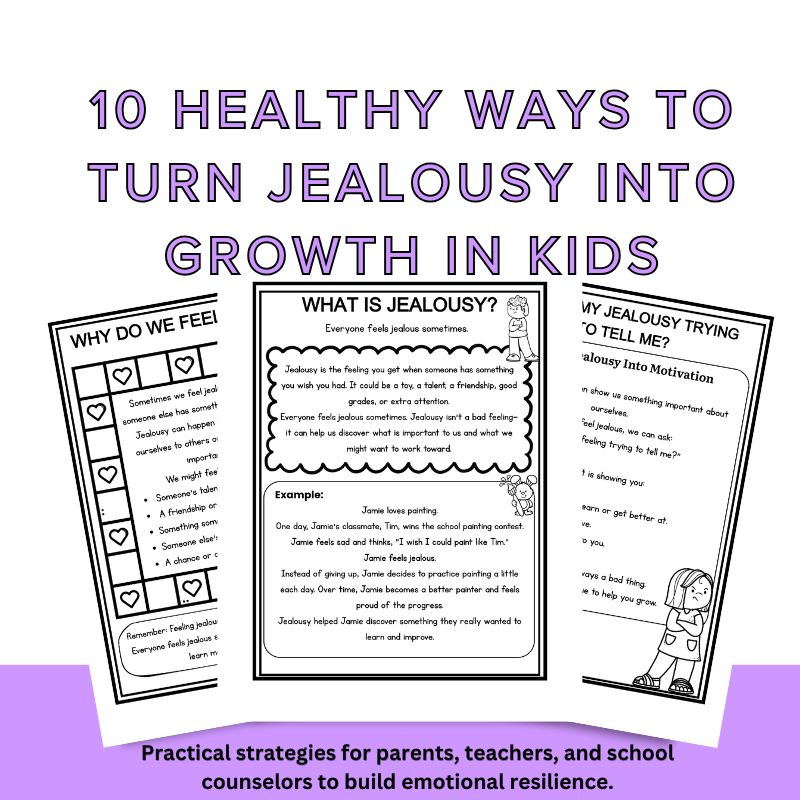
I don’t believe that jealousy is something children need to avoid or feel ashamed of because it can become an opportunity to build emotional awareness, resilience, empathy, and a growth mindset.
Wondering how?
You see, when children learn to understand their feelings, they’re better equipped to respond in healthy, positive ways.
Is Jealousy Normal in Kids?
Absolutely!
Children begin comparing themselves to others from a young age. They may notice a classmate who earns better grades, a friend who has more toys, a sibling who gets extra attention, or a teammate who seems naturally talented.
These comparisons can lead to jealousy.
Jealousy isn’t a sign that a child is selfish or unkind but rather showcases that something feels important to them. So, instead of us as parents trying so hard to eliminate jealousy. How about we teach children how to understand it and respond in healthy ways?
10 Healthy Ways to Turn Jealousy Into Growth in Kids
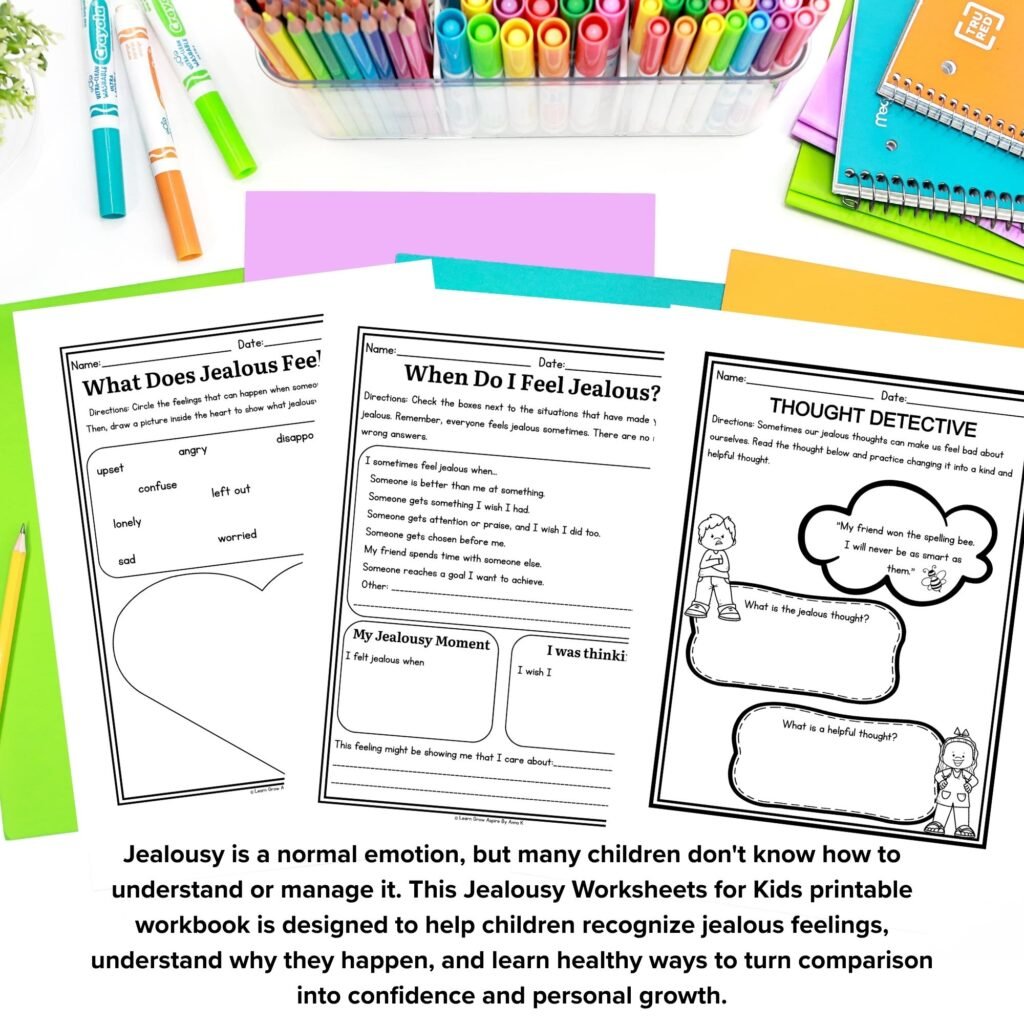
Here are 10 ways you can help kids understand why they may be feeling jealousy and learn from it.
1. Help Kids Name the Feeling
Many children know they feel upset but can’t identify why.
Encourage them to pause and ask questions such as:
- What am I feeling now?
- Am I feeling jealous?
- Why am I feeling this way?
- What happened just before I felt this way?
- What thoughts am I having?
Naming emotions helps children understand them instead of reacting impulsively.
2. Let Children Know Jealousy Is Normal
Children often worry that feeling jealous makes them “bad.”
So as parents, teachers, and counselors, let’s do our part and reassure them that everyone experiences jealousy from time to time. Including us!
You can say something along the lines of – “Feeling jealous doesn’t make you a bad person. It’s what we choose to do with that feeling that matters.”
When children feel accepted instead of judged, they’re more willing to talk openly about their emotions.
3. Discover What Jealousy Is Trying to Tell Them
Remind kids that jealousy often points toward something meaningful.
Ask them questions such as:
- What do you wish you had?
- Why is that important to you?
- Is there something you’d like to learn or improve?
For example, if a child feels jealous because a friend is a great artist, that feeling may simply reveal their interest in drawing. Something they may not have known they like doing.
Instead of focusing on comparison, help them focus on growth.
4. Change Jealous Thoughts Into Helpful Thoughts
Our thoughts influence our feelings.
Teach children to notice unhelpful thoughts such as:
- “They’re better than me.”
- “I’ll never be good enough.”
Then help them replace those thoughts with healthier ones:
- “We all have different strengths.”
- “I can improve with practice.”
- “I’m still learning.”
This simple habit builds confidence over time.
5. Focus on What They Can Control
Children can’t control:
- Other people’s talents
- Who wins
- What someone owns
- Other people’s choices
But they can control:
- Their effort
- Their attitude
- Their practice
- Their kindness
- How they respond to their feelings
Again, reminding kids to focus on what they can control can help reduce frustration and build resilience.
6. Turn Comparison Into Inspiration
This is a huge one! Even as an adult, the moment I stopped comparing myself to others and saw their achievements as encouragement, I was able to truly step into my power.
The same goes for kids.
Encourage children to ask:
“What can I learn from them?” instead of “Why can’t I be like them?”
This small shift transforms jealousy into motivation.
Someone else’s success doesn’t have to feel threatening but, rather, inspire them to grow and develop new skills.
7. Celebrate Other People’s Success
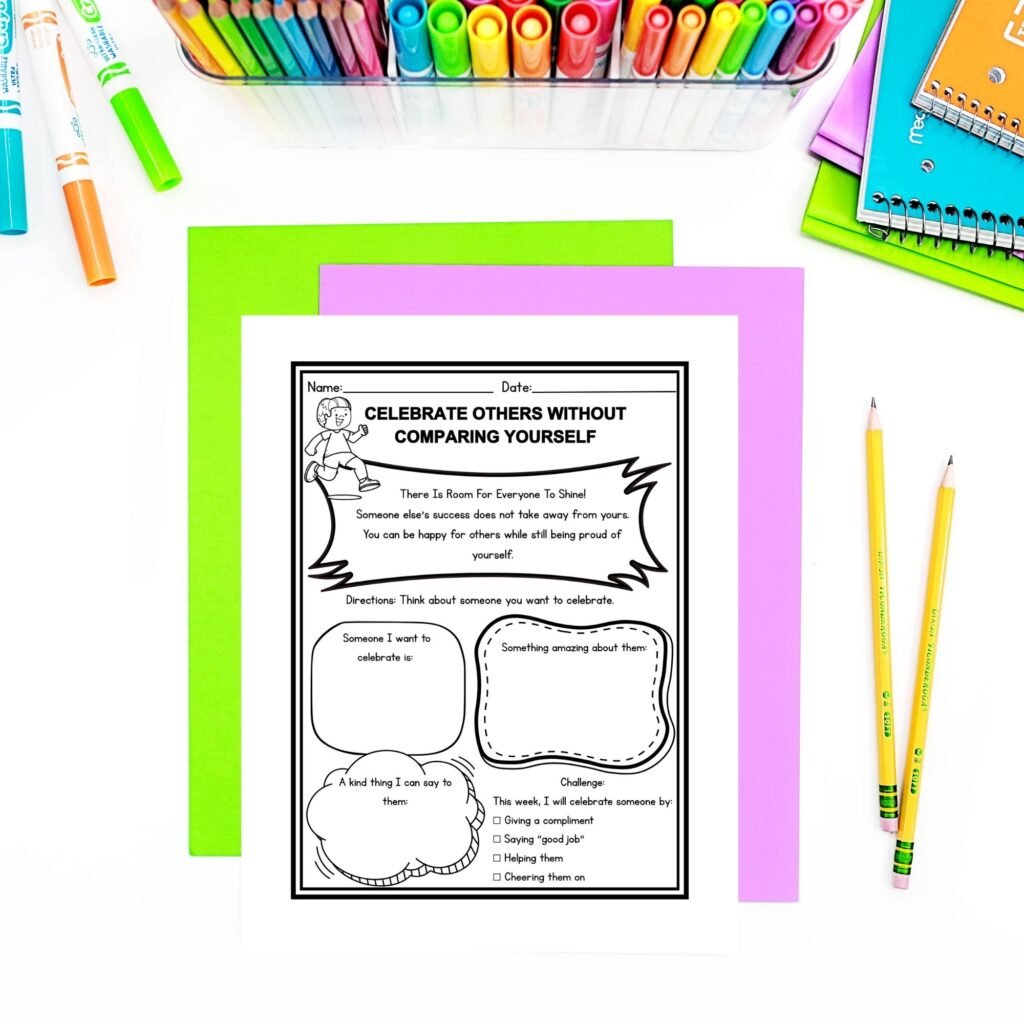
Cheering for others helps children build empathy and stronger relationships.
Invite children to:
- Give a compliment.
- Congratulate a classmate.
- Cheer on a teammate.
- Celebrate a sibling’s achievement.
Learning to celebrate others doesn’t take away from their own success.
8. Practice Gratitude
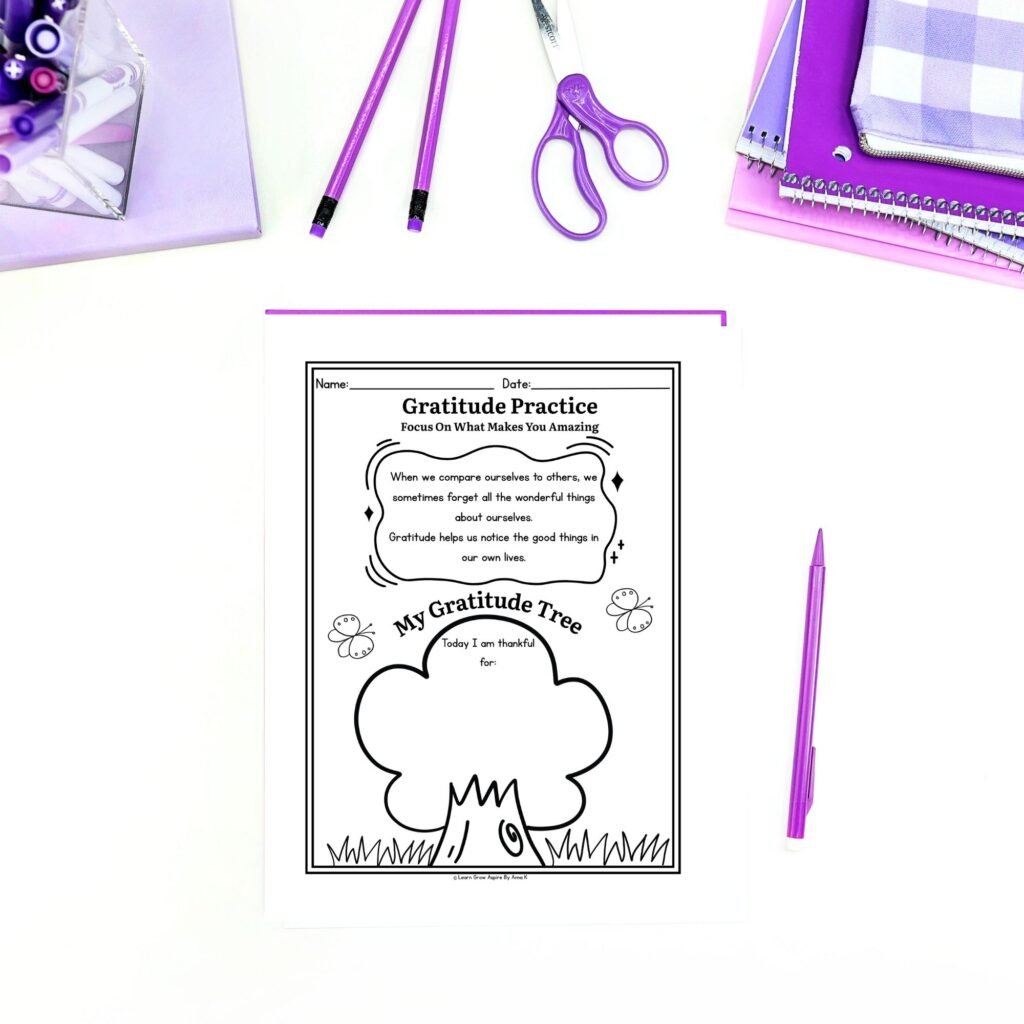
When children focus only on what others have, they often overlook their own strengths.
Encourage them to write down:
- Three things they’re thankful for.
- Something they like about themselves.
- A talent they’re proud of.
- Someone who makes them smile.
Gratitude helps shift attention from comparison to appreciation.
9. Help Kids Discover Their Own Strengths
Every single child has unique talents. Some are creative and curious; others are determined and kind.
Remind children that they don’t need to be the best at everything to be valuable.
Helping children recognize their own strengths builds self-confidence and reduces the urge to compare themselves with others.
10. Create a Plan for the Next Time Jealousy Appears
Jealousy will happen again and again. And that’s okay.
Help children create a simple plan so that they can:
- Notice the feeling.
- Name the emotion.
- Identify the jealous thought.
- Replace it with a helpful thought.
- Focus on what they can control.
- Take one small positive step.
Having a plan helps children respond thoughtfully instead of reacting emotionally.
Turning Jealousy Into Growth Takes Practice
Jealousy doesn’t disappear overnight, and it shouldn’t have to. Like any other emotion, it becomes easier to manage with practice, guidance, and encouragement.
By teaching children to understand their feelings, challenge unhelpful thoughts, focus on what they can control, and celebrate their own progress, we help them develop emotional resilience that will benefit them for years to come.
Want to Help Kids Practice These Skills?
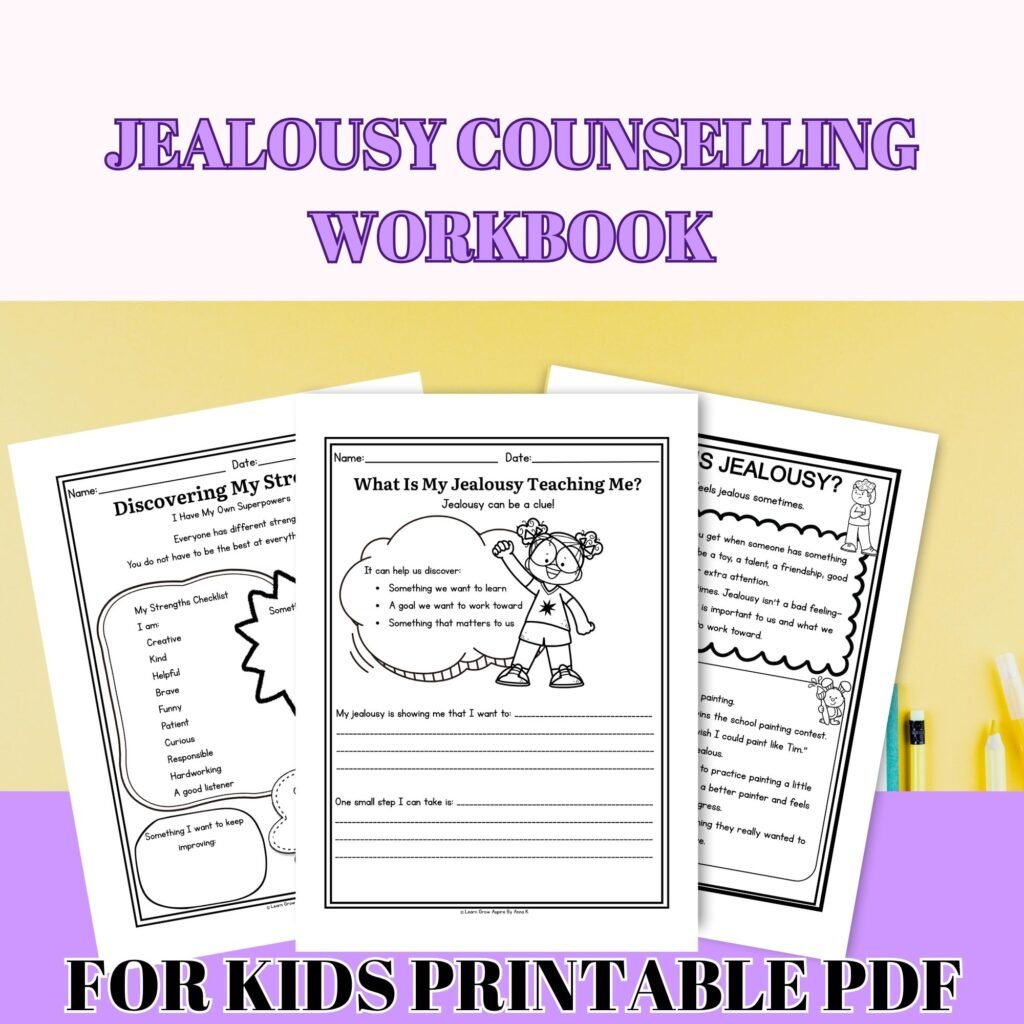
If you’re looking for a ready-to-use resource, my Understanding Jealousy and Coping Strategies Worksheets | Self-Regulation workbook makes teaching these skills simple and engaging.
Inside, children will:
- Learn what jealousy is and why everyone feels it.
- Explore what jealousy is trying to tell them.
- Practice replacing jealous thoughts with helpful thoughts.
- Complete engaging self-reflection activities.
- Learn what they can and cannot control.
- Build gratitude, confidence, and emotional awareness.
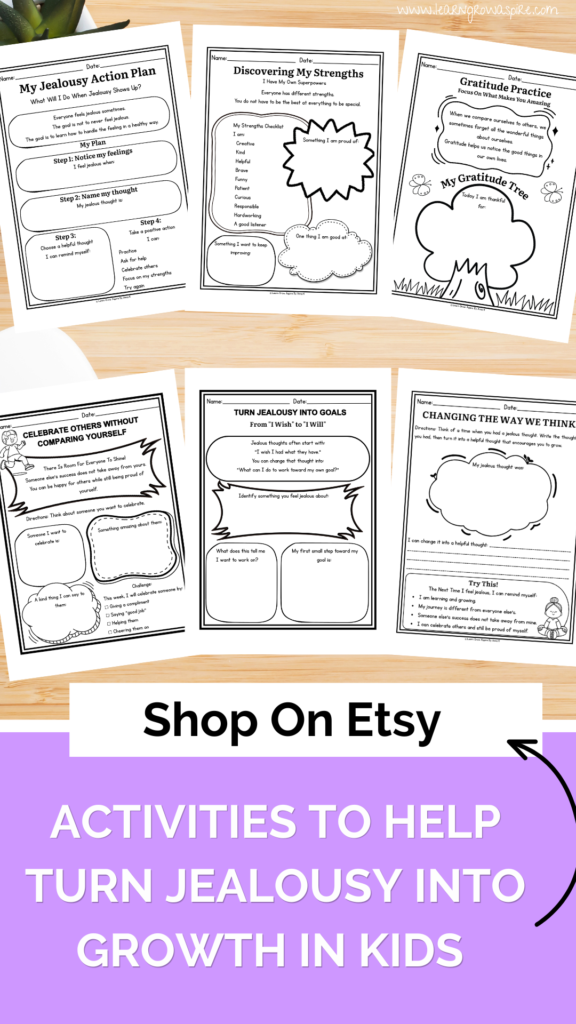
- Create a personal action plan for handling jealousy in healthy ways.
Whether you’re a parent, teacher, school counselor, or therapist, these printable worksheets are designed to help children build emotional awareness while turning jealousy into confidence and growth.
SHOP JEALOUSY COUNSELING PRINTABLE PDF WORKBOOK ON ETSY!
Helping children understand jealousy isn’t about stopping the feeling—it’s about teaching them how to grow through it.
With patience, encouragement, and the right tools, children can learn that jealousy isn’t something to fear. But rather, it can be the first step toward discovering their strengths, setting meaningful goals, and becoming more confident in who they are.
You May Also Like These Posts:
- Positive affirmations for kids printable PDF
- Mindfulness coloring pages for kids free printable PDF
- Core values and beliefs worksheets for kids printable PDF
Pin 10 Healthy Ways To Turn Jealousy Into Growth In Kids
Save how you can help turn your kiddos’ jealous feelings into growth to your coping skills Pinterest board so that you can easily find them when needed. And while on Pinterest, please consider following me on the platform.
Some of the links in this post may be affiliate links. I’m also an Amazon Affiliate and will occasionally link to some of my favorite Amazon products. I will receive a small percentage back if you purchase through my link. You won’t be charged a penny more if you shop through my links. That said, I do NOT recommend anything I do not use and love! Thank you for helping support my blog!

