Use these listening skills activities for elementary students to help them succeed both academically and socially.
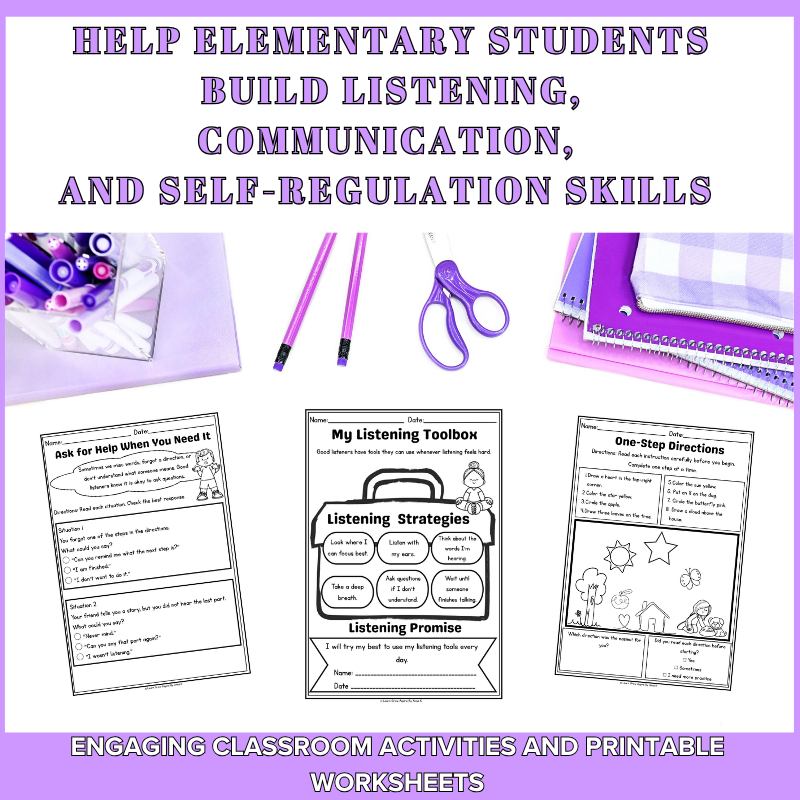
Strong listening skills support everything from following directions and participating in classroom discussions to building friendships, solving problems, and developing confidence.
Yet for many children, listening doesn’t come naturally. They may miss important directions, become easily distracted, interrupt others, or struggle to remember what they’ve heard. These challenges can affect not only their learning but also their relationships with others.
The encouraging news is that listening is a skill that can be taught, practiced, and strengthened over time. Through these engaging activities I’m about to share with you today, children can learn to pay attention, understand spoken information, communicate respectfully, and become more confident learners.
In this article, we’ll explore why listening skills are so important, simple strategies you can use in your classroom or counseling sessions, and practical activities you can use to help students become active, thoughtful listeners.
Why Listening Skills Matter More Than We Realize
“Are you listening?”
It is a phrase we use countless times as teachers or parents throughout the school day.
A child forgets directions.
Another student interrupts before a classmate finishes speaking.
Someone misses an important instruction and then feels frustrated because they do not know what to do.
Often, we assume children are choosing not to listen. But listening is actually a complex skill that develops over time.
Listening requires children to:
- Pay attention
- Process information
- Remember what they hear
- Manage distractions
- Understand another person’s perspective
- Respond appropriately
For many elementary students, especially those who struggle with attention, self-regulation, anxiety, executive functioning, or communication, listening does not always come naturally.
The good news?
Listening is a skill that can be taught, practiced, and strengthened.
Listening Is More Than Just Hearing
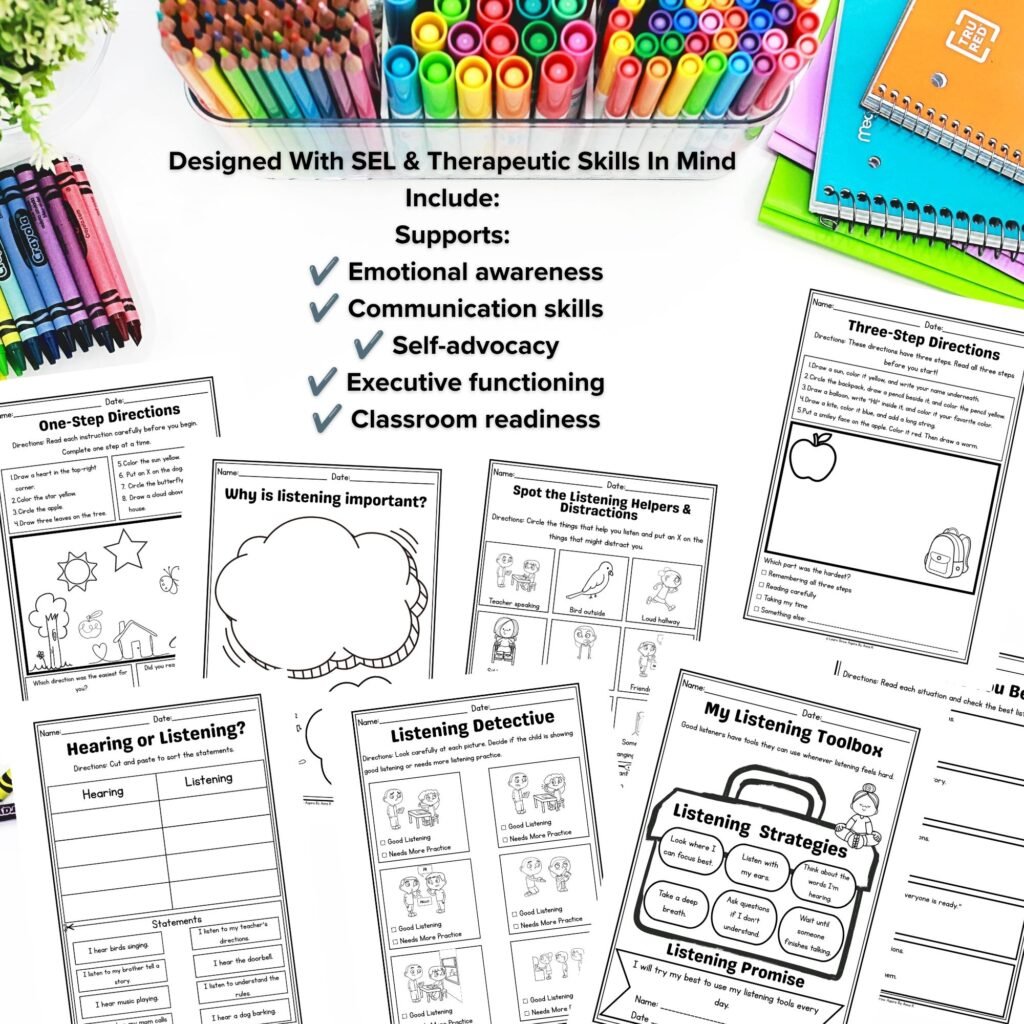
One of the biggest misconceptions children have is that listening and hearing are the same thing.
It’s not!
Hearing is something that happens automatically.
Listening is an active process.
When children are actively listening, they are:
- Paying attention to the words being spoken
- Thinking about what they hear
- Understanding another person’s message
- Responding in a meaningful way
Teaching students this difference helps them understand that becoming a better listener is something they can practice.
Why Listening Skills Are Important in the Classroom
Strong listening skills support almost every area of a child’s school experience.
1. Listening Helps Students Follow Directions
Every day, students are expected to listen to instructions:
“Take out your math notebook.”
“Complete questions one through five.”
“Work with your partner and discuss your answer.”
When students struggle with listening, they may:
- Miss important steps
- Need repeated directions
- Feel overwhelmed
- Become frustrated
- Lose confidence in their abilities
Teaching following directions skills helps students become more independent learners.
2. Listening Builds Stronger Relationships
Listening is also a social skill.
Children who know how to listen are better able to:
- Have conversations
- Understand their peers
- Solve problems
- Show empathy
- Build friendships
When a child feels heard, they feel valued.
Teaching students how to listen is also teaching them how to connect with others.
3. Listening Supports Self-Regulation
Many children are not intentionally ignoring directions—they may be experiencing:
- Distractions
- Big emotions
- Busy thoughts
- Difficulty shifting attention
- Challenges remembering information
This is why listening skills and self-regulation skills go hand in hand.
Students need strategies to recognize:
“What is making listening difficult right now?”
and
“What can I do to help myself focus?”
This shift moves children away from feeling like they are “bad listeners” and toward understanding that they can use tools and strategies to improve.
Tips For Teaching Listening Skills
Listening skills are most effective when they are explicitly taught.
Instead of simply saying:
“Pay attention.”
We can teach students:
- What good listening looks like
- What distractions feel like
- How to bring their attention back
- How to ask for clarification
- How listening impacts others
Here are a few simple activities you can use:
Activity 1: Listening Detective
Ask students:
“What does a good listener look like?”
Show different examples:
- Someone waiting their turn to speak
- Someone interrupting
- Someone paying attention
- Someone distracted
Students can identify which behaviors help communication and which behaviors make listening harder.
This builds awareness and helps children recognize listening behaviors in themselves and others.
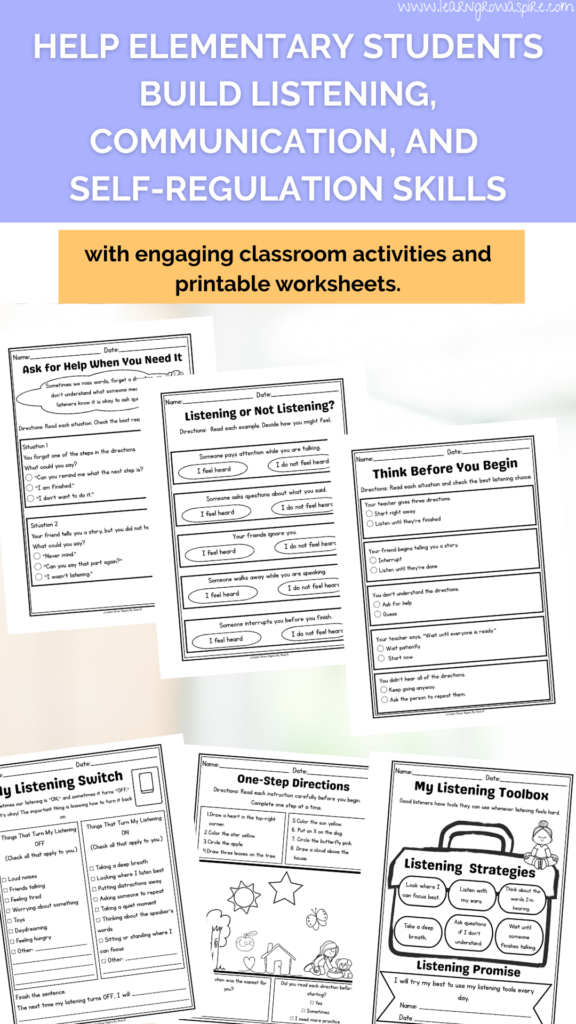
Activity 2: My Listening Switch
Children can reflect on:
“What turns my listening OFF?”
and
“What helps turn my listening ON?”
Students may identify:
- Noise
- Friends talking
- Feeling tired
- Worrying thoughts
They can also discover strategies that help:
- Taking a breath
- Asking questions
- Finding a place to focus
- Removing distractions
This supports self-regulation and problem-solving skills.
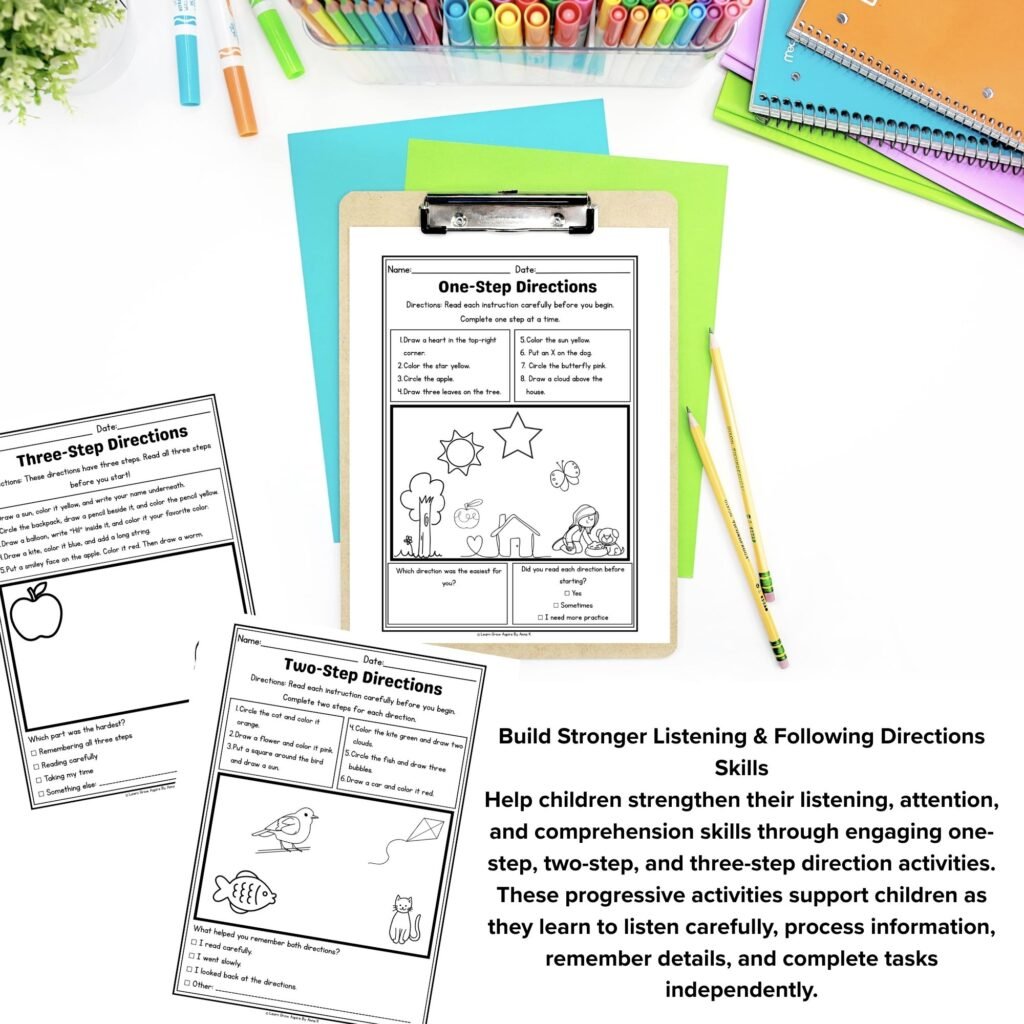
Activity 3: Following Directions Practice
Following directions activities help students strengthen:
- Attention
- Listening comprehension
- Working memory
- Independence
Start with simple one-step directions and gradually build toward two-step and three-step directions.
This allows children to experience success while developing stronger listening skills.
How You Can Use This Resource As A School Counselor
As a school counselor, you often support students with:
- Social skills
- Emotional regulation
- Classroom behaviors
- Communication challenges
- Friendship skills
Listening skills are connected to all of these areas.
A student who learns how to listen is also learning:
- How to respect others
- How to communicate their needs
- How to solve problems
- How to build healthy relationships
Listening activities can be used during:
- Individual counseling sessions
- Small social skills groups
- Classroom guidance lessons
- SEL instruction
- Behavior support interventions
Ready-to-Use Listening Skills Resource For Kids
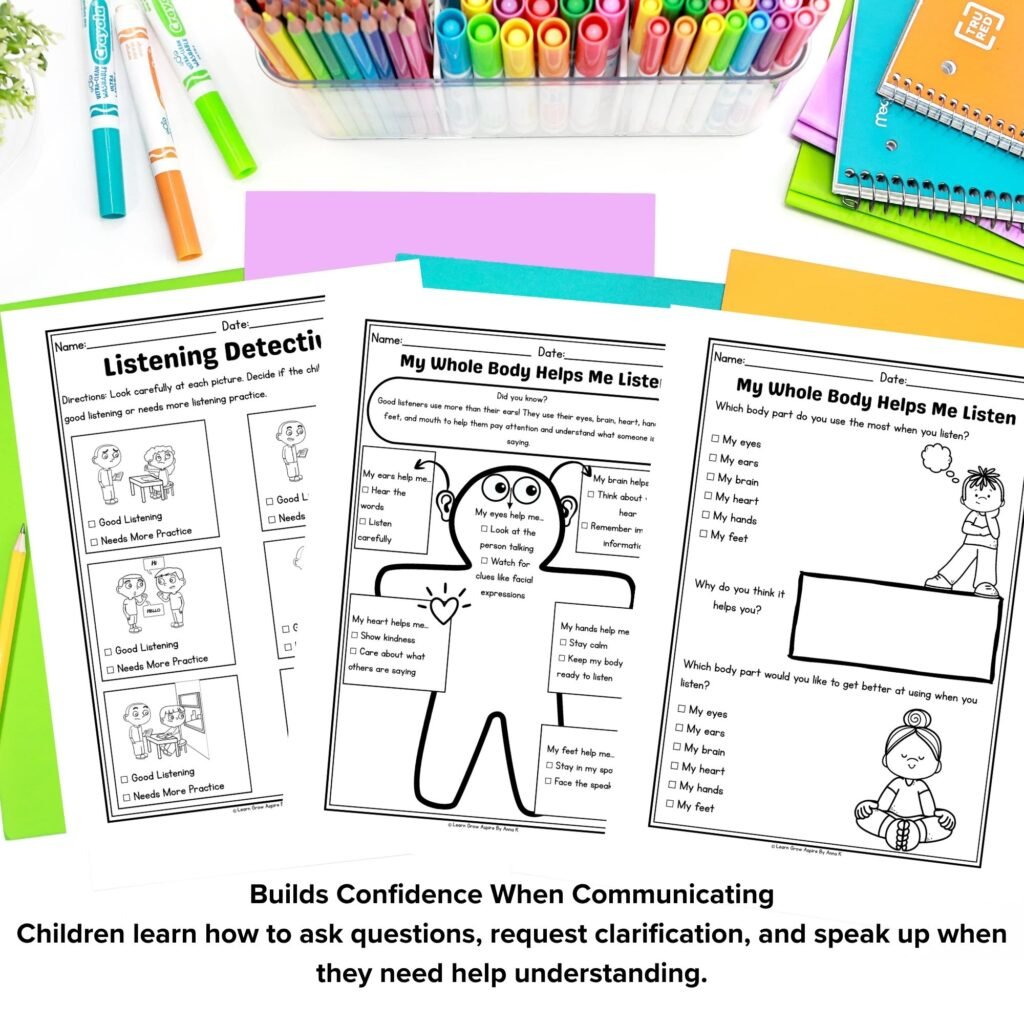
To make teaching these skills easier, I created a listening skills activities & worksheets resource designed for children in grades 2-4.
This resource includes 22 printable activities that help students develop:
- Active listening skills
- Following directions
- Communication skills
- Self-regulation strategies
- Social awareness
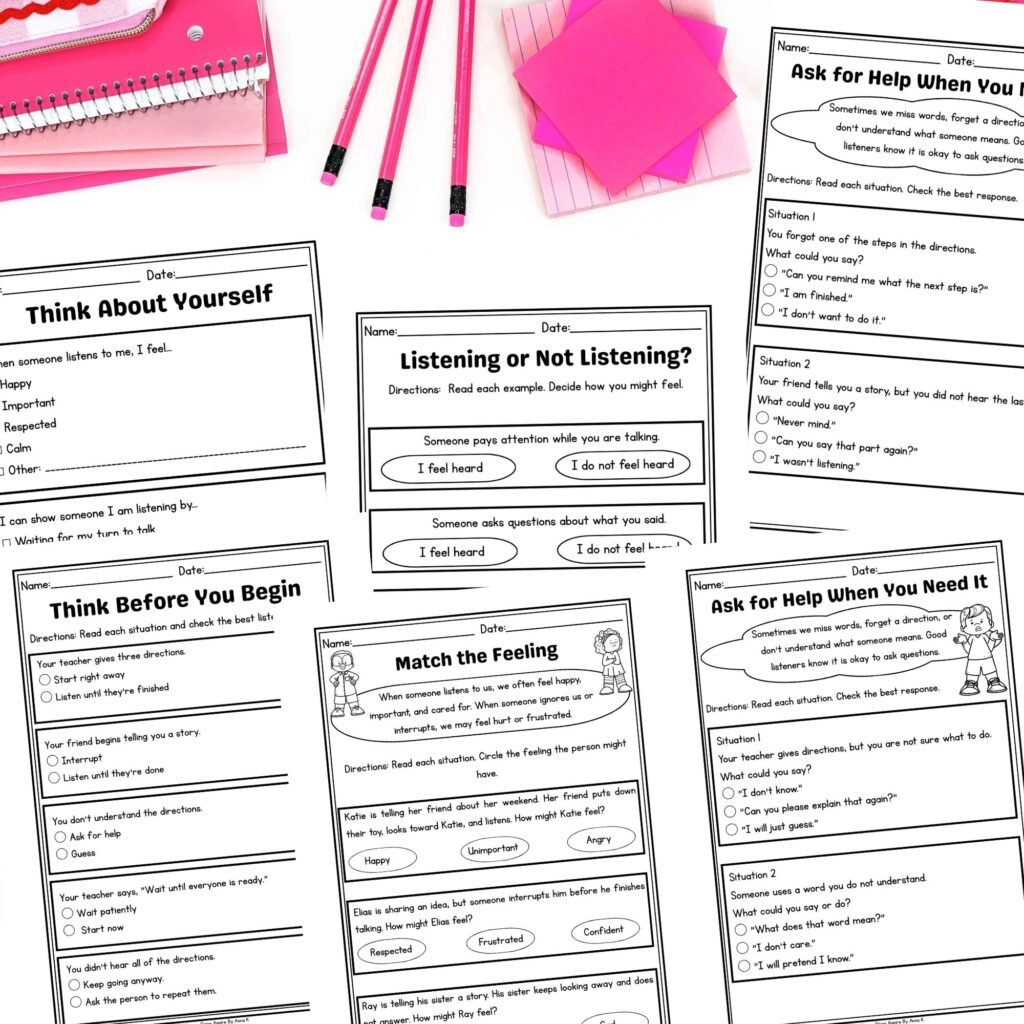
- Self-advocacy skills
Students will practice:
- Understanding what listening means
- Recognizing helpful listening behaviors
- Identifying distractions
- Following one-step, two-step, and three-step directions
- Understanding how listening affects feelings
- Asking for help when they do not understand
The activities are designed to be simple, engaging, and easy to use in classrooms, counseling sessions, intervention groups, and therapy settings.
Help Children Become Confident Communicators
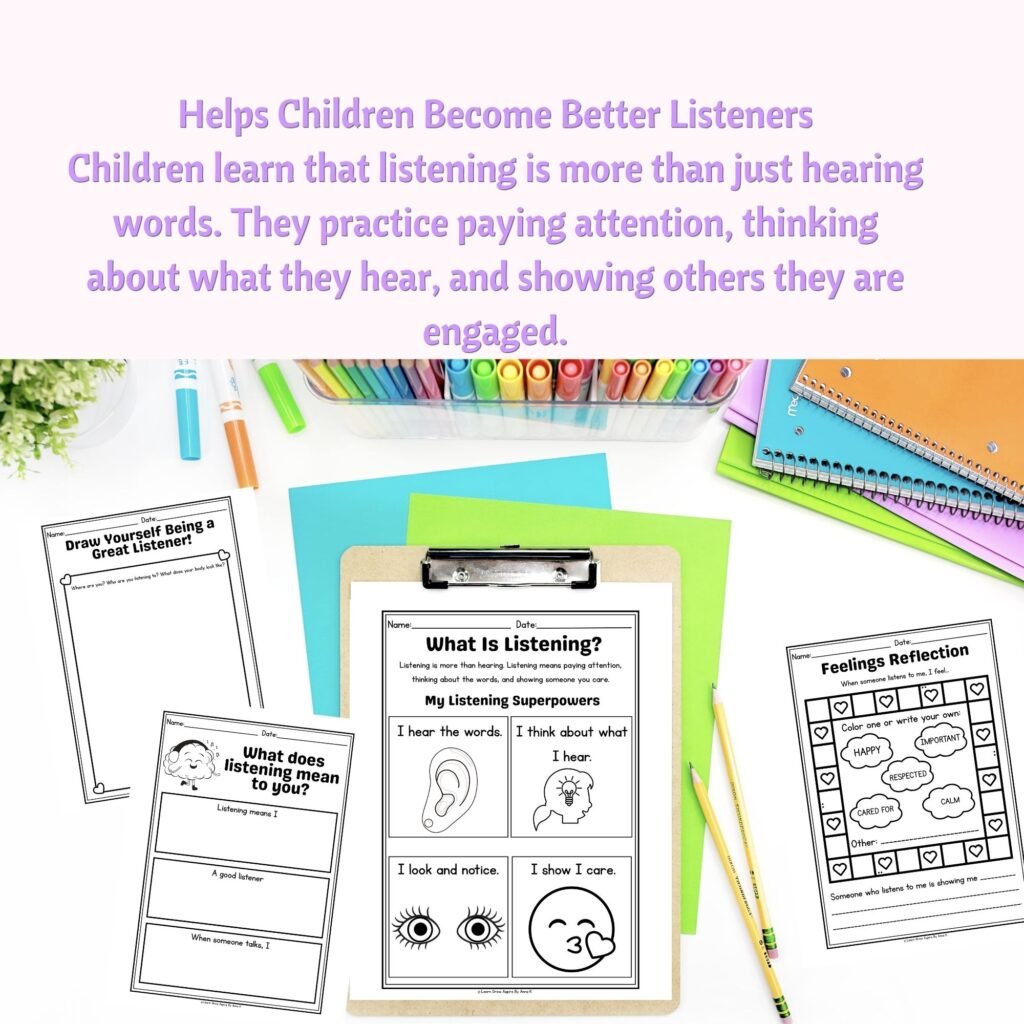
Listening is a skill children will use for the rest of their lives.
When we teach students how to listen, we are not just helping them follow classroom directions; we are helping them:
- Feel confident communicating
- Build stronger relationships
- Understand others
- Advocate for themselves
- Become more independent learners
Every child deserves to feel heard.
And every child deserves the tools to learn how to listen.
SHOP LISTENING & COMMUNICATION SKILLS ACTIVITIES & WORKSHEETS
Pin These Listening Worksheets & Activities
Save these listening skills activities for elementary students to your SEL Pinterest board so that you can easily find them when needed. And while on Pinterest, please consider following me on the platform.
Some of the links in this post may be affiliate links. I’m also an Amazon Affiliate and will occasionally link to some of my favorite Amazon products. I will receive a small percentage back if you purchase through my link. You won’t be charged a penny more if you shop through my links. That said, I do NOT recommend anything I do not use and love! Thank you for helping support my blog!

