Teaching kindness is one of the most important social-emotional skills kids can learn. These Kindness Activities for Kindergarten, Grade 1 & Grade 2 can help children understand empathy, build friendships, recognize the feelings of others, and practice positive behaviors in everyday situations.
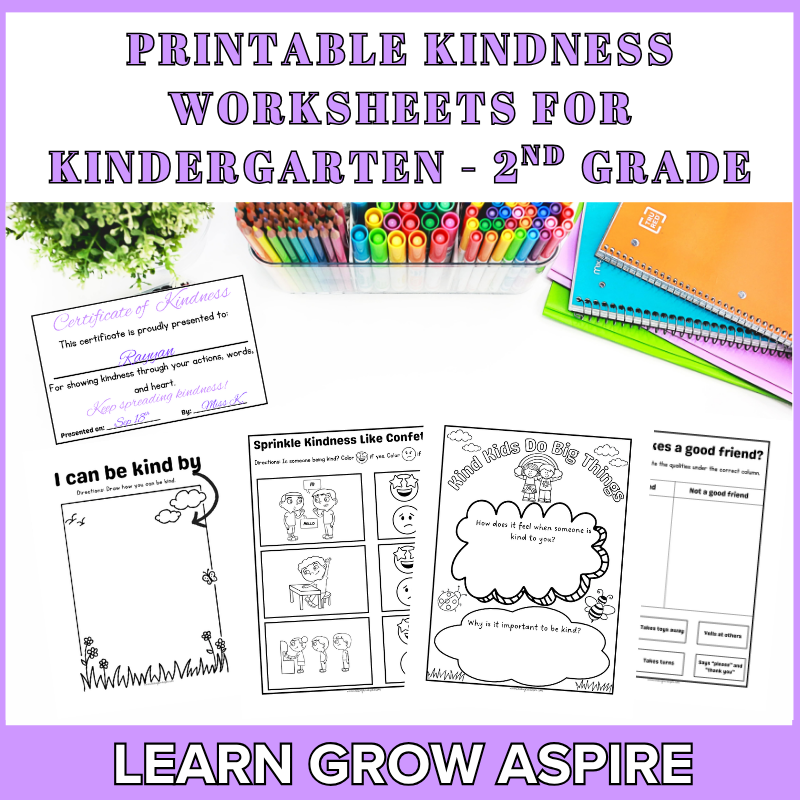
It’s important for us as teachers, school counselors, and/or parents to create opportunities for children to practice kindness doesn’t have to be complicated.
Through simple conversations, classroom activities, and hands-on experiences, kids can begin developing the skills they need to become caring and respectful individuals.
In this blog post, we’ll explore fun and meaningful kindness activities designed specifically for Kindergarten, Grade 1, and Grade 2 students that can be used in classrooms, counseling sessions, or at home.
Why Is Teaching Kindness Important?
Kindness helps children develop empathy, emotional awareness, and positive social skills. When children learn to recognize how their actions affect others, they begin building stronger friendships, resolving conflicts more peacefully, and creating more welcoming environments both in and outside the classroom.
Teaching kindness also supports many important social-emotional learning skills, including:
- Empathy
- Respect
- Cooperation
- Communication
- Problem-solving
- Emotional regulation
- Positive relationship building
The earlier children begin practicing these skills, the more naturally they become part of their daily lives.
15 Kindness Activities For K – Grade 1-2
1. Start Each Day with a Kindness Challenge
Begin the morning by giving students one simple kindness goal to complete during the day.
Some ideas include:
- Smile at someone.
- Help clean up.
- Invite a classmate to play.
- Say something encouraging.
- Hold the door open for someone.
- Thank an adult for helping you.
At the end of the day, invite students to share how they completed their kindness challenge.
You can snag this free printable PDF of the winter daily kindness challenge.
2. Read Books That Teach Kindness
Storytime creates wonderful opportunities to discuss empathy and caring. Books such as Kindness is my superpower and Kindness makes me stronger are two of my favourite books to read to kids around this age,
After reading, ask questions like:
- How did the character show kindness?
- How do you think the other person felt?
- What would you have done?
- Have you ever experienced something similar?
These discussions encourage children to think beyond their own perspective.
3. Create a Kindness Jar
Place a jar somewhere visible in the classroom.
Whenever students notice someone doing something kind, they should write it on a small piece of paper, alongside their classmate’s name, and place it in the jar.
At the end of each week, read several examples aloud to celebrate positive choices.
4. Practice Using Kind Words
Many young children want to be kind but aren’t always sure what to say.
Practice phrases like:
- Can I help you?
- Would you like to play with us?
- Thank you.
- Great job!
- I’m sorry.
- Are you okay?
Role-playing everyday situations helps children feel more confident using kind language.
5. Make Kindness Cards
Invite children to create cards for people who make a difference in their lives.
They might make one for:
- Parents
- Grandparents
- Teachers
- School office staff
- Custodians
- Bus drivers
- Friends
This simple activity teaches gratitude while helping children recognize acts of kindness around them.
6. Role-Play Everyday Situations
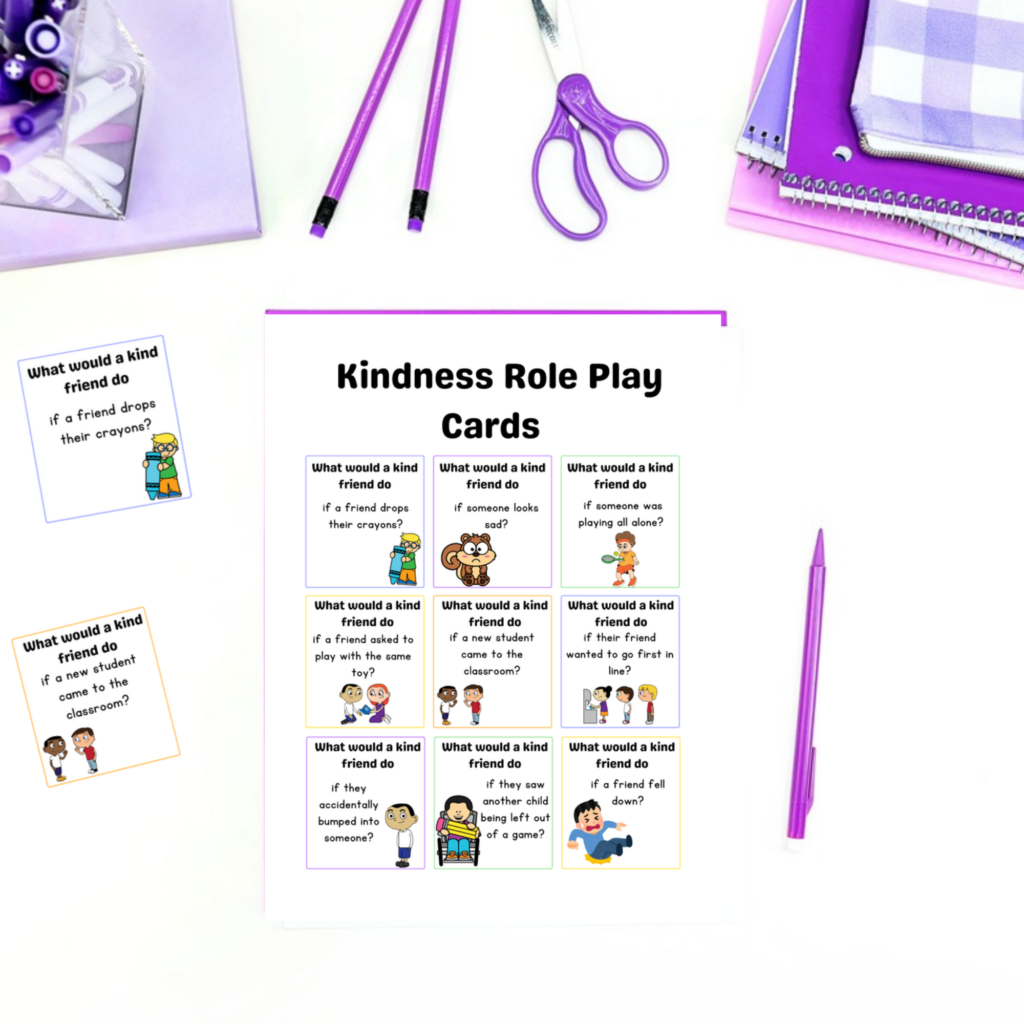
Present simple scenarios and ask children how they could respond kindly.
For example:
- Someone falls on the playground.
- A friend forgot their lunch.
- Someone is sitting alone.
- A classmate loses a game.
- Someone drops their school supplies.
Role-playing helps children prepare for real-life situations before they happen.
7. Build a Classroom Kindness Tree
Draw or display a large tree in your classroom.
Each time a student performs a kind act, add a paper leaf with their act of kindness written on it.
Watching the tree grow throughout the school year reminds students that every small act matters.
8. Give Compliments
Gather students in a circle and encourage them to share something kind about another classmate.
Compliments might include:
- You’re a good helper.
- You’re a great friend.
- I like playing with you.
- You always make me smile.
This activity helps build confidence and strengthens classroom relationships.
9. Practice Kindness at Home
Parents can encourage kindness through simple daily routines.
Children can:
- Help set the table.
- Feed a pet.
- Pick up their toys.
- Help a sibling.
- Write a thank-you note.
- Help carry groceries.
These everyday responsibilities teach children that kindness starts at home.
10. Celebrate Acts of Kindness
Children repeat behaviors that receive positive attention.
When you notice kindness, acknowledge it.
For example:
“I noticed you helped your friend without being asked.”
“That was thoughtful of you to include someone new.”
“I saw how patient you were while waiting your turn.”
Specific praise helps children understand exactly what kindness looks like.
11. Create a Kindness Bulletin Board
Invite students to draw or write about kind things they’ve done or seen others do.
As the board fills up, children begin to see how many opportunities there are to make someone’s day a little brighter.
12. Work Together on a Kindness Mural
Give students a large piece of paper where everyone contributes something positive.
They might draw helping hands, smiling faces, hearts, or pictures of classmates showing kindness.
Collaborative art reinforces teamwork while creating a classroom display everyone can be proud of.
13. Play “Secret Kindness”
Assign each student a classmate to encourage through small acts of kindness during the day.
At the end of the activity, reveal everyone’s “secret friend” and discuss how those kind actions made people feel.
14. Talk About Feelings
Use picture cards, facial expressions, or simple scenarios to help children identify emotions.
Ask questions such as:
- How do you think they feel?
- What could you do to help?
- What would make them smile?
Understanding emotions is the first step toward developing empathy.
15. Reward Effort, Not Perfection
Kindness isn’t about being perfect—it’s about making thoughtful choices.
Celebrate children for trying, learning, and growing rather than expecting perfect behavior every day.
This creates a classroom where mistakes become learning opportunities.
Tips for Encouraging Kindness Every Day
Children learn kindness by watching the adults around them.
Some simple ways to reinforce kindness include:
- Model respectful language.
- Encourage teamwork instead of competition.
- Read stories that promote empathy.
- Give children opportunities to help others.
- Celebrate kindness just as often as academic success.
- Discuss how actions affect other people’s feelings.
When kindness becomes part of your daily classroom routine, children begin to practice it naturally.
Looking for Ready-to-Use Kindness Activities?
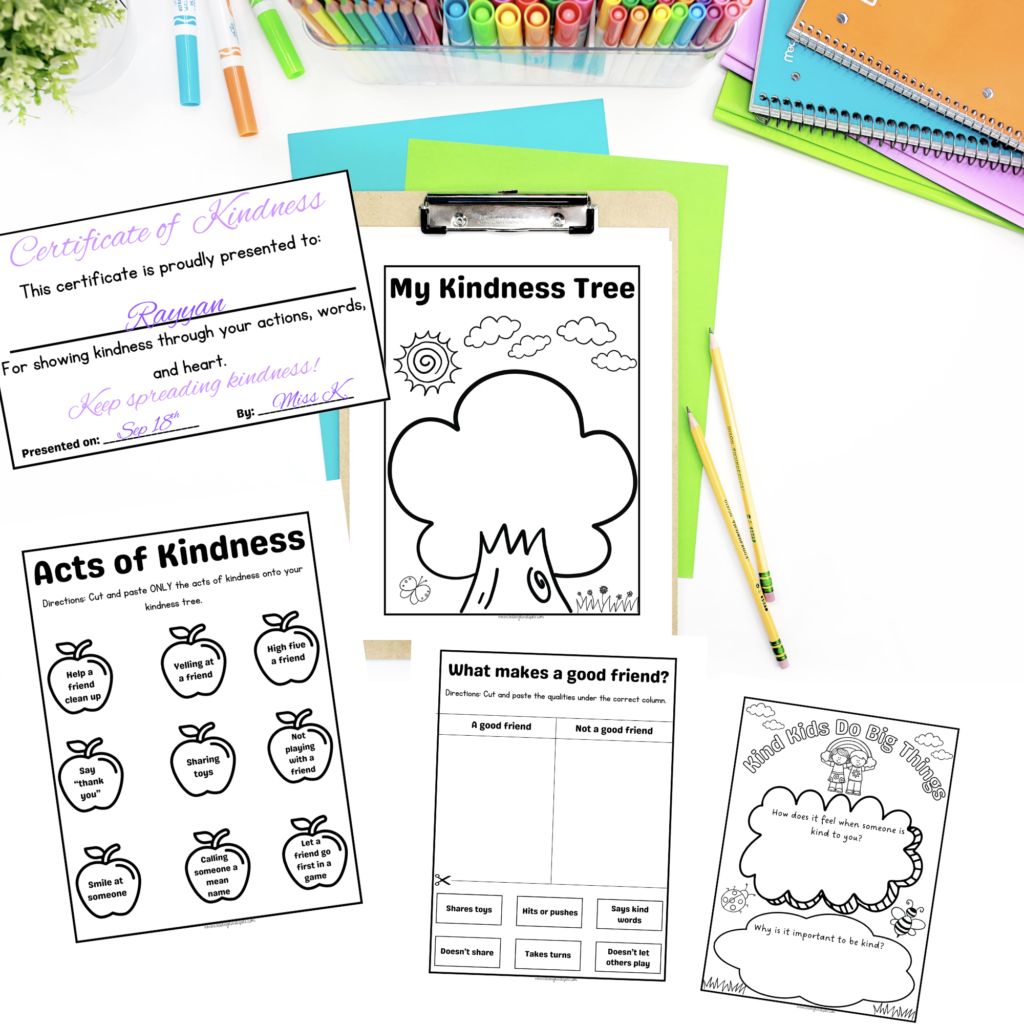
Planning engaging SEL lessons can take time, especially during busy school weeks.
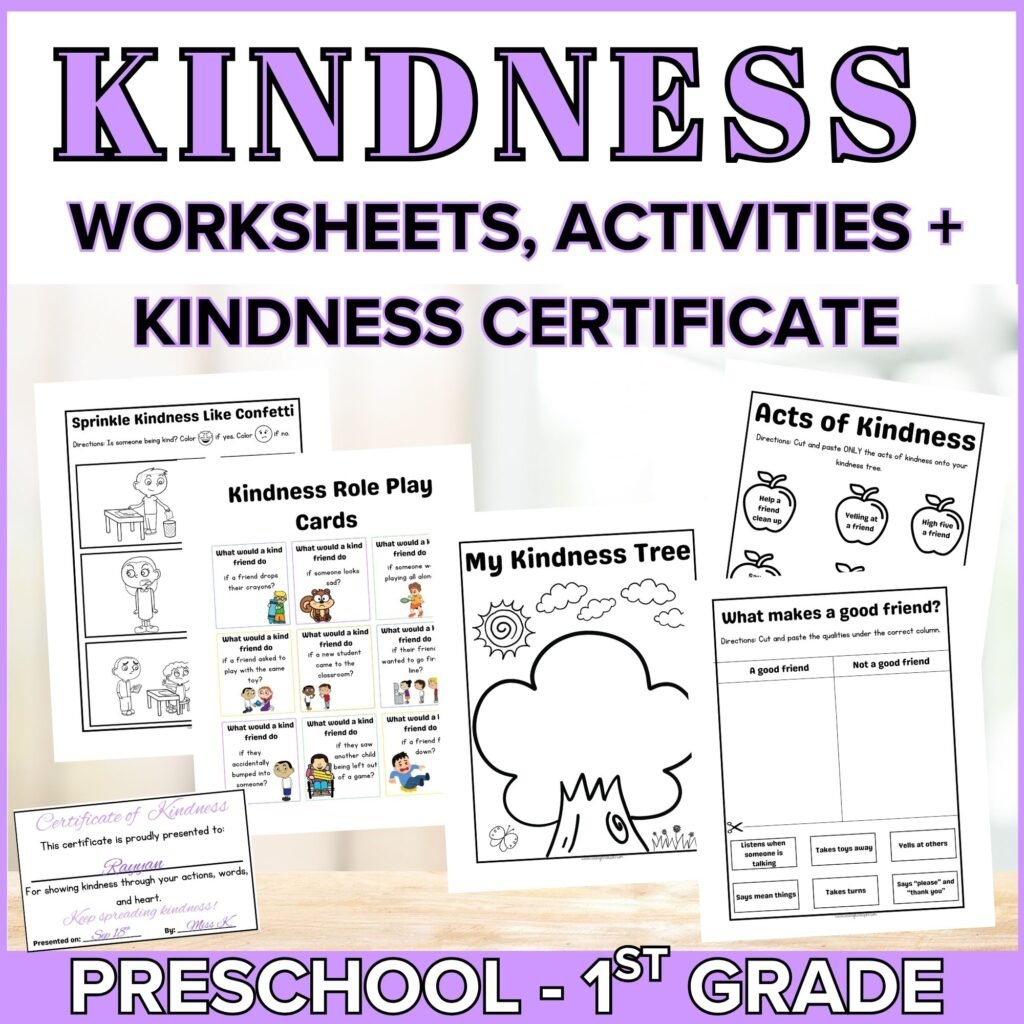
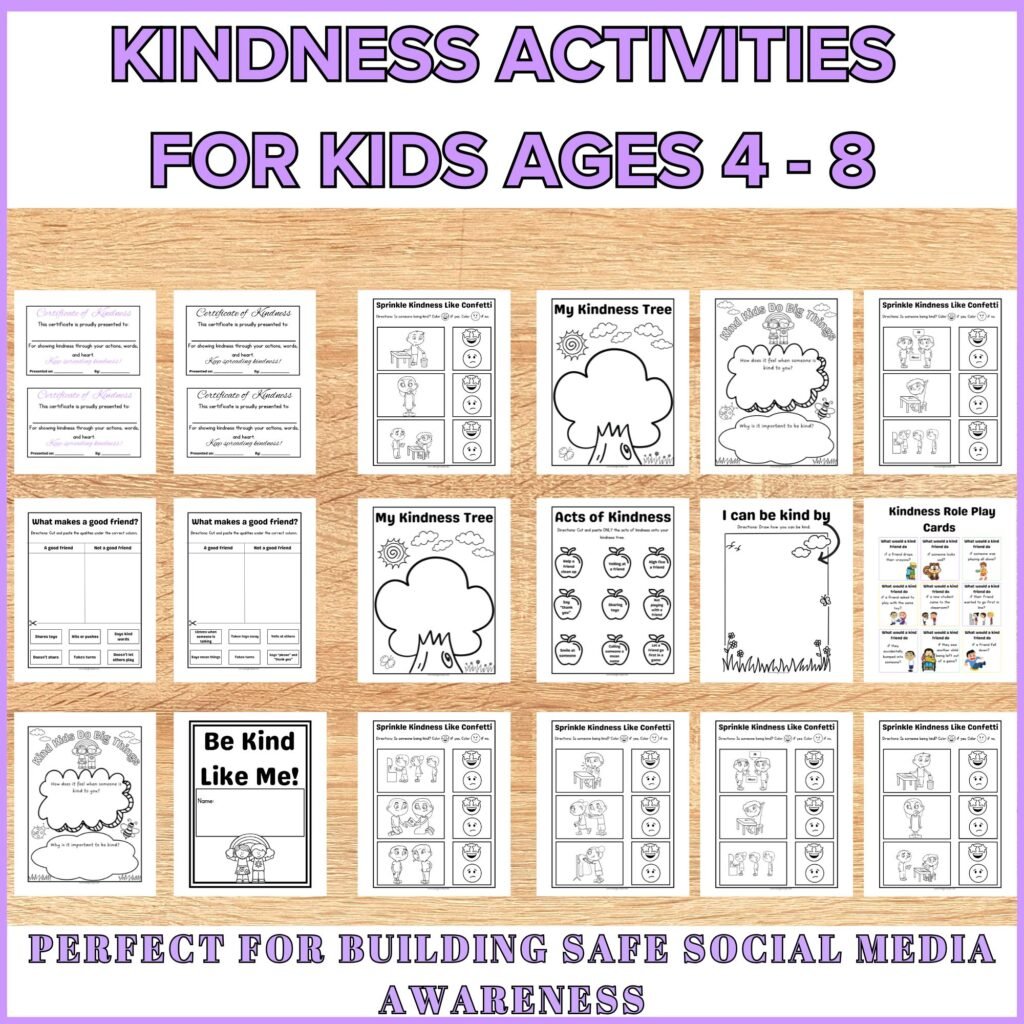
If you’re looking for a low-prep resource, my Kindness Activities for Kindergarten, Grade 1 & Grade 2 printable pack is designed to help children explore empathy, friendship, and positive choices through age-appropriate activities.
The resource includes:
- Printable kindness worksheets
- Discussion activities that encourage meaningful conversations
- A kindness certificate to celebrate students’ efforts
These activities work well for classroom lessons, kindness week, morning meetings, school counseling sessions, centers, or even at-home learning.
Shop My Kindness Worksheets On ETSY!
Kindergarten & Grade 1-2 Kindness Activities
Teaching kindness is one of the greatest gifts we can give to our children. Every encouraging word, helping hand, and thoughtful action helps children build the empathy and confidence they need to form positive relationships throughout their lives.
Whether you introduce one kindness activity each week or make kindness part of your daily routine, every small step helps create classrooms and homes where children feel valued, respected, and encouraged to care for others.
The goal isn’t simply to teach children to “be nice”. It’s to help them understand how their actions can make someone else’s day a little brighter—and that’s a lesson they’ll carry long after they leave your classroom.
Save These Kindness Activities For K – Grade 2
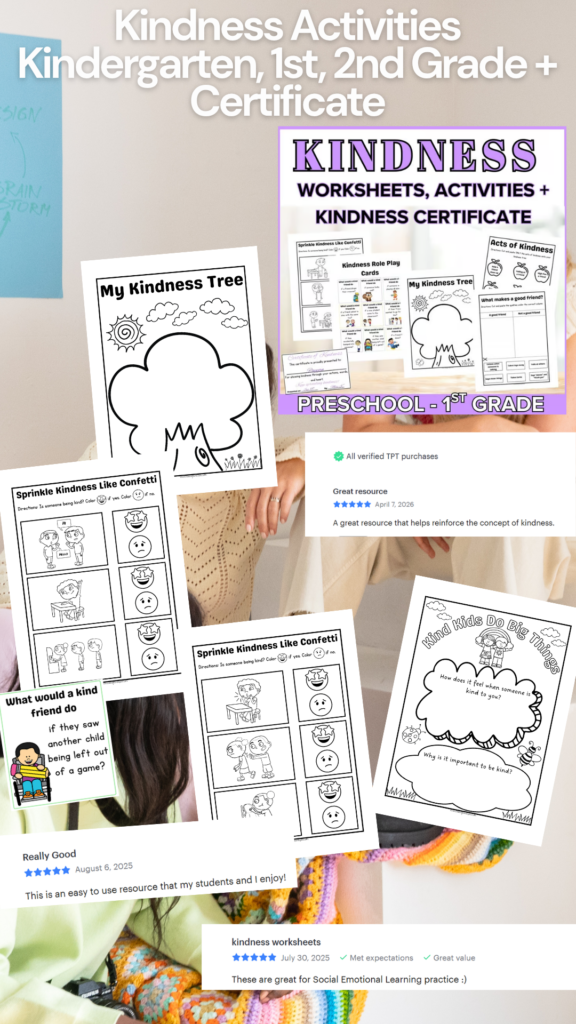
Make sure to pin these Kindness Activities For Kindergarten & Grade 1-2 to your Pinterest social skill board so that you can easily find them when needed. And while on Pinterest, please consider following me on the platform.
Some of the links in this post may be affiliate links. I’m also an Amazon Affiliate and will occasionally link to some of my favorite Amazon products. I will receive a small percentage back if you purchase through my link. You won’t be charged a penny more if you shop through my links. That said, I do NOT recommend anything I do not use and love! Thank you for helping support my blog!

