Self control worksheets can end up being one of those classroom tools you reach for again and again. Especially when you have students who feel their emotions quickly and react before they even have time to think.
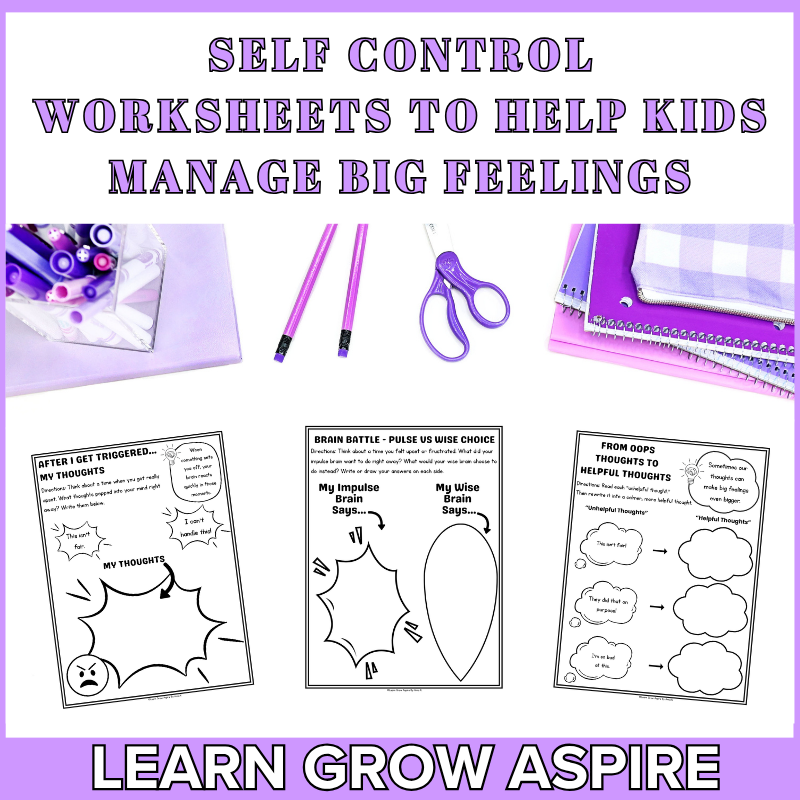
I’m sure you can already think of that student/s.
The kid who gets frustrated and shuts down or blurts out something as soon as it pops into their head.
The child who cries over a small mistake, argues when corrected, or gets upset when things do not go their way.
After working with these students, perhaps you began to realize that these moments are not always just behavioral issues.
In fact, a lot of the time, these kids are already struggling with managing big feelings.
They are feeling anger, embarrassment, frustration, disappointment, or overwhelm faster than their coping skills can keep up.
That is exactly why I always find having simple self control worksheets and low-prep emotion regulation activities so helpful.
Because sometimes students do not need another reminder. Instead, they need direct practice learning what to do with those emotions.
Teaching Kids To Slow Down Their Big Feelings
Is this even possible? I bet you’re wondering – and so did I for a long time.
As a teacher, chances are you are seeing a lot of children who have huge emotions, but very few tools for handling them.
So when something feels unfair, hard, or upsetting – what do they do?
They react immediately.
Yelling, arguing, or sometimes even in tears, and completely shutting down.
And then you spend half your day trying to pull them back.
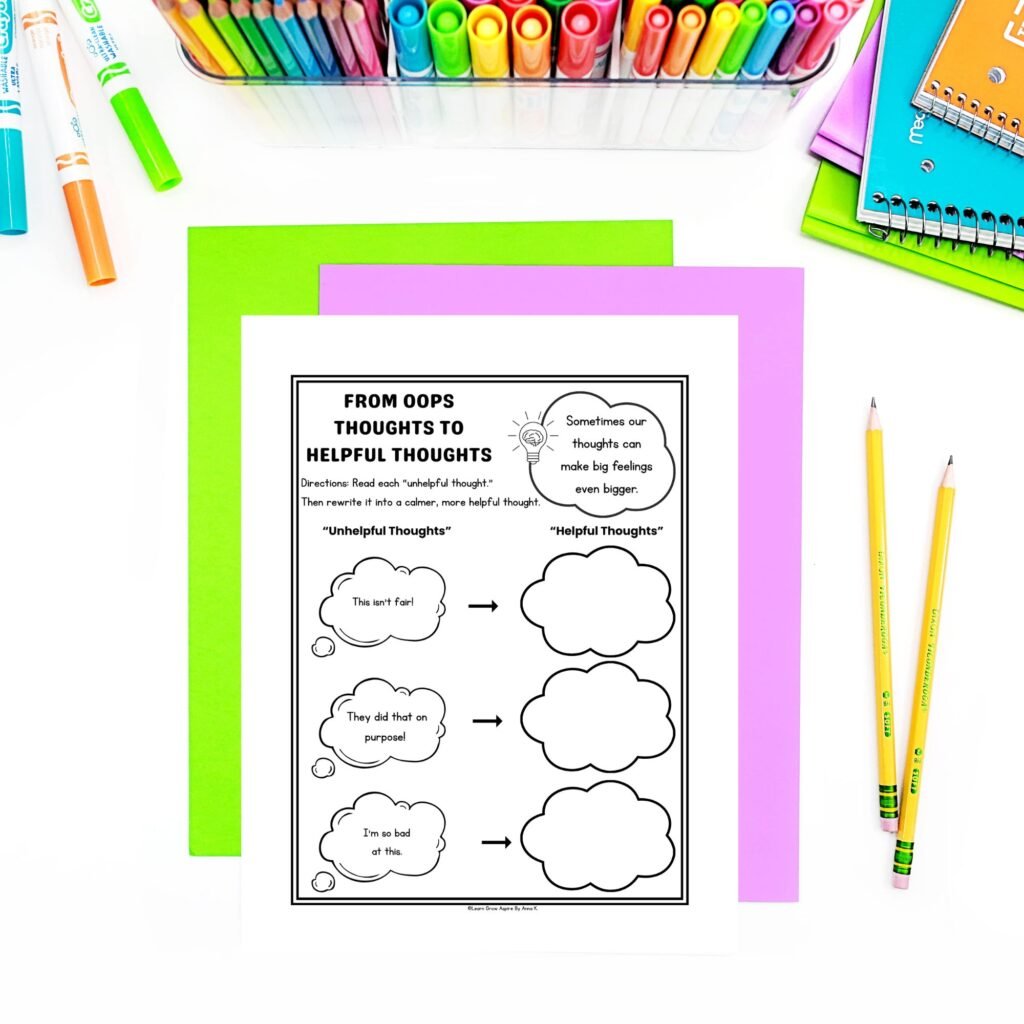
This is why self-regulation worksheets can be so valuable.
These worksheets give students a chance to reflect while calm instead of trying to learn the lesson in the middle of a meltdown.
Helping them to notice:
- What does my body feel like when I am upset?
- Why do I react so fast?
- What usually makes things worse?
- The next time I feel X emotions, maybe I can try this coping strategy.
- That is where the emotional learning starts.
The Resource That Will Change Small Daily Moments
What I love about using emotion regulation activities consistently is that the work slowly starts showing up in real classroom situations.
A student pauses and thinks before blurting. Or, a child who normally cries starts using words first.
Another kid who usually gets frustrated, but they do not react in their usual way.
While these are not huge, dramatic overnight changes, they are the little shifts that will start making your classroom feel calmer.
And those little shifts matter.
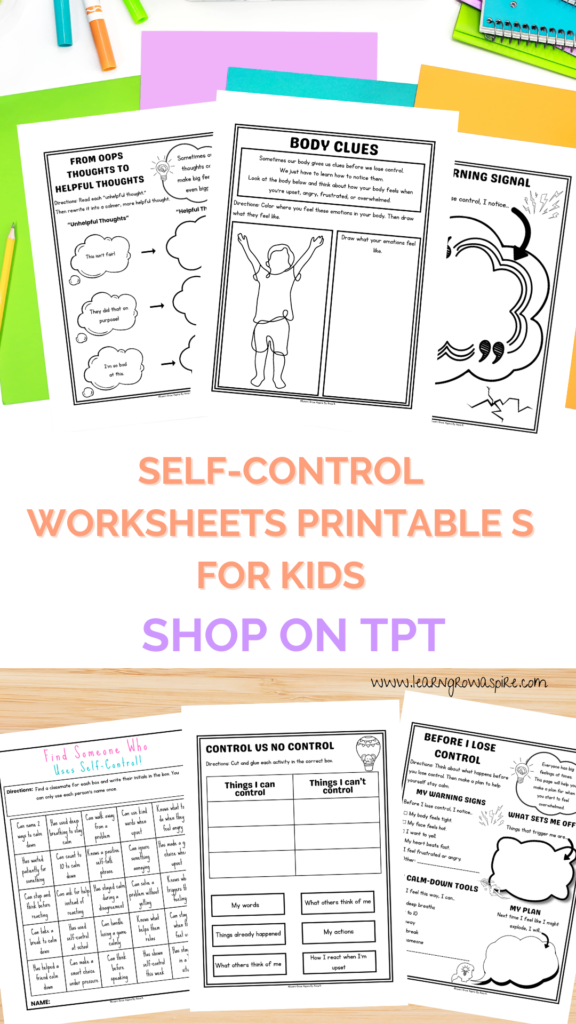
My friend, that’s why I created these self-control worksheets to help kids manage big feelings.
Because I believe students need repeated opportunities to think through emotions before the next hard moment happens.
Students Need More Than Just “Calm Down”
We have all said it to our kids before.
- Take a breath.
- Use kind words.
- Make a better choice.
- Calm your body.
But the reality is, many students do not really know how to do those things when they are upset.
Their emotions get big first, and their self-control skill comes second.
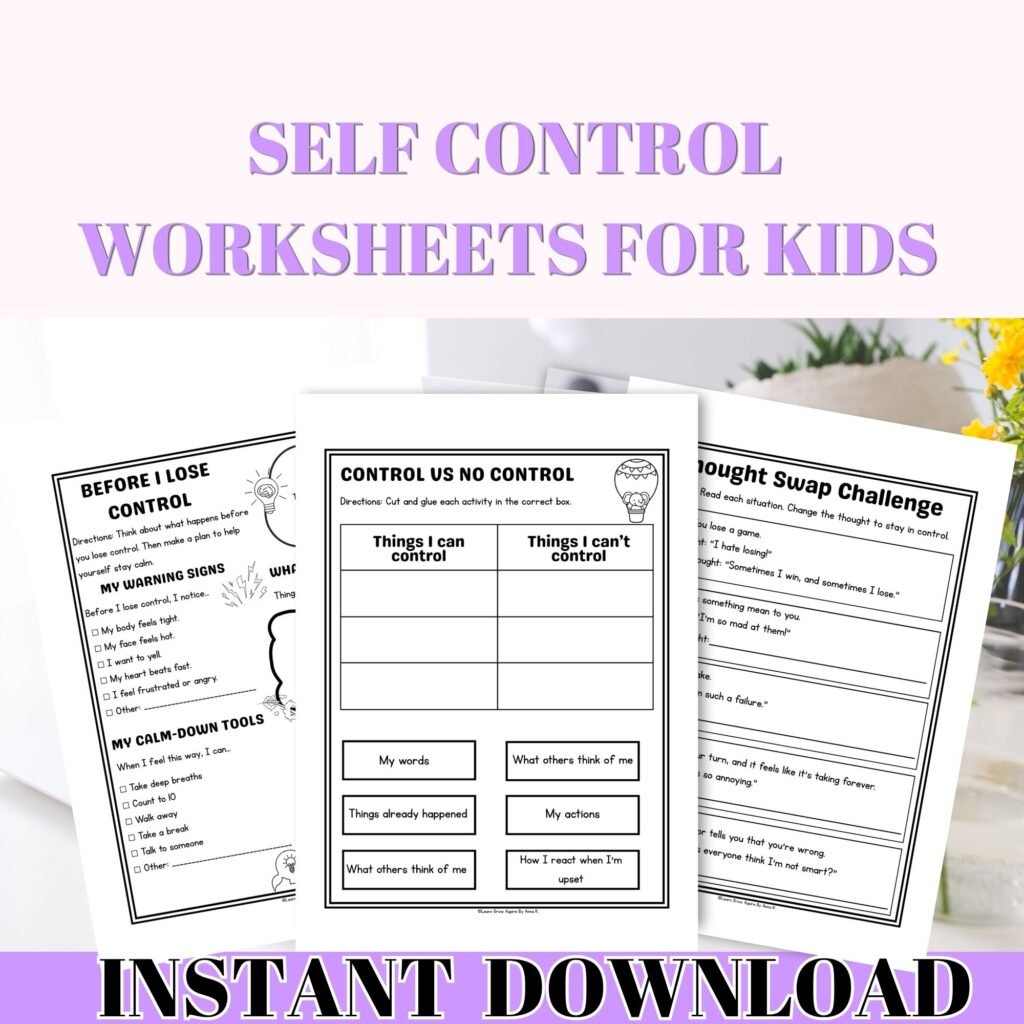
That is why these printable coping skills activities for kids can be such a helpful part of SEL support.
They help children work through:
- identifying feelings,
- recognizing triggers,
- sorting healthy vs unhealthy reactions,
- practicing calming strategies,
- and learning better choices.
These are skills that have to be taught over and over.
The SEL Resource You Keep Coming Back To
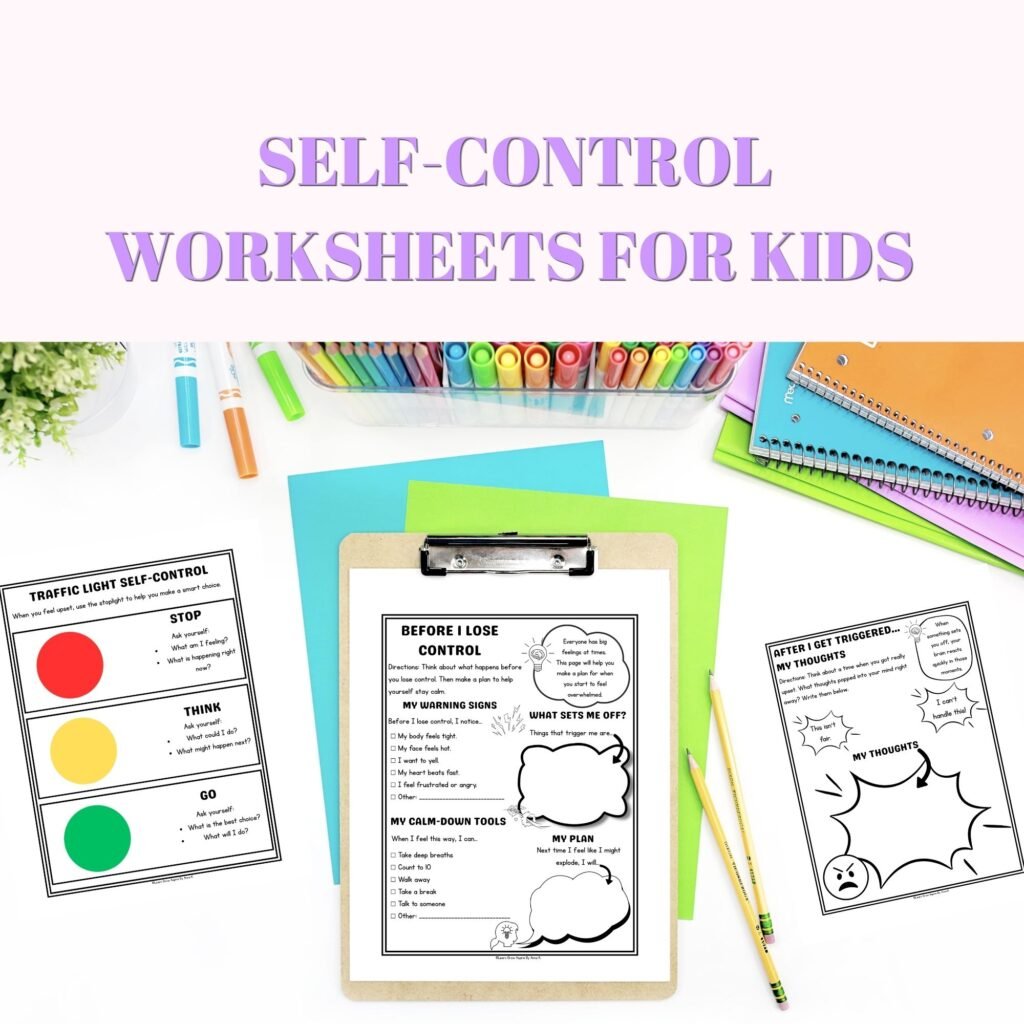
This is not a one-time lesson.
Because managing emotions is not a one-time lesson.
You can use these self-control worksheets during:
- SEL block
- calm down, corner reflection
- behavior intervention
- counseling support
- morning work
- one-on-one student conferences
- social skills groups
And every time students revisit those same emotional language patterns, the self-awareness gets a little stronger.
That repeated practice is what helps growth stick.
Helping Students Build the Pause Before the Reaction
At the end of the day, that is really what we are trying to teach.
The pause.
That tiny moment between feeling angry and yelling.
Feeling frustrated and arguing.
Embarrassed and shutting down.
Or,
Feeling impulsive and blurting.
These SEL worksheets for big feelings will help students slowly build that pause.
And once that starts happening, classroom behavior often starts feeling less reactive and much more manageable.
If you know you have a few students this year who react quickly and struggle to slow down, this printable SEL workbook can be such a helpful tool to keep on hand.
You May Also Like These Blog Posts
Here are some other posts you may want to check out:
- Upper elementary character education activities
- How to teach personal boundaries to kids
- Free printable calm down countdown for kids
Pin These Self-Control Worksheets For Kids
Make sure to save these worksheets to your SEL Pinterest board so that you can easily access them when needed. And while on Pinterest, please consider following me on the platform.
Some of the links in this post may be affiliate links. I’m also an Amazon Affiliate and will occasionally link to some of my favorite Amazon products. I will receive a small percentage back if you purchase through my link. You won’t be charged a penny more if you shop through my links. That said, I do NOT recommend anything I do not use and love! Thank you for helping support my blog!

