“I don’t know where to start.” If you work with teenagers, you have probably heard some version of that sentence more times than you can count. It comes from the student staring at a blank document, the teen who melts down when the to-do list piles up, and the bright kid whose grades don’t reflect what they can do. That’s the main reason I created this executive functioning toolkit for teens.
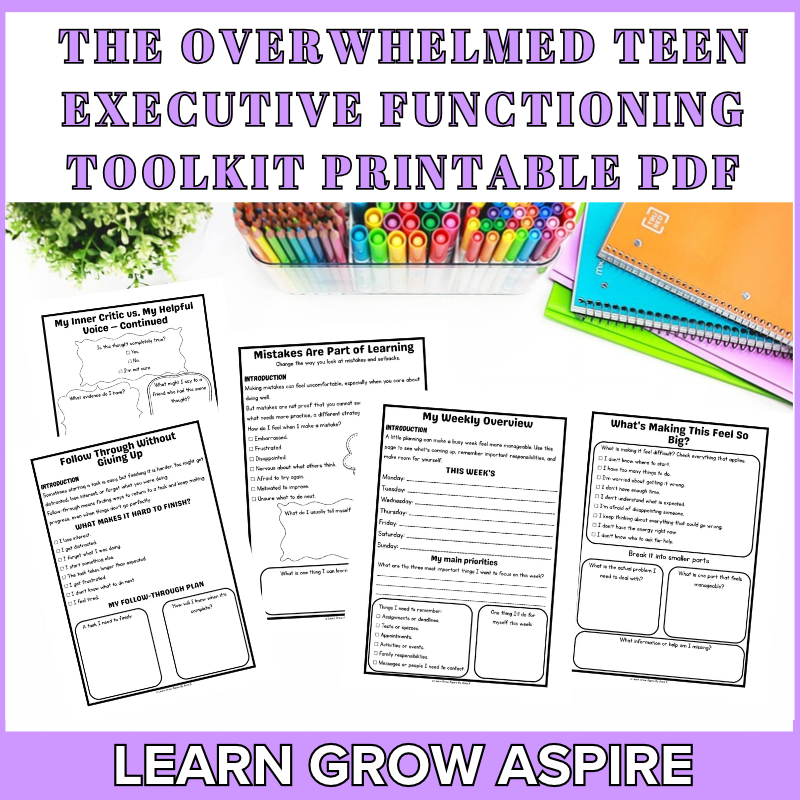
To give them something concrete to hold onto when their thinking feels tangled.
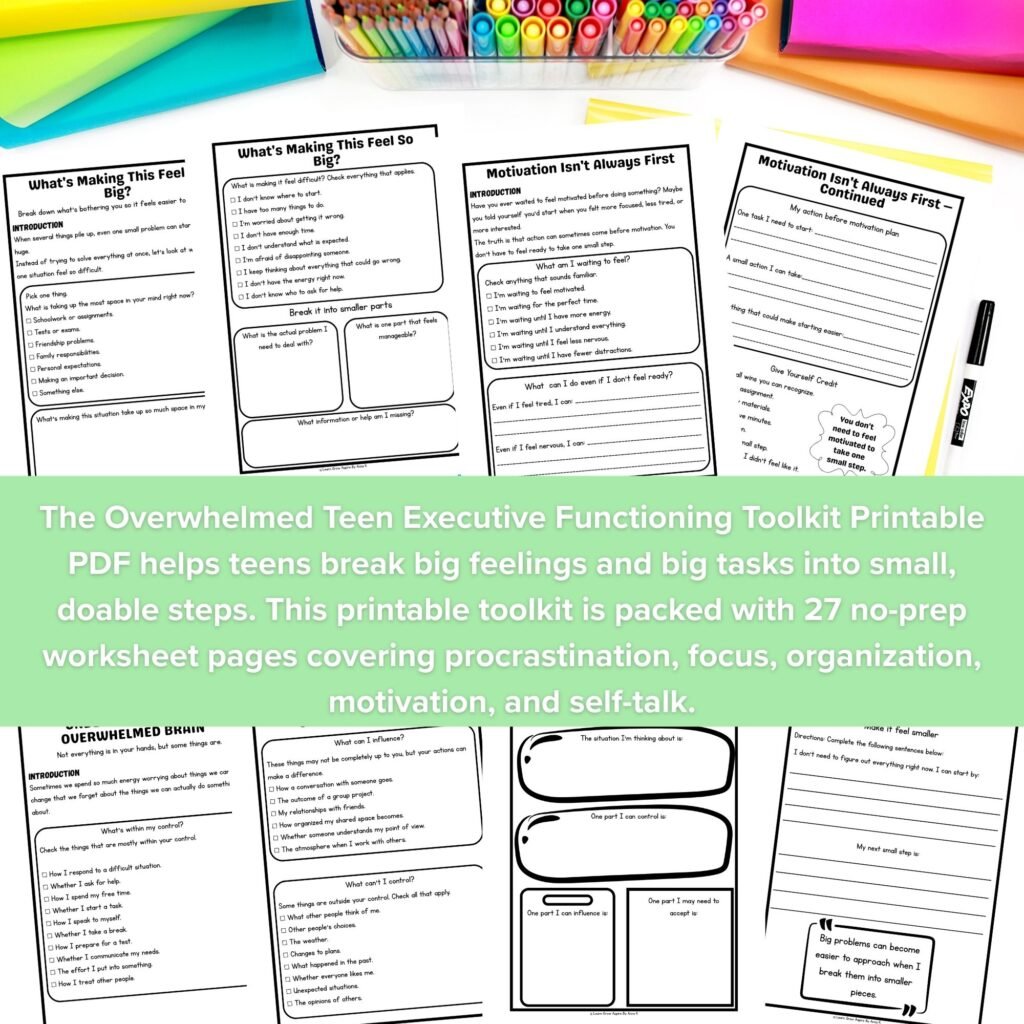
This Overwhelmed Teen Executive Functioning Toolkit is a 27-page, no-prep resource built to help teens break big feelings and big tasks into small, doable steps. It was created with school counselors, therapists, teachers, and parents in mind.
Why Teens Feel So Overwhelmed?
Executive function is the brain’s management system. It covers planning, prioritizing, starting tasks, staying focused, regulating emotions, and following through.
These skills continue developing well into early adulthood, yet the demands on teens ramp up quite quickly. Multiple teachers, long-term projects, digital distractions, social pressure, and extracurricular commitments all compete for limited mental bandwidth.
When a teen’s workload outpaces their current skills, the results can look like laziness, defiance, or lack of motivation.
Counselors and therapists know the reality is usually different. Many of these students are anxious, perfectionistic, or simply never taught how to approach a big task.
Executive dysfunction in teens often hides behind behaviors that adults misread, such as procrastination, avoidance, missed deadlines, and emotional shutdowns.
The most helpful reframe you can offer is that this is a skills gap, not a character flaw. Skills can be taught, practiced, and improved.
Why Counselors and Therapists Need This Resource?
Most professionals have a folder of worksheets that sounded great in theory and landed flat with real teens.
The resources that actually get used tend to share a few traits:
Teen-friendly language. Adolescents quickly tune out anything that talks down to them.
Low writing demands. Teens who hate writing, or who feel overwhelmed by a blank page, need formats like check-the-box and short fill-ins.
Small steps over big systems. An overwhelmed brain can’t absorb a complicated planner. It needs one manageable action.
Progress, not perfection. Teens who already feel behind need tools that reward starting rather than punish imperfection.
No prep for you. Counselors have packed caseloads. A resource you can print and use the same day is a resource you will actually use.
The Overwhelmed Teen Executive Functioning Toolkit was designed around exactly these needs.
What’s Inside the Toolkit?
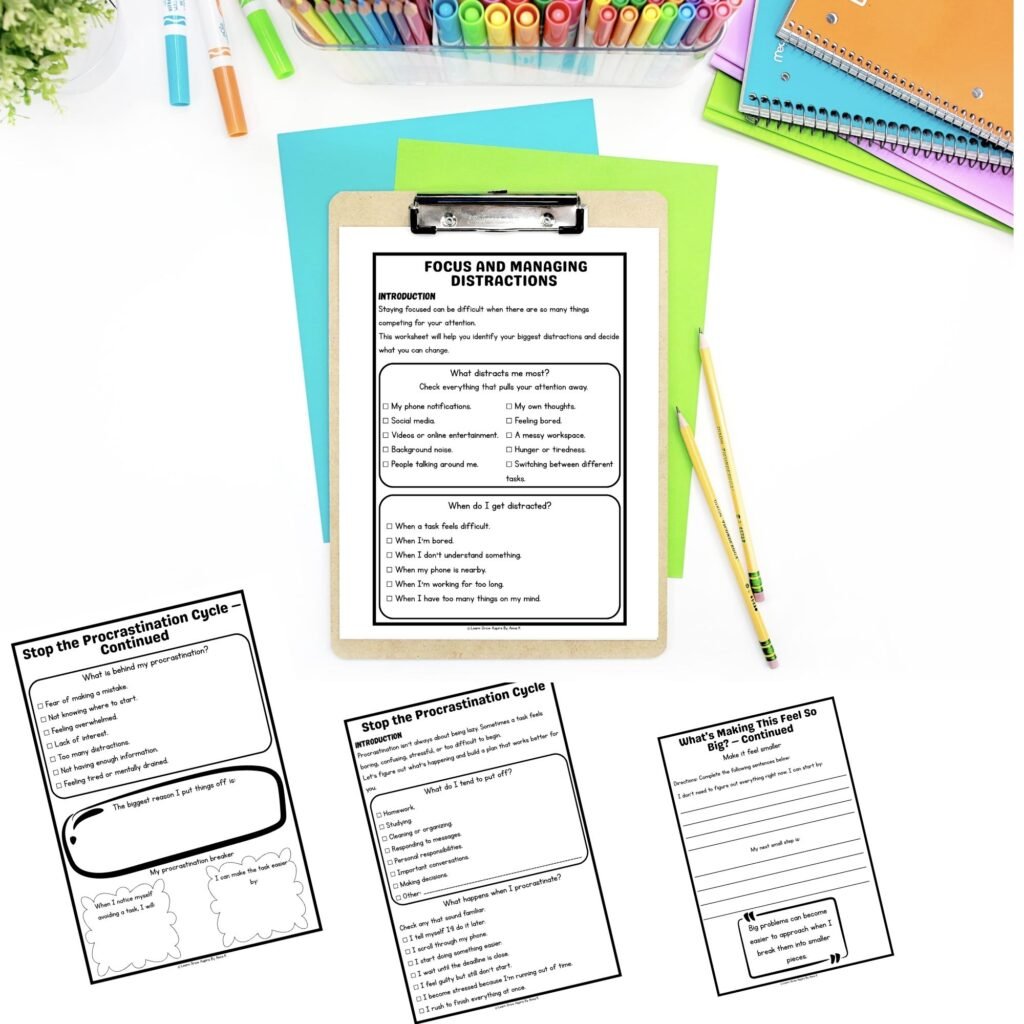
The PDF contains 27 printable worksheet pages covering 15 worksheet topics across procrastination, focus, organization, motivation, and self-talk.
Here is how the content breaks down.
Understanding Overwhelm
Several pages help teens make sense of what they are feeling before they try to fix it.
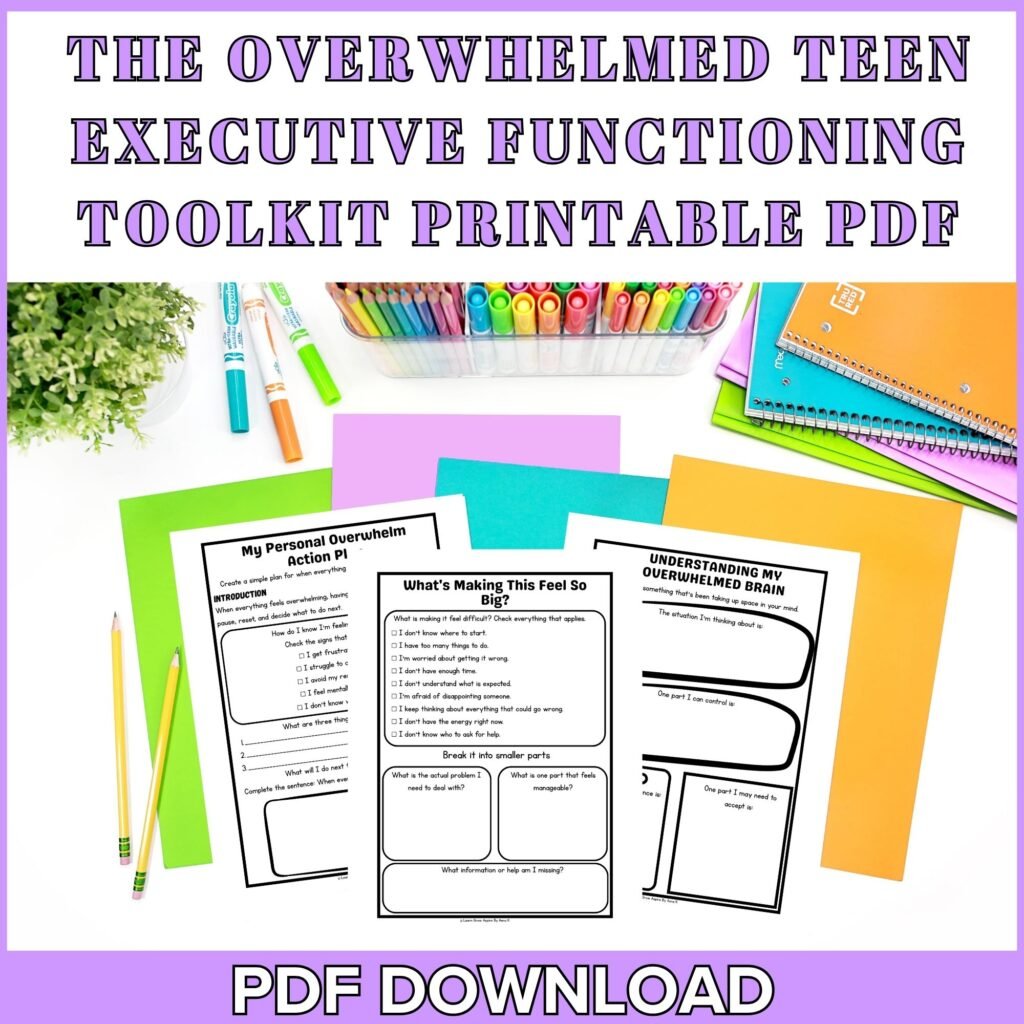
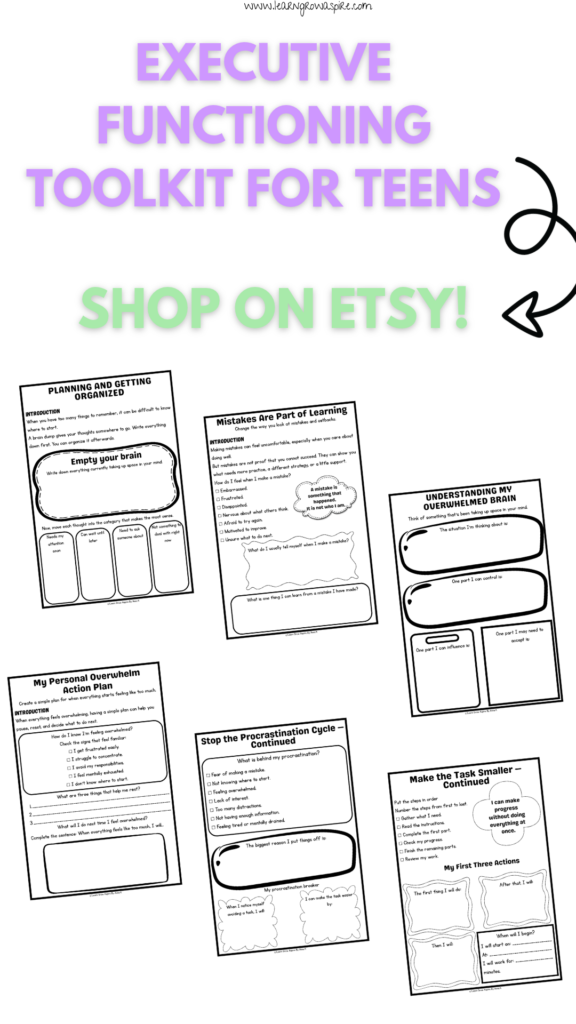
Understanding My Overwhelmed Brain invites teens to sort what is in their control, what they can influence, and what they need to accept. This is a helpful anchor for anxious teens who spiral over things they can’t change.
What’s Making This Feel So Big? guides students to break a stressful situation into smaller parts, which often shrinks the problem on its own.
Getting Started and Breaking Tasks Down
Task initiation is one of the most common sticking points for teens, and the toolkit gives it plenty of attention.
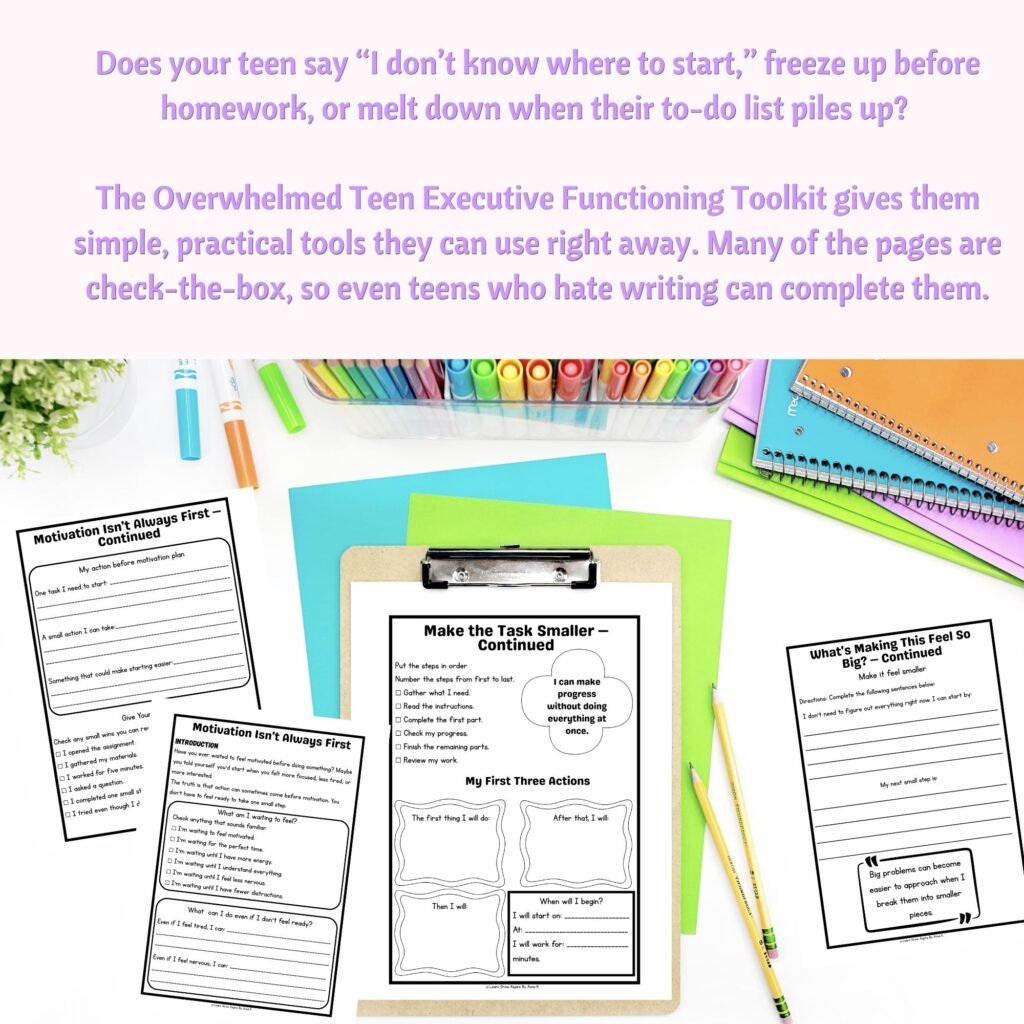
Getting Started When I Don’t Feel Like It introduces the 5-Minute Start and a five-minute plan.
Make the Task Smaller turns one overwhelming assignment into manageable steps.
Motivation Isn’t Always First challenges the belief that you have to feel ready before you act, a belief that keeps many teens stuck.
Stop the Procrastination Cycle helps teens uncover the real reason behind putting things off, whether that is fear of failure, boredom, or uncertainty.
Focus and Organization
Focus and Managing Distractions helps teens build an environment that supports concentration.
My Focus Sprint supports short, realistic work sessions rather than unrealistic marathon study blocks.
Planning and Getting Organized includes a brain dump and sorting page, a classic strategy for clearing mental clutter.
My Weekly Overview is a weekly planner with a space for priorities.
Follow-Through and Resilience
Follow Through Without Giving Up supports teens in finishing what they started.
When Things Don’t Go as Planned helps build the skill of bouncing back from setbacks.
Self-Talk and Mindset
My Inner Critic vs. My Helpful Voice gives teens practice replacing harsh internal commentary with kinder, more balanced self-talk.
Mistakes Are Part of Learning encourages a healthier view of errors.
My Personal Overwhelm Action Plan pulls it all together into a go-to plan for the moments when everything feels like too much.
The mix of practical strategies and emotional skill-building is what sets this resource apart from a plain planner. Teens don’t just learn how to organize their time. They learn how to handle the feelings that get in the way of doing it.
Using the Toolkit in Individual Sessions
One-on-one counseling is where these printables can be most personalized. A few ways to put it to work:
Choose the page that matches the problem. If a student comes in frozen over a project, reach for the task-breakdown and 5-Minute Start pages. If they are spiraling after a bad test, the setback and self-talk pages may serve them better.
Use check-the-box pages to open reluctant teens up. Some teenagers are guarded in the first sessions. A check-the-box activity lets them communicate without having to find the words, and it often becomes a springboard for conversation.
Work through the Overwhelm Action Plan together. Co-creating a personal plan gives the teen ownership. Keep a copy in your file and send one home so the strategy follows them beyond your office.
Revisit and revise. Check in at the next session on what worked and what didn’t. Treat a strategy that failed as useful data rather than a failure on the teen’s part.
Using the Toolkit in Groups and Classrooms
Small group counseling and advisory periods are a natural fit for a no-prep, SEL-friendly resource. Teens often feel enormous relief when they hear that their peers struggle with the same things. That shared experience cuts through shame, which is frequently the biggest barrier to change.
Here is one possible four-week framework for a small group:
First week: Explore the overwhelmed brain and normalize the struggle.
Second week: Practice breaking down a real task and doing a 5-Minute Start.
Third week: Build focus sprints and a weekly overview.
Fourth week: Work on self-talk, setbacks, and each student’s personal action plan.
Because the pages stand alone, you can also pull a single worksheet for a quick advisory activity, a study hall, or a reflective journaling session. Homeschool families and tutors can use the same approach for study skills and planning.
Supporting Neurodivergent and Anxious Teens
Many of the students who benefit most from executive function support are neurodivergent or anxious. Teens with ADHD frequently struggle with task initiation, time awareness, and working memory. Teens with anxiety may avoid starting of fear of getting it wrong. Perfectionistic students may spend hours on one assignment and never finish another.
The toolkit’s emphasis on small steps, low-pressure formats, and self-compassion suits these students well. Its focus on progress over perfection helps counter the all-or-nothing thinking that keeps many teens stuck.
It is worth being clear about what this resource is. It is a skill-building tool, not an assessment or a treatment.
Bringing Home and School Together
Executive function skills grow when they are practiced in more than one place. A strategy that stays in the counselor’s office rarely sticks. Consider these ways to extend the reach:
Share a page with parents and caregivers. When families understand the “why” behind a strategy, home routines can reinforce your work and reduce the nagging that often escalates conflict.
Coordinate with teachers. A brief note about a teen’s chosen strategy, such as chunking assignments, can encourage consistent support in the classroom.
Schedule short check-ins. A two-minute review keeps momentum going without becoming one more demand.
Celebrate small wins. Overwhelmed teens tend to discount their progress. Naming what went right builds the confidence that fuels the next attempt.
Why You Need These Printable PDFs?
Digital downloads have become a staple of counseling offices for good reasons.
Instant access. After purchase, you can download the file from your Etsy account and print the same day. There is no waiting on shipping.
Print only what you need. Keep fresh copies on hand for new students, or print a single page for a single moment.
Ink-friendly design. The black-and-white layout is easy on your printer, which matters when you are copying for a whole group.
Flexible use. Use the pages one at a time, work through them in order, or build a binder that becomes a go-to resource for your caseload.
Screen-free practice. Teens spend much of their day on devices. Putting pen to paper can feel like a welcome change and often supports focus and reflection.
Tips For Getting Teen Buy-In
Even the best worksheet fails if a teen won’t engage. These approaches help:
Be upfront about the purpose – Explain that the goal is to make life easier, not to monitor them.
Offer choice – Let the teen pick which page to try first. Autonomy matters enormously in adolescence.
Start with one page – A single, quick win builds trust faster than a stack of paper.
Normalize imperfection – Remind them that a messy or incomplete page still counts.
Tie it to their goals – Link the work to something the teen cares about, such as more free time, fewer arguments at home, or a sense of control.
Who Is This Toolkit For?
The toolkit is a good fit for:
- School counselors running individual sessions and small groups
- Therapists, coaches, and tutors working with adolescents
- Classroom teachers using SEL and advisory time
- Homeschool families building study skills
- Parents who want practical support for a teen who freezes before homework
Executive Functioning Toolkit for Teens
Overwhelm is one of the most common and most overlooked struggles of adolescence. A teen who says “I don’t know where to start” is often asking for a manageable first step. The right structure can turn that moment of paralysis into a small win, and small wins add up.
If you are looking for an executive functioning toolkit for teens that is practical, teen-friendly, and ready to print, The Overwhelmed Teen Executive Functioning Toolkit Printable PDF is a strong addition to your counseling resources. With 27 pages of simple, low-pressure worksheets, it helps students move from stuck to started.
Get The Overwhelmed Teen Executive Functioning Toolkit on Etsy
Have a go-to strategy for helping overwhelmed students get started? Share it in the comments so other counselors and therapists can learn from it.
Other Posts You May Be Interested In
Here are some other posts you may enjoy as well:
- Teen therapy bundle for counselors
- Goal setting for middle schoolers
- Insecurities for teens worksheets
- Self compassion worksheets for teens
Pin This Executive Functioning Toolkit for Teens
Save these executive functioning worksheets to your Teen Therapy Pinterest board so that you can easily find them when needed. And while on Pinterest, please consider following.
Some of the links in this post may be affiliate links. I’m also an Amazon Affiliate and will occasionally link to some of my favorite Amazon products. I will receive a small percentage back if you purchase through my link. You won’t be charged a penny more if you shop through my links. That said, I do NOT recommend anything I do not use and love! Thank you for helping support my blog!


Leave a Reply