“I’m bad at fractions. I can’t do this.” If you work with kids, you’ve heard some sort of version of this. Helping kids learn to speak to themselves kindly is one of the most practical social-emotional learning (SEL) skills you can build, and it starts with small, simple steps. In today’s blog post, I will share with you 4 simple ways you can teach kids positive self-talk, plus you can grab our free SEL worksheets to help students turn “I can’t” into “I can try.”
A math problem goes wrong, a spelling word won’t stick, or a game doesn’t go their way, and suddenly the whole day feels ruined. In that moment, kids are talking to themselves, and what they say makes a big difference to what happens next.
What Is Self-Talk?
Self-talk is the way we talk to ourselves in our minds. Sometimes it sounds like “I got this!” and sometimes it sounds like “I’ll never get this right.”
Kids often don’t realize they have an inner voice, let alone that they can influence it. So the first step is simply naming it: “That little voice in your head is called self-talk.”
Positive Self-Talk Isn’t Pretending Everything Is Easy
This is the part I care about most. Positive self-talk doesn’t mean telling yourself you’re the best at everything. Kids see through that, and it can backfire when things really are hard.
Instead, we teach thoughts that are kind, realistic, and encouraging, like:
- “This is hard, but I can keep trying.”
- “I made a mistake, and I can learn from it.”
- “I don’t know how to do this yet.”
Notice that none of these pretend the challenge isn’t real. They just leave room to keep going.
4 Simple Ways to Teach Kids Positive Self-Talk
Use these simple yet effective strategies to help your kids practice speaking kindly to themselves.
1. Categorize thoughts into helpful and unhelpful
Give students a few example thoughts and ask, “Does this thought help you to keep going, or does it make you want to give up?” Kids love the detective angle, and it takes the shame out of having unhelpful thoughts. Everyone has them, so remind them of that.
2. Teach a simple routine they can remember
I use STOP, NOTICE, CHANGE, TRY:
- Stop and take a slow breath
- Notice what you’re saying to yourself
- Change it if it isn’t helping
- Try one small next step
A short, repeatable routine is much easier for kids to use in the moment than a long explanation.
3. Ask, “Is this thought fair?”
Many unhelpful thoughts are simply unfair to ourselves. “I made one mistake, so I’m terrible at this” is a good example. Asking whether a thought is fair, or whether they’re being too hard on themselves, helps kids question harsh thoughts without arguing with their feelings.
4. Use a story
Kids learn from characters more easily than from lectures. When students watch a character get frustrated, notice her thought, and change it, they can talk about the skill without it feeling personal. (More on this below.)
Grab the Free Positive Self-Talk Worksheets
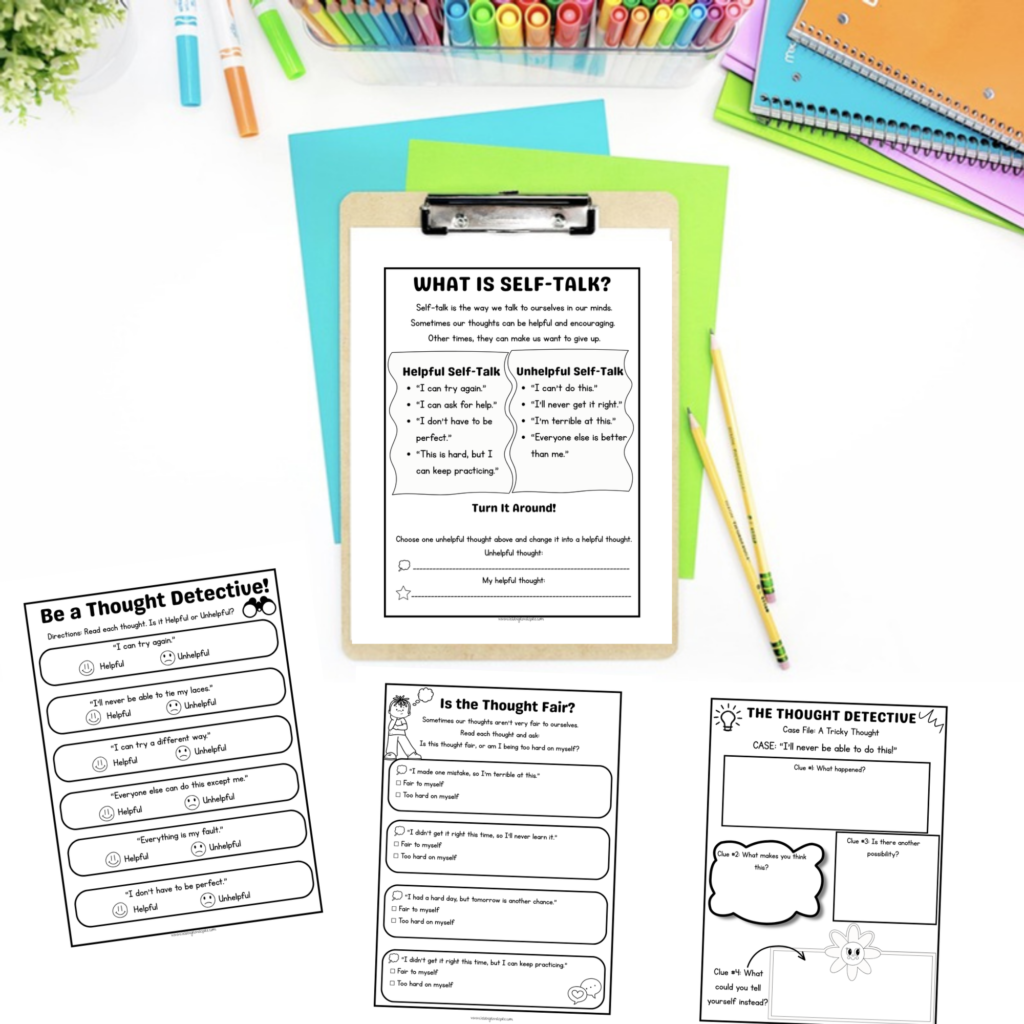
To make this easy to try, I put together a free set of printable pages you can use right away. Inside this packet, you will receive 4 printable PDFs:
- What Is Self-Talk? – Compares helpful and unhelpful self-talk and includes a “Turn It Around!” prompt
- Be a Thought Detective! – Students will decide whether each thought is helpful or unhelpful
- Is the Thought Fair? – Asks whether a thought is fair or too hard on themselves
- The Thought Detective Case File – A four-clue organizer for investigating a tricky thought and finding a kinder one
These worksheets are black and white, so they use less ink and require no prep, saving you time.
Get the Free Worksheets
Click on the link below, and we will send these pages straight to your inbox.
You’ll also get occasional SEL tips and new resources from me. You can unsubscribe anytime you wish; however, I do hope you stick around for more good stuff.
Want to Go Deeper? Meet Nora
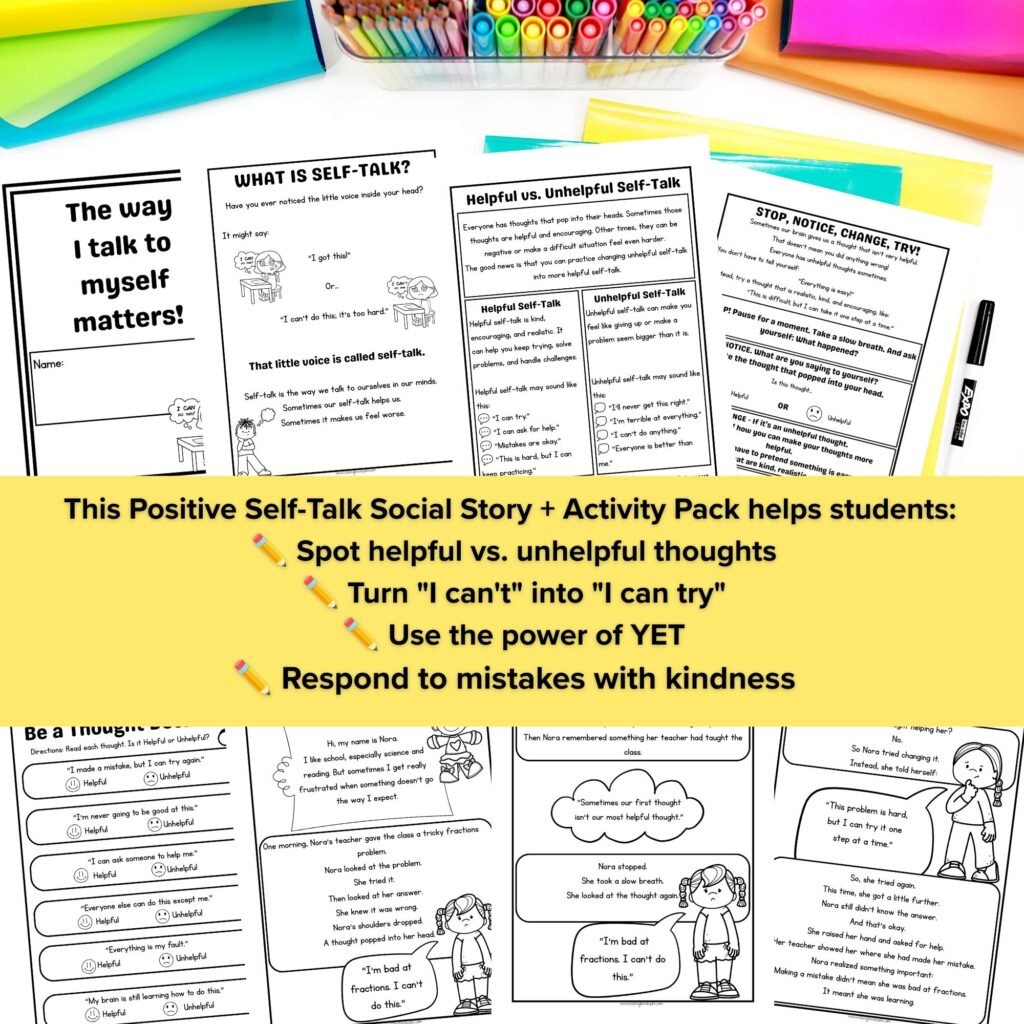
If your students respond well to these pages, my Positive Self-Talk Social Story & Worksheets pack takes it further.
It includes Nora’s Story, a 4-page social story about a student who gets frustrated with a tricky fractions problem and learns to change her thoughts, plus:
- The STOP, NOTICE, CHANGE, TRY! strategy page
- The Power of YET
- What Would You Say to a Friend?
- A self-talk toolbox and a “Build Your Positive Voice” page
- A comic organizer so students can create their own story
- A self-talk challenge and a promise page
SHOP THESE WORKSHEETS ON ETSY!
Suggested Ways You Can Use These Printables
Here are some ways you can consider using these activities:
- Morning meeting: Read a thought aloud and have students vote helpful or unhelpful.
- Small groups: Work through the Thought Detective case file together.
- Individual sessions: Use “Is the Thought Fair?” to open a conversation gently.
- Early finishers or centers: Let students choose a page to complete independently.
- At home: Parents can use the pages to talk through a tough homework moment.
Positive Self-Talk Activities For Kids
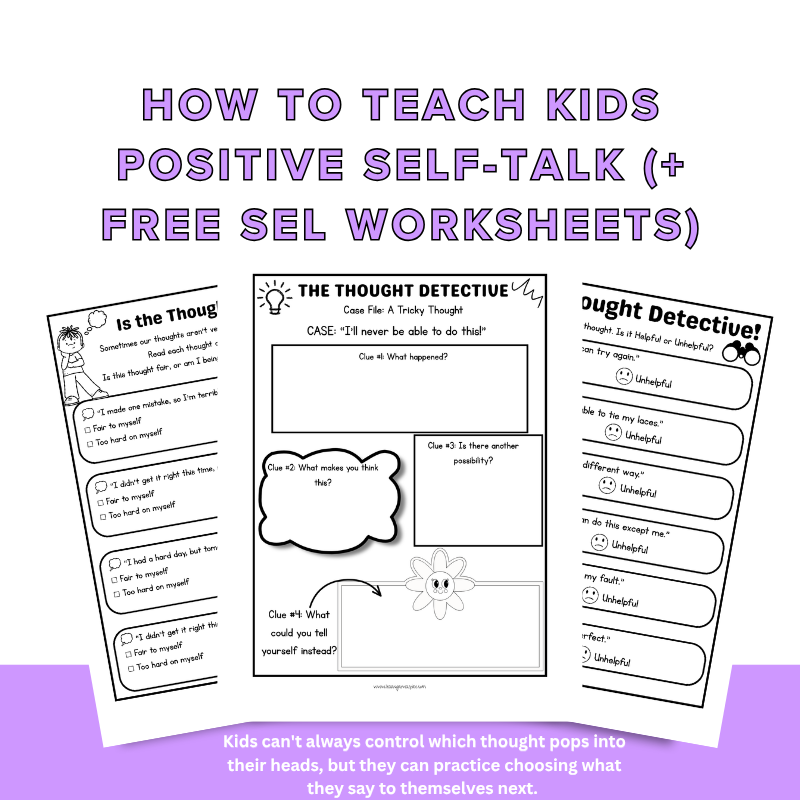
Kids can’t always control which thought pops into their heads, but they can practice choosing what they say to themselves next. That’s a skill they can use for life, and it starts with small, kind, realistic steps.
If you try the free worksheets, I’d love to hear how it goes. Leave a comment below.
xoxo Anna
This resource is an educational SEL tool and is not a substitute for professional mental health care.
You May Also Like These Posts
Here are some other posts on positive self-talk and self-esteem that you may be interested in:
- Free build the bear worksheets for self-esteem building
- 7 free mindfulness worksheets
- Positive affirmations for kids: free printable
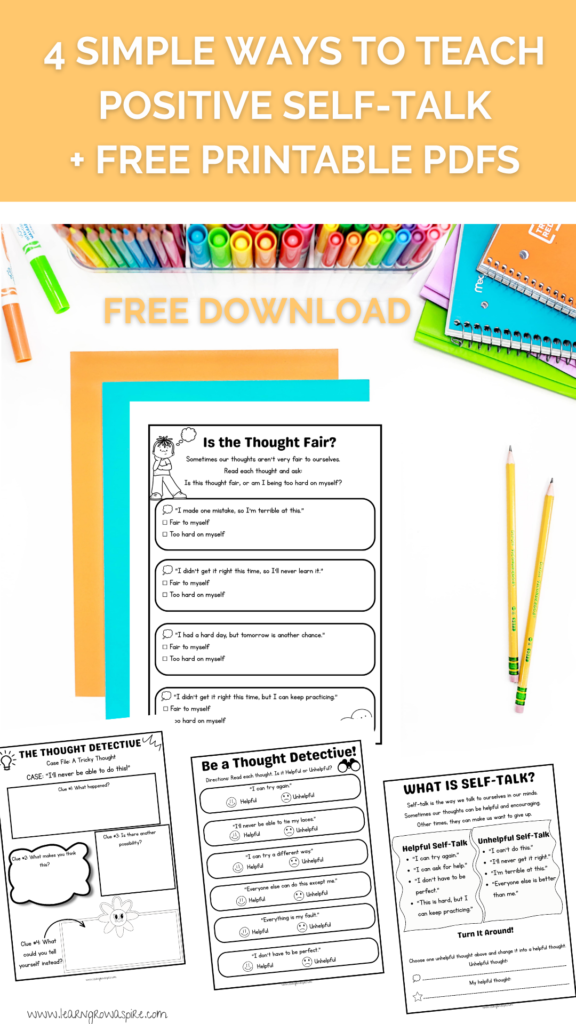
Pin Simple Ways To Teach Positive Self-Talk
Save these free positive self-talk worksheets for kids to your kid’s Self-esteem and Confidence Pinterest board so that you can easily access them when needed. And while on Pinterest, please consider following me on the platform.
Some of the links in this post may be affiliate links. I’m also an Amazon Affiliate and will occasionally link to some of my favorite Amazon products. I will receive a small percentage back if you purchase through my link. You won’t be charged a penny more if you shop through my links. That said, I do NOT recommend anything I do not use and love! Thank you for helping support my blog!


Leave a Reply