When we talk about goal setting for middle school students, it can be tempting to make it very simple.
Write down a goal.
Figure out the steps.
Set a deadline.
Get it done.
But if you’ve ever actually worked with middle school or even high school students, you know it doesn’t always work that way.
A student might tell you, “I want to get better grades.”
Okay. Great!
But then you ask, “Why?”
And sometimes the answer is:
“Because my mom wants me to.”
Or, “Because everyone else is getting better grades.”
Or maybe they don’t really know why.
And that is where I believe goal setting can become much more meaningful for our teens.
So, instead of only asking our kids what they want to accomplish, we can help them stop and think about
- why they want it,
- whether it actually matters to them,
- what might get in their way,
- and what they can do next.
My friend, that is the idea behind the goal-setting activities I’ve created for middle school students and teens.
Goal Setting Is About More Than Checking a Box
As parents, teachers, and guidance counselors, we all want students to learn how to set goals.
But we also want them to learn something bigger along the way.
We want them to become more aware of themselves. Understand that some things are within their control and some aren’t.
We want them to learn how to deal with setbacks without immediately concluding they’re failures.
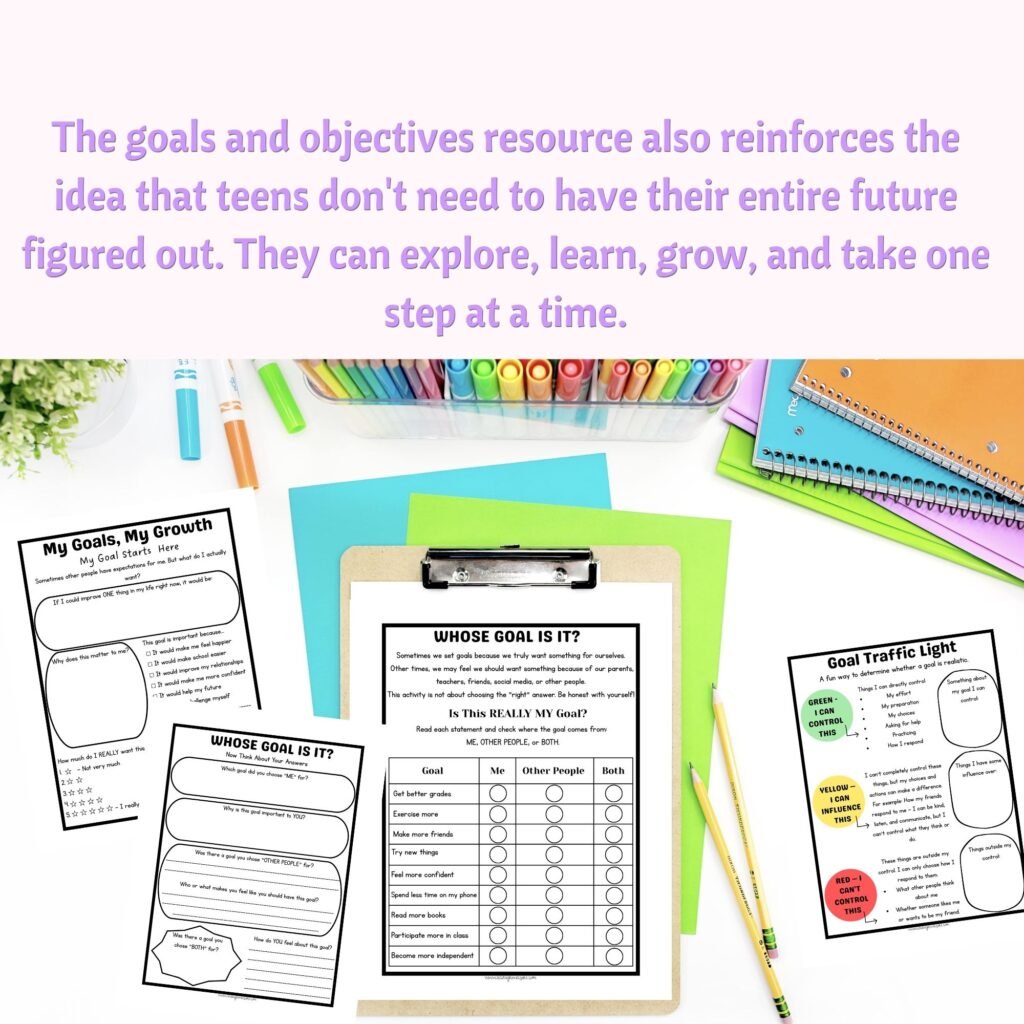
And we want them to understand that having ambition doesn’t mean they need to have their entire future figured out at 12, 13, or 14.
That’s why I like using these goal-setting activities for middle schoolers, allowing students to reflect, rather than simply filling in a goal and moving on.
Start With a Simple Question: Is This Really My Goal?
This is one of my favourite ideas in the resource.
Ask your students or child:
“Is this really your goal?”
It sounds like a simple question, but think about how many goals young people hear from the adults and people around them.
Get better grades.
Study more.
Spend less time on your phone.
Make more friends.
Join a team.
Think about your future.
Be more confident.
Some of these may genuinely be goals the student wants for themselves.
But sometimes these come from parents, teachers, friends, social media, or other expectations.
And sometimes it’s a mixture of both.
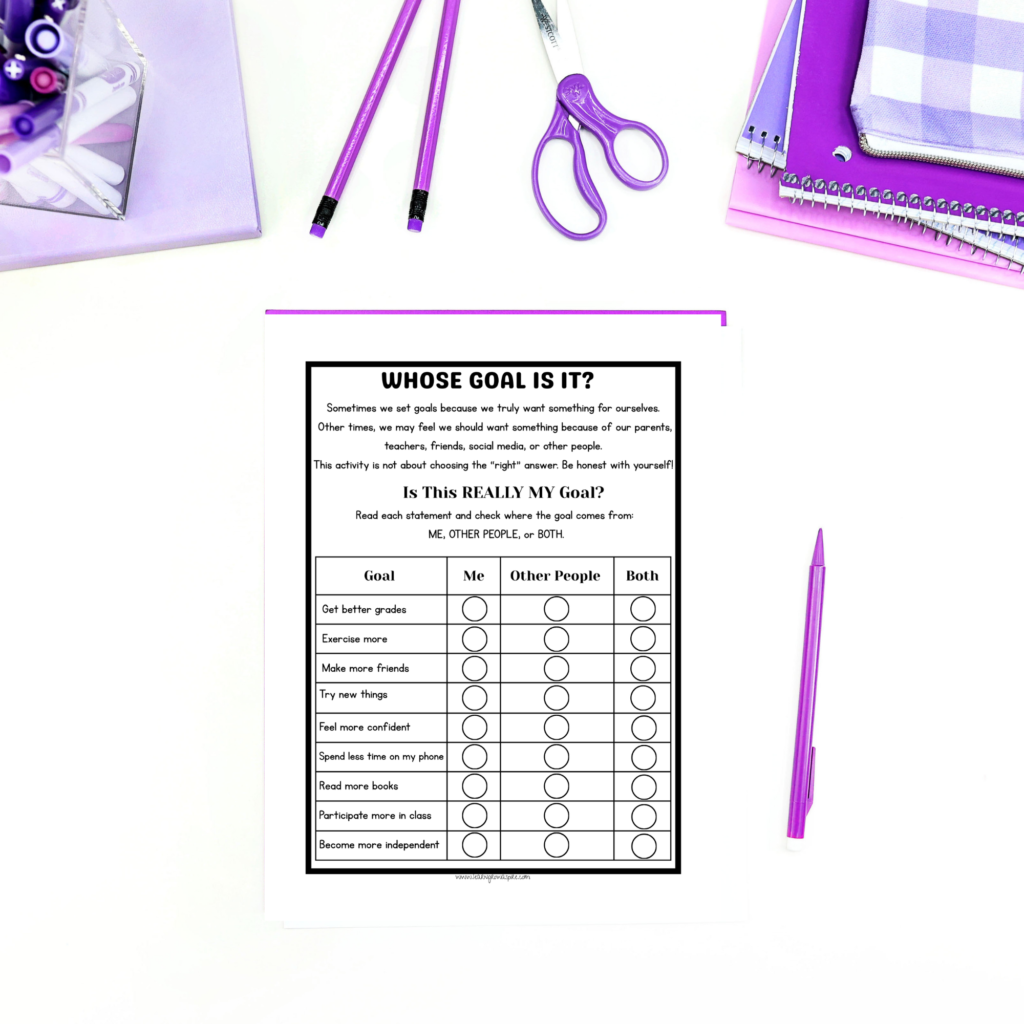
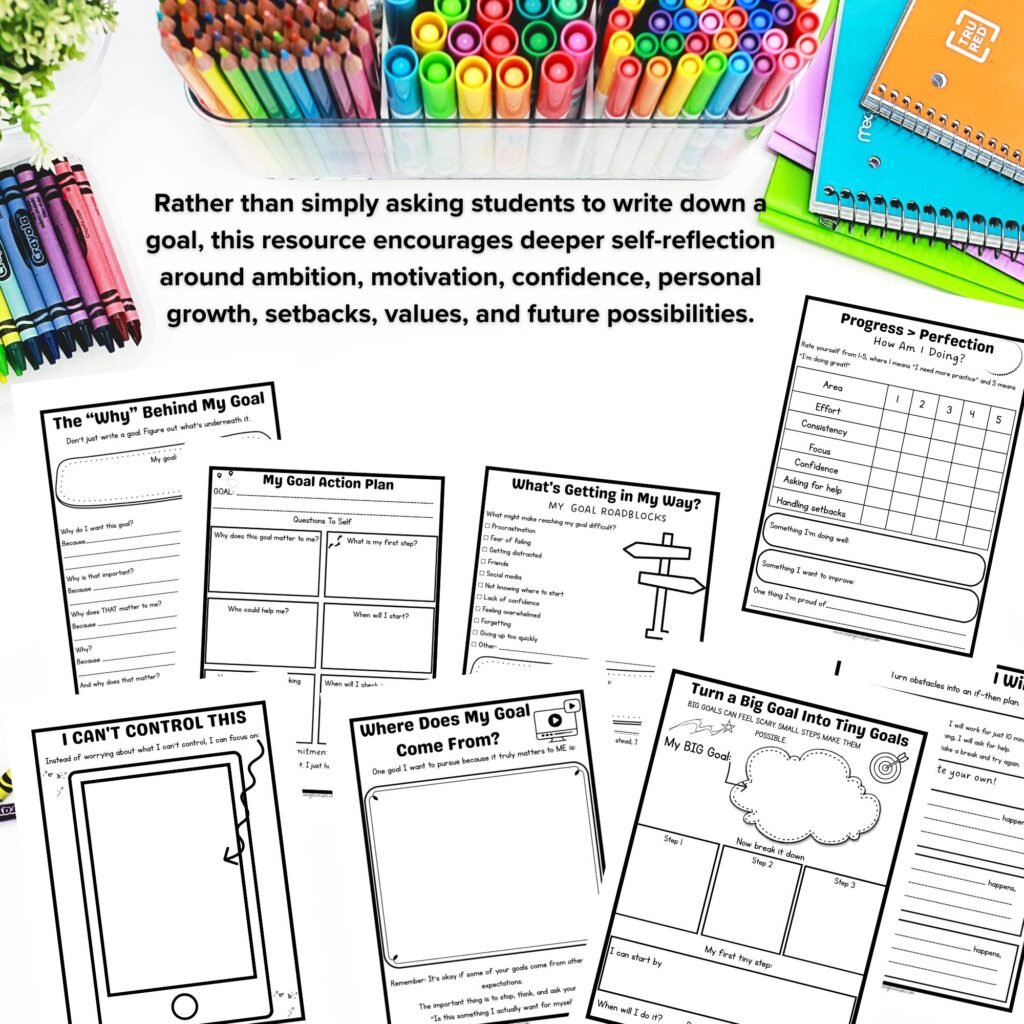
That’s why one of the activities asks students to look at different goals and decide whether they come from ME, OTHER PEOPLE, or BOTH.
I really like this page because there isn’t a “right” answer.
It’s simply an opportunity for students to stop and think:
“Do I actually want this?”
That kind of self-awareness is important when we’re talking about goal setting for teens.\
Help Students Decide What They Can Control
Here’s another conversation I think is incredibly useful for young people.
What can you control?
Students sometimes spend an enormous amount of emotional energy worrying about things they simply cannot control.
What someone thinks about them.
Whether someone likes them.
Whether a friend responds to a message.
What happened yesterday.
So, instead of us telling students to simply “stop worrying,” we can help them sort things into categories.
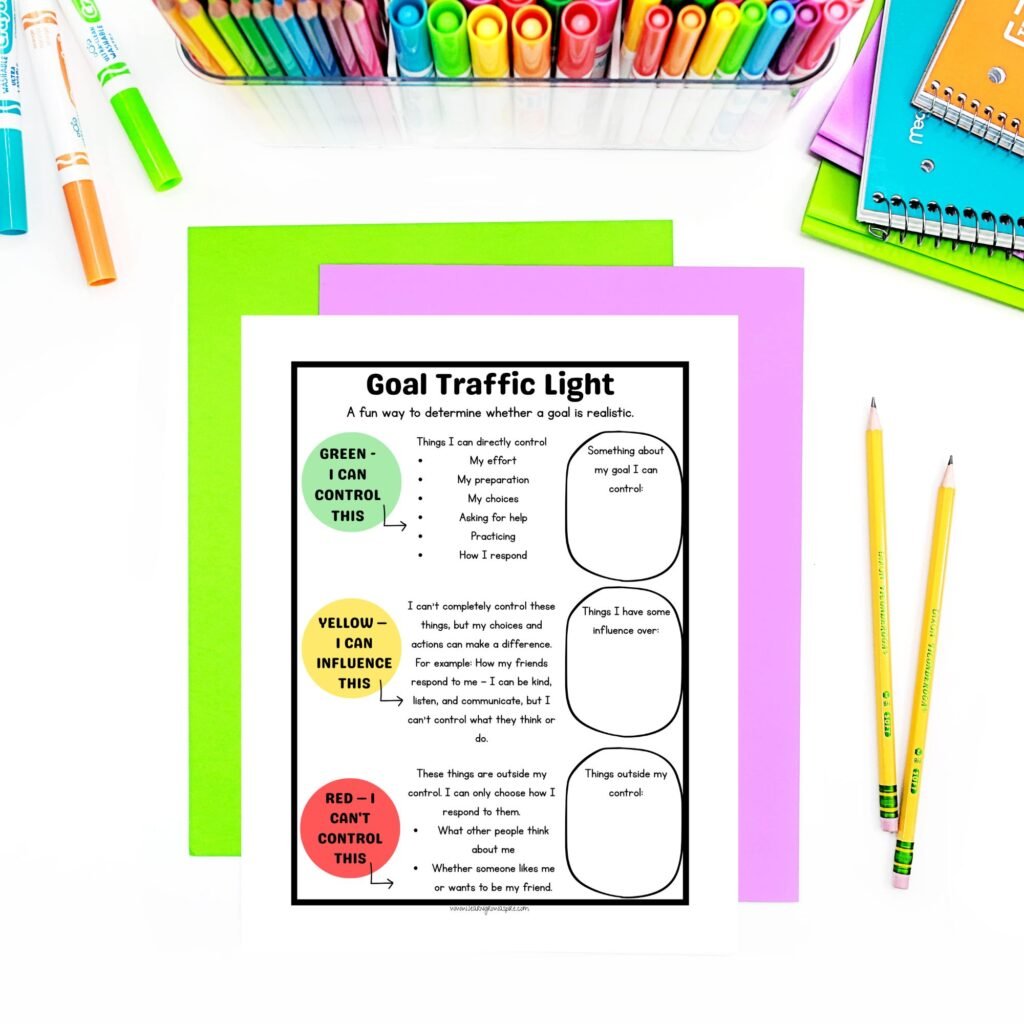
In the resource, students use a simple Goal Traffic Light:
GREEN — I CAN CONTROL THIS
YELLOW — I CAN INFLUENCE THIS
RED — I CAN’T CONTROL THIS
For example, a student can control whether they study for a test.
They can influence their grade by preparing and asking questions.
But they can’t completely control the grade they receive.
That distinction is important.
It teaches students to put their energy where it can actually make a difference.
Ask “Why?” Before Jumping Into the Plan
Sometimes we are so focused on helping students create a plan that we forget to ask why the goal matters in the first place.
Let’s go back to:
“I want better grades.”
Why?
Maybe the student wants to feel proud of themselves.
They want to feel more confident.
Perhaps, they’re interested in a particular future career.
Maybe they’re worried about disappointing their parents.
Or, maybe they just want to prove to themselves that they can do it.
The reason behind the goal can completely change how a student approaches it.
That’s why I included a “The Why Behind My Goal” activity.
Students are encouraged to keep digging a little deeper instead of stopping at the first answer.
For me, this is one of the things that makes these goal setting worksheets for middle and high school students different from a basic goal planner.
We’re not just asking:
“What do you want?”
We’re asking:
“Why does this matter to you?”
Big Goals Can Feel Really Big
Another thing I’ve noticed with goal setting is that students can sometimes choose a goal that is simply too broad.
“I want to be healthier.”
“More organized.”
“I want to become more confident.”
“I want to get better at school.”
These are great goals, but they don’t tell the student what to actually do.
So one of the activities focuses on taking a big goal and turning it into tiny goals.
If the goal is to become more organized, maybe the first step is simply cleaning out their backpack or desk.
Afterward, they can begin to write down upcoming assignments.
Then choosing a time to complete homework and check their planner each day.
Suddenly, the goal doesn’t feel quite so overwhelming.
And that’s a lesson I really want students to take away:
You don’t have to do everything at once.
Sometimes you just need to figure out your next step.
What Is Going to Get in the Way?
This is another part of goal setting that I think we sometimes skip.
We ask students to create a goal and a plan, but we don’t ask:
“What could get in your way?”
Because something probably will.
Maybe it’s procrastination.
Spending too much time on their phone.
Maybe they’re afraid of failing.
A lack of confidence.
Maybe they don’t know where to begin.
Maybe they become overwhelmed.
Or, they simply forget.
The resource gives students a chance to identify their own roadblocks and then create an “If X happens, I will do Y” strategy.
For example:
If I feel like procrastinating, I will work for 5 minutes before taking a break.
Or:
If I don’t understand something, I will ask for help.
It’s simple, but it gives students something concrete to fall back on when motivation disappears. And we know that motivation is not always there.
When Things Don’t Go According to Plan
And the truth is – things will go wrong at times.
Students will miss a goal.
They’ll forget something, lose motivation, make mistakes, and the list goes on.
That’s why I wanted setbacks to be part of these teen goal-setting activities.
A setback doesn’t have to mean:
“I’m bad at this.”
It can mean:
“Something didn’t work. What can I learn from it?”
Students reflect on what didn’t go as planned, how they felt, what was within their control, what wasn’t, and what they might try differently next time.
That shift in thinking can be incredibly valuable.
We want our children to understand that a setback is information. It’s not a definition of who they are.
Let’s Talk About Ambition
I also wanted this resource to go beyond academic goals.
Because what about the student who wants to become an amazing athlete?
Or learn guitar?
Start a business someday?
Become a doctor?
Make art?
Travel?
Help people?
Or simply become more independent and confident?
Ambition can look very different from one student to another.
That’s why students are encouraged to explore questions like:
What could I become?
If I could become anything, what would I do?
I don’t think ambition should be about being better than everyone else.
It can simply be about wanting to grow into someone you’re proud of becoming.
Ambition and Pressure Aren’t Always the Same Thing
This is another conversation I think is worth having with teens.
Sometimes a student says:
“I want to get perfect grades.”
But where did that goal come from?
Maybe they genuinely love learning and want to challenge themselves.
Perhaps it’s expectations from the adults in their lives.
Maybe they’re comparing themselves to their friends.
The Ambition vs. Pressure activity allows students to think about this.
They read different thoughts and decide whether they represent ambition, pressure, or possibly both.
Again, there isn’t necessarily one perfect answer.
The goal is simply to get students thinking.
A Goal Doesn’t Have to Be Huge to Matter
I think this is probably one of the most important messages we can give young people.
A goal doesn’t have to change their entire life.
Getting homework done without procrastinating can be a goal.
Speaking up in class can be a goal.
Trying something new can be a goal.
Asking for help can be a goal.
Practicing something for 15 minutes can be a goal.
Trying again after a disappointment can be a goal.
Those small steps matter.
Progress doesn’t have to look dramatic to be real.
And students don’t need to know exactly where they’re going YET!
They can explore.
Change their minds.
Discover new interests.
Try something and decide they don’t like it.
That’s all part of growing.
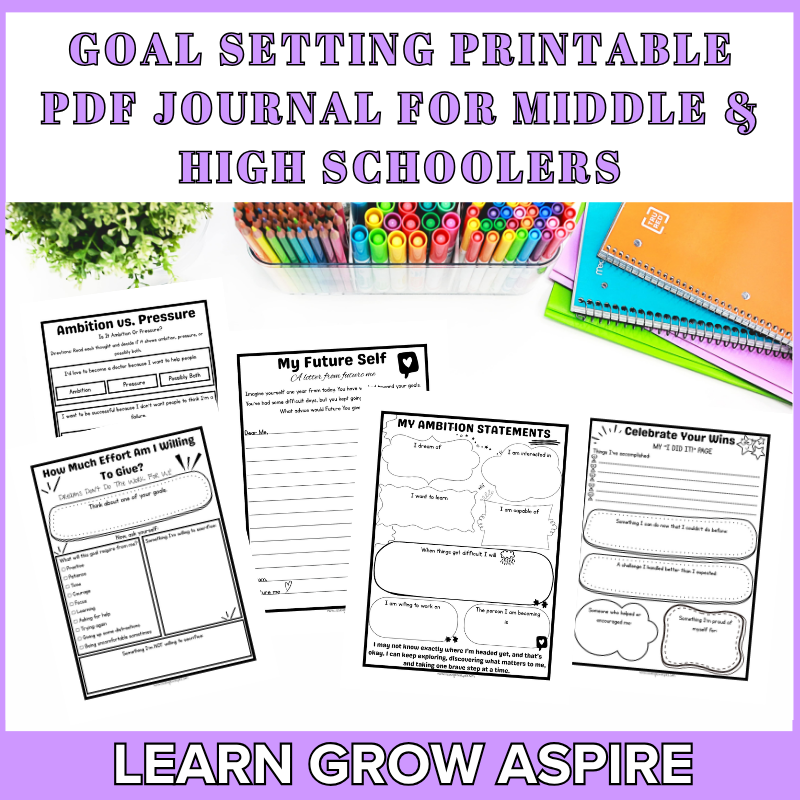
Goal Setting Printable PDF For Students
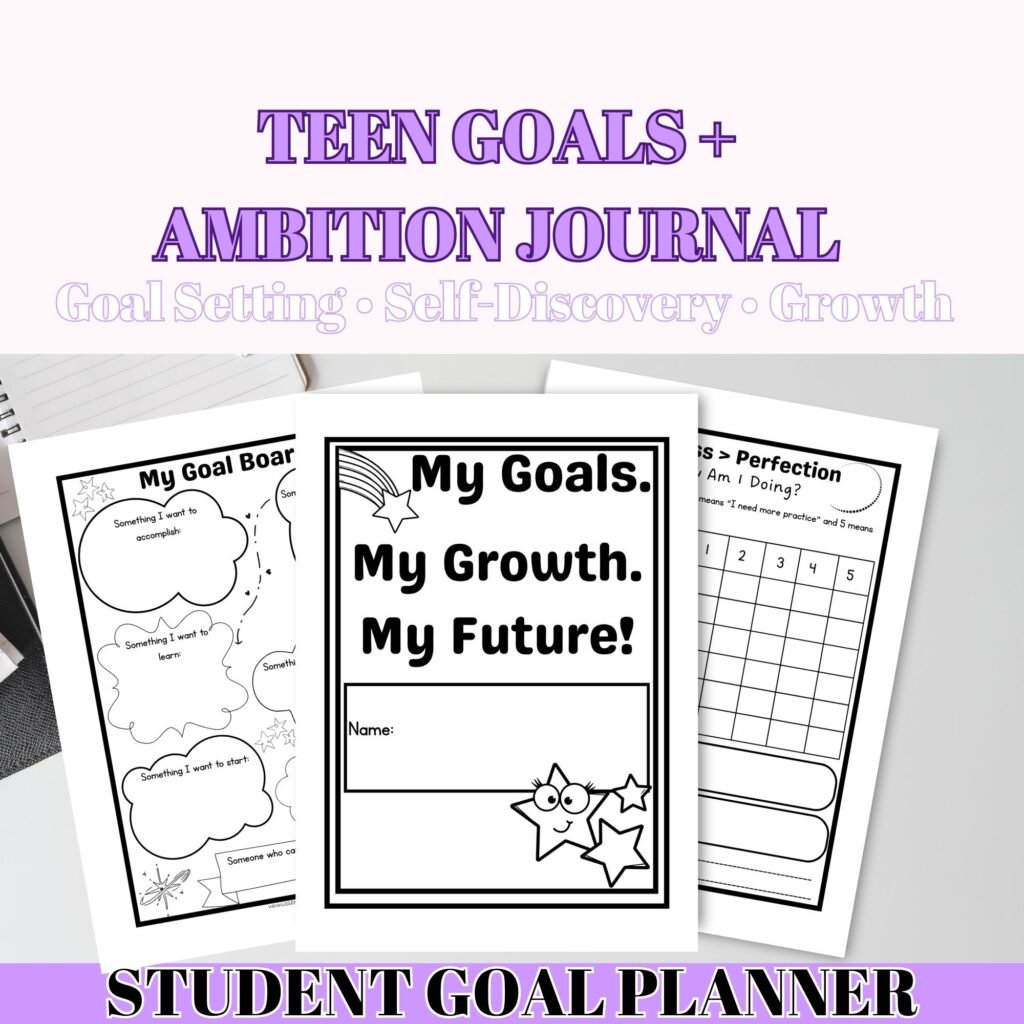
If you’re a teacher, school counselor, guidance counselor, therapist, SEL professional, or parent looking for a ready-to-use resource, I created a 27-page Teen Goals Worksheets & Ambition Journal for Grades 6–9.
It takes students through the goal-setting process while giving them space to think about:
- Personal goals
- Motivation
- Ambition
- Outside pressure
- What they can control
- Goal planning
- Roadblocks
- Effort
- Setbacks
- Growth
- Future possibilities
- The person they want to become
You can use the pages individually or work through the journal from beginning to end. It’s flexible enough for classroom activities, advisory, small groups, counseling sessions, or individual student reflection.
Take a look at the Teen Goals Worksheets & Ambition Journal on Etsy
Goal Setting Activities For Students
When we’re helping students set goals, I don’t think the most important question is always:
“Did you reach your goal?”
Sometimes the better questions are:
Did you learn something new about yourself?
Did you keep going when something became difficult?
What did you learn you can control?
Did you discover what actually matters to you?
What steps did you take to move forward?
Because those are skills students can carry with them long after they’ve finished middle or high school.
And maybe that’s what good goal setting is really about.
Not creating a perfect plan for the future.
But helping a young person become a little more confident about taking the next step.
You May Also Like These Posts
Here are some other blog posts I believe you might want to check out:
- Insecurities worksheets every teen needs
- Self-compassion worksheets for teens printable
- 9 Ways to help teens build resilience
Pin Goal Setting For Middle School Students
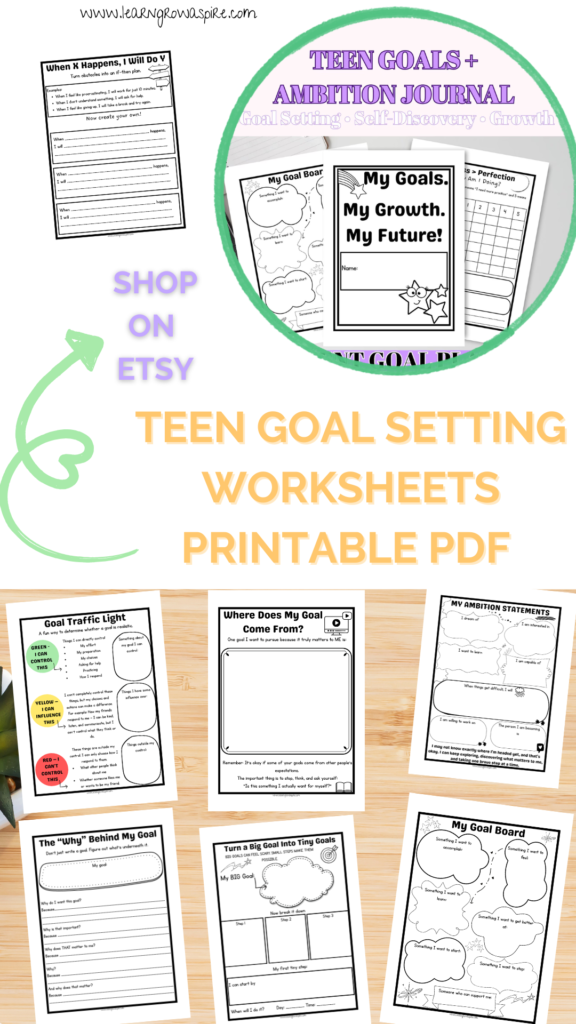
Make sure to save these goal setting template and sheets for students to your Pinterest board so that you can easily find them when needed.
Some of the links in this post may be affiliate links. I’m also an Amazon Affiliate and will occasionally link to some of my favorite Amazon products. I will receive a small percentage back if you purchase through my link. You won’t be charged a penny more if you shop through my links. That said, I do NOT recommend anything I do not use and love! Thank you for helping support my blog!

