Big emotions are a normal part of childhood, but many children struggle to manage feelings like anger, frustration, or anxiety. That’s why learning calm down strategies for kids is such an important skill to teach them early.
When children feel overwhelmed, their brains can go into a stress response that makes it difficult to think clearly or control their reactions.
Simple emotional regulation tools—like deep breathing, movement, or mindfulness– can help children pause, reset, and regain control of their emotions.
In this post, you’ll discover 25 calm down strategies for kids that actually work, along with practical ways to help children build strong emotional regulation skills at home and/or in the classroom.
These strategies are especially helpful for children who experience:
-
difficulty managing big emotions
-
classroom stress or social challenges
By practicing calming techniques regularly, children can learn how to manage their emotions in healthier ways and develop confidence in handling difficult situations.
Why Kids Need Calm Down Strategies
Children are still learning how to understand and control their emotions, so when they feel overwhelmed, their brains may go into fight-or-flight mode, which can lead to behaviors like yelling, crying, or shutting down.
Teaching calm down strategies helps children:
• recognize their emotions
• develop self-control
• reduce meltdowns and emotional outbursts
• build emotional regulation skills
• improve focus and decision-making
These strategies are especially helpful for children who experience big feelings, anxiety, frustration, or anger.
25 Calm Down Strategies for Kids That Actually Work
Here are practical techniques you can use at home or in your classroom.
1. Take Slow Deep Breaths
Deep breathing helps calm the nervous system and slow the body’s stress response.
Try encouraging children to imagine they are smelling a flower and blowing out a candle.
2. Count Slowly to Ten
Counting slowly to ten can help children pause when they feel overwhelmed or upset. This short pause gives their brain time to slow down and regain control before reacting.
As children count, their breathing naturally becomes slower, which helps calm their body and mind.
With practice, kids can learn to use this simple strategy on their own when big emotions start to rise.
3. Create a Calm Down Corner
A calm down corner is a quiet space where children can go when they need to relax and regulate their emotions.
Include items like:
• soft pillows
• sensory toys
• emotion charts
• calming worksheets
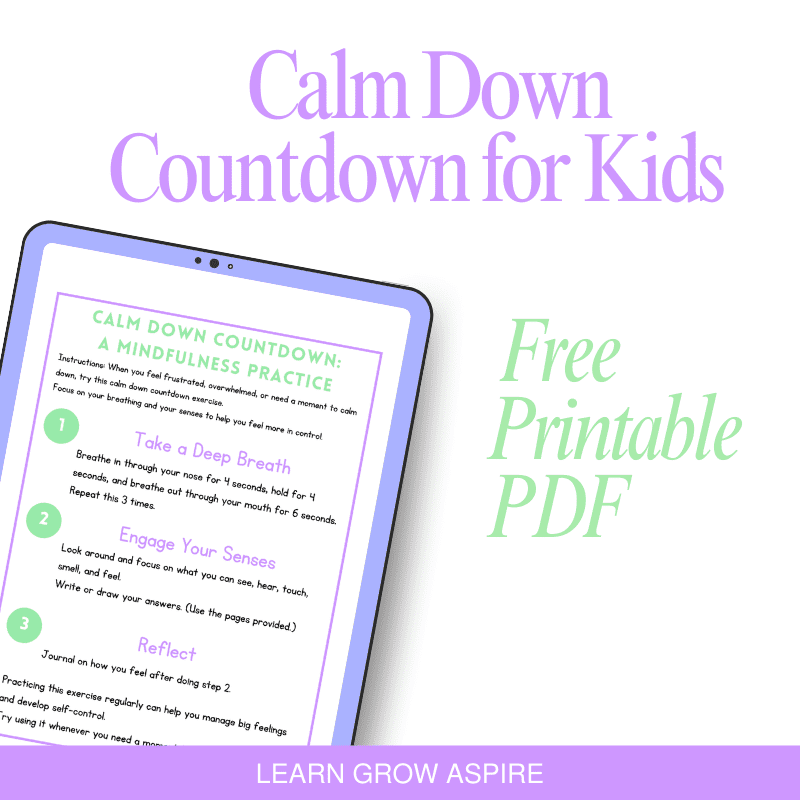
DOWNLOAD YOUR FREE CALMDOWN COUNTDOWN FOR KIDS PDF
4. Squeeze a Stress Ball
The act of squeezing and relaxing their hands helps redirect nervous energy and relax the body. This simple movement also helps children focus their attention on something physical instead of their strong emotions.
time, using a stress ball can become a helpful tool for managing big feelings in a healthy way.
5. Take a Short Walk
Taking a short walk gives kids an opportunity to step away from a stressful situation.
You see, gentle movement helps release built-up energy and allows the body to relax.
Walking also helps clear the mind and gives children time to think and reset their emotions. Even a few minutes of walking can make a big difference in helping kids feel calmer and more in control.
6. Draw or Color
Art is a powerful emotional outlet that allows children to express feelings safely, and they love it as well.
7. Listen to Calming Music
Soft music can help regulate emotions and create a relaxing environment.
8. Practice Mindful Breathing
Encourage children to focus on their breathing and notice how their body feels.
9. Stretch Their Body
Simple stretching helps release tension and improve focus. You can do simple stretches, yoga for kids, etc. YouTube has tons of videos – just search for short, simple. stretching videos for kids/
10. Use Positive Self-Talk
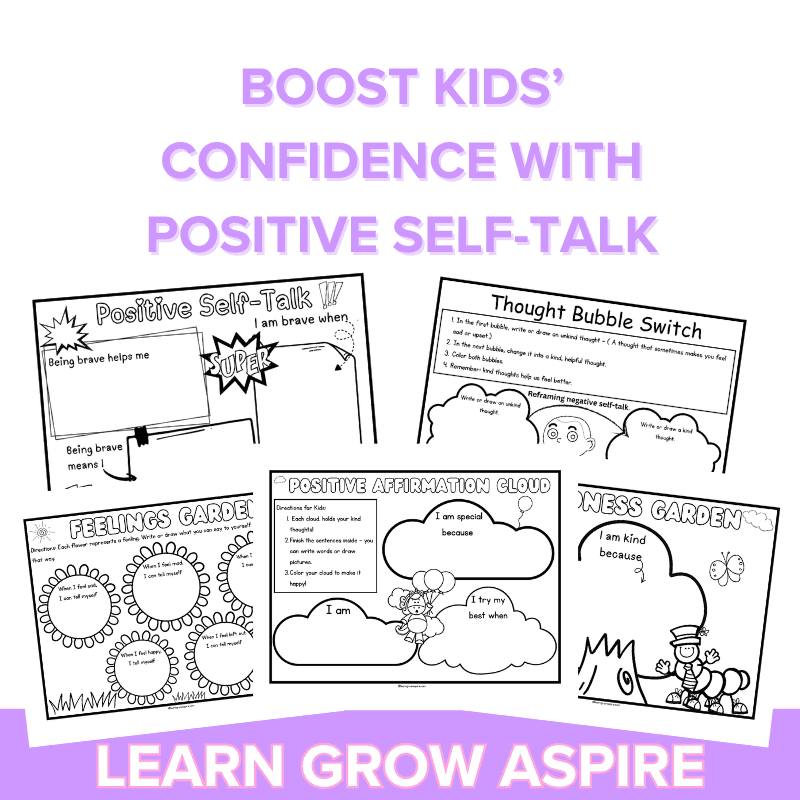
I love positive self-talk and believe every child should be introduced to this.
Teach your children phrases like:
“I can handle this.”
“I’ll calm down.”
“I can try again.”
11. Hug a Stuffed Animal
Comfort objects like stuffed animals or soft blankets can provide children with a strong sense of emotional security. Many children develop attachments to these objects because they represent safety and familiarity.
12. Blow Bubbles
Blowing bubbles is a surprisingly powerful calming technique because it encourages slow, controlled breathing.
When children are upset, their breathing often becomes fast and shallow. Blowing bubbles forces them to slow down their breathing, which helps regulate the nervous system and reduce stress.
You can say something like:
“Let’s see how big a bubble you can make.”
The goal is to encourage slow, gentle breaths rather than quick ones.
13. Write Down Their Feelings
For older children, journaling can be a helpful way to process emotions. It allows kids to express feelings they may not feel comfortable saying out loud.
Encourage children to write about:
• What happened
• How they feel
• What they wish could change
Journaling helps children understand their emotions and gives them a healthy outlet for expressing difficult thoughts.
14. Splash Cool Water on Their Face
Cool water can help calm the body during moments of intense emotion. When cool water touches the face, it activates a natural reflex in the body that can slow the heart rate and reduce emotional intensity.
This quick sensory reset can help children regain control when they feel overwhelmed, angry, or anxious.
Some children may also enjoy washing their hands or holding something cool, like a cold cloth.
15. Practice Gratitude
Gratitude helps shift a child’s focus away from frustration or negativity and toward positive thoughts.
A simple exercise is asking children to name three things they are thankful for.
These could be things like:
• A favorite toy
• A friend
• Something fun they did that day
Practicing gratitude regularly can help children develop a more positive mindset and improve emotional resilience over time.
16. Do a Simple Yoga Pose
Yoga can help calm both the body and mind. Slow, gentle movements combined with breathing help release tension and improve focus.
Two simple poses for children include:
Child’s Pose – Kneel on the floor and stretch arms forward while resting the forehead down.
Butterfly Pose – Sit with the soles of the feet together and gently move the knees up and down like butterfly wings.
These movements can help children relax and reconnect with their bodies when emotions feel overwhelming.
17. Read a Favorite Book
Reading a familiar and comforting story can help children shift their attention away from stressful feelings.
Books can provide a sense of comfort and routine, especially if they are a favorite story that the child already enjoys. Helping slow the mind and body, allowing emotions to settle naturally.
You can also create a small reading corner with calming books, which can become a helpful quiet space for children.
18. Take a Quiet Break
Sometimes children simply need a moment away from noise, stimulation, or stressful situations.
A quiet break does not need to be a punishment. Instead, it can be framed as a reset moment.
For example:
“Let’s take a few minutes to sit quietly and help our bodies calm down.”
This pause allows children to regulate their emotions before returning to the activity or conversation.
19. Practice Grounding
Grounding exercises can bring a child’s attention back to the present moment when they feel overwhelmed.
A simple technique is the 5-4-3 method.
Ask children to identify:
• 5 things they can see
• 4 things they can feel
• 3 things they can hear
This activity shifts focus away from strong emotions and helps calm the mind.
Grounding techniques are especially helpful for children experiencing anxiety or stress.
20. Talk About Their Feelings
Helping children put their emotions into words is one of the most important skills for emotional regulation.
Children often act out when they do not know how to explain what they feel.
You can guide them by modeling simple statements such as:
“I feel frustrated because my toy broke.”
This teaches children that emotions are normal and that expressing them through words is a healthy way to cope.
21. Practice Guided Imagery
Guided imagery helps children relax by imagining a peaceful and safe place.
You might say something like:
“Close your eyes and imagine you are sitting on a quiet beach. You can hear the waves and feel the warm sand.”
Encouraging children to picture calming scenes helps their mind and body relax.
This technique is often used in mindfulness and relaxation exercises for children.
22. Use a Breathing Visual

SHOP BREATHING & CALMING VISUALS
Breathing visuals can help children follow slow breathing patterns easily and engagingly.
For example, you might use a chart that shows when to:
• breathe in
• hold
• breathe out
You can also use visuals shaped like stars, squares, or circles to guide children through breathing cycles. This structured approach makes breathing exercises easier for kids to understand.
Alternatively, you can grab my breathing and calming visuals over on TPT.
23. Shake Out the Energy
Sometimes strong emotions are connected to excess physical energy in the body.
Encouraging children to move can help release that tension.
Simple activities include:
• jumping up and down
• shaking arms and legs
• stretching
After releasing energy through movement, children often feel calmer and more ready to regulate their emotions.
24. Spend Time Outside
Nature has a naturally calming effect on the brain. Fresh air, sunlight, and open space can help reduce stress and improve mood.
Even a short walk outside or a few minutes of outdoor play can help children reset emotionally.
Outdoor activities such as walking, swinging, or simply observing nature can help children relax and regain focus.
25. Model Calm Behavior
Children learn how to manage their emotions by watching the adults around them.
When you remain calm during stressful situations, you demonstrate healthy ways to respond to challenges.
For example, instead of reacting with anger, you can say something along the lines:
“I’m feeling frustrated right now, so I’m going to take a few deep breaths.”
This teaches children that emotions can be handled in thoughtful and constructive ways.
Over time, children begin to copy these calming behaviors themselves.
How You Can Teach Emotional Regulation
Teaching calm down strategies works best when children practice them before they become overwhelmed.
Try practicing calming techniques during calm moments so children know how to use them when big feelings appear.
You can also encourage children to:
• recognize emotional triggers
• label their feelings
• practice calming tools regularly
These small habits gradually build strong emotional regulation skills.
Calm Down Strategies For Kids That Actually Work
Every child experiences big emotions from time to time. Learning calm down strategies will help children develop the tools they need to manage frustration, anger, and stress in healthy ways.
With patience, practice, and supportive guidance, children can learn how to pause, breathe, and respond thoughtfully instead of reacting impulsively.
Over time, these simple strategies can help children grow into emotionally resilient and confident individuals.
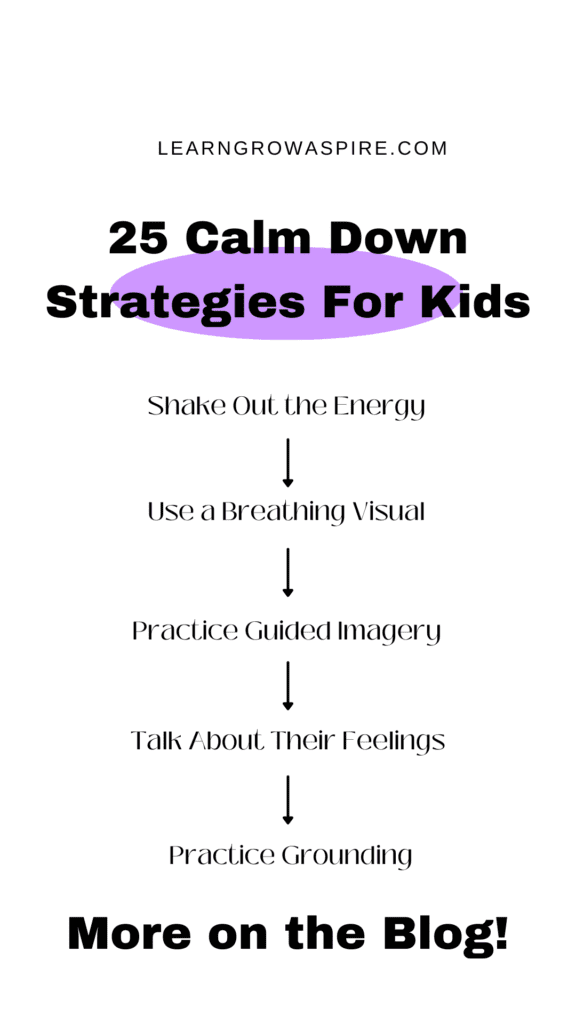
Save These 25 Calm Down Strategies
Make sure to save these calm-down strategies to your emotional regulation Pinterest board so that you can easily find them when needed. And while on Pinterest, please consider following me on the platform,
Some of the links in this post may be affiliate links. I’m also an Amazon Affiliate and will occasionally link to some of my favorite Amazon products. I will receive a small percentage back if you purchase through my link. You won’t be charged a penny more if you shop through my links. That said, I do NOT recommend anything I do not use and love! Thank you for helping support my blog!

Leave a Reply