These making friends social story worksheets for kids are ideal for helping your children or students in grades 2–4 build confidence, strengthen peer relationships, and develop essential friendship skills.
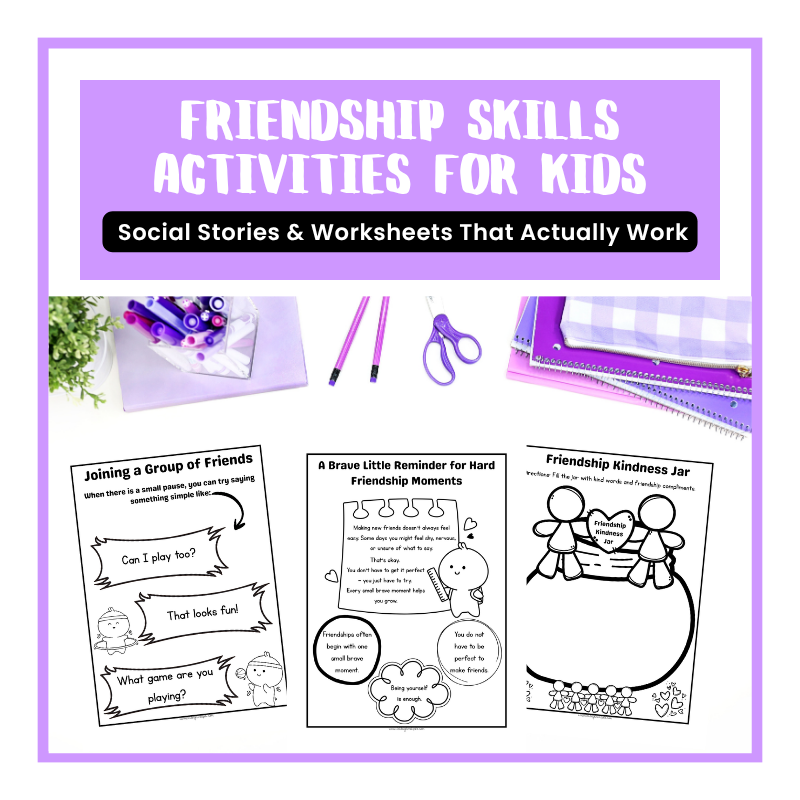
I believe that kids today are not lacking the desire for connection, but rather ideas and knowledge on how to navigate social situations successfully.
In this blog post, I will break down why friendship instruction matters, what skills children need, and how you can effectively teach social skills using structured activities that actually work. Whether that’s at home or in the classroom.
Why Friendship Skills Need to Be Taught?
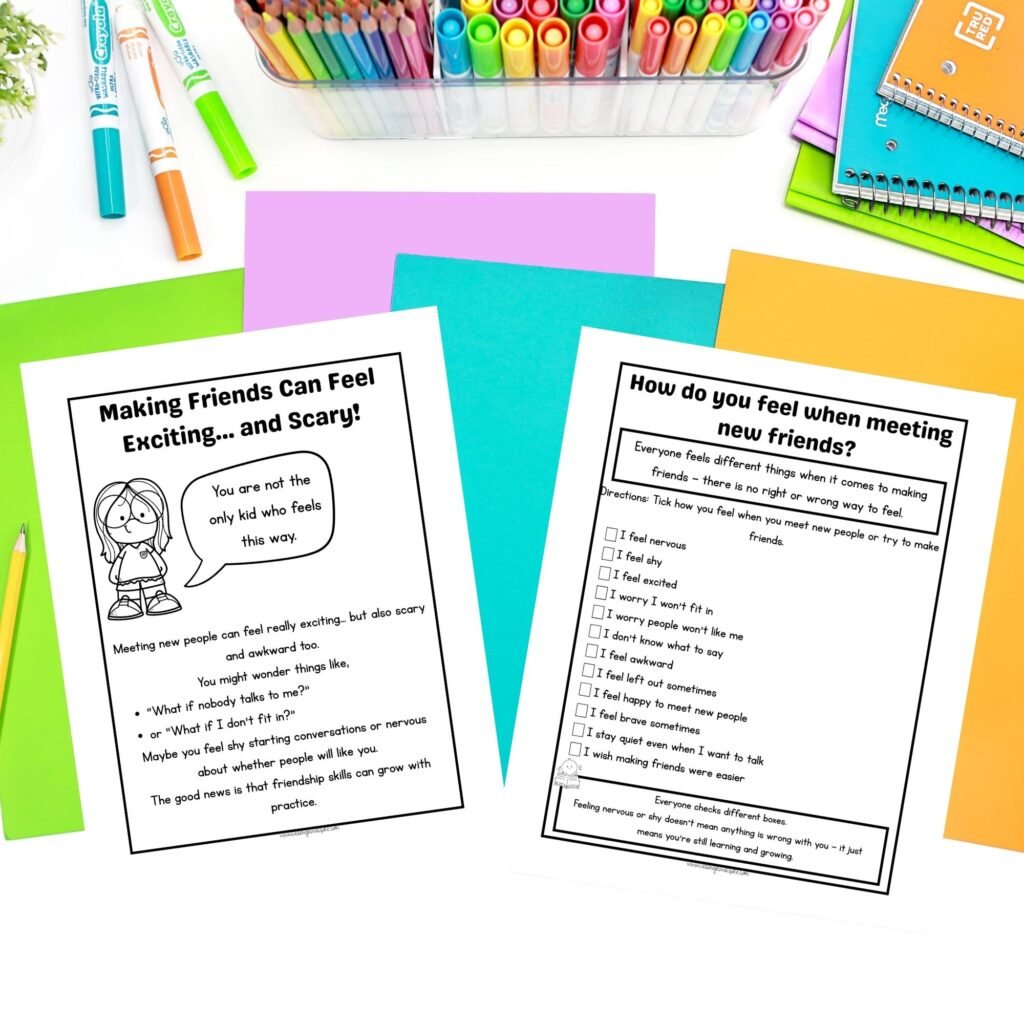
Friendship dilemmas occur more often than not in grades 2, 3, and 4.
Most of the time, it’s because kids
- Form deeper peer relationships
- Experience social exclusion more strongly
- Compare themselves socially to others
- Navigate group dynamics and peer pressure
At this stage, friendship is no longer just about playing together; instead, it becomes about belonging.
Research shows that children who develop strong social skills early are more likely to experience academic success, emotional regulation, and long-term confidence in school settings.
However, many students are never directly taught how to make friends.
And that’s the exact reason I created these making friends social story worksheets for kids in grades 2, 3, and 4.
What Students Struggle With Socially?
As a classroom teacher, parent, or counselor, you may have observed children who:
- Want to join peers playing or chatting, but don’t know how
- Interrupt or approach peers inappropriately
- Misread social cues
- Struggle with rejection or “no” responses
- Prefer isolation due to anxiety or past experiences
- Have difficulty maintaining friendships over time
These challenges are not behavioral “issues” in isolation but rather, more often than not, skill gaps.
This is why structured friendship skills activities for kids are so effective.
They provide clear, repeatable instructions in otherwise unpredictable situations.
Why Social Stories For Teaching Friendship Skills?
Social stories are one of the most widely used tools in SEL instruction and special education because they:
- Break down social situations step-by-step
- Model appropriate behaviors
- Reduce anxiety around peer interactions
- Reinforce empathy and perspective-taking
- Provide visual and structured learning support
When paired with friendship worksheets and SEL activities, students get both understanding and practice.
This combination is especially powerful for:
- Small group counseling sessions
- Special education support
- Autism support programs
- Classroom SEL lessons
- Behavior intervention plans
- Lunch bunch friendship groups
Key Friendship Skills Students Need to Learn
Inorder to help our kiddos build strong, meaningful friendships, we need to guide them.
Here are 5 ways we can initiate friendship building with kids:
1. Helping Them Learn To Start Conversations
You may have noticed that some students genuinely want friends, but they don’t know how to start the interaction. (Sometimes, as adults, this is difficult for us as well.)
Walking up to a group at recess or speaking to a classmate during partner work can feel really overwhelming for some kids.
They may worry about saying the wrong thing, getting ignored, or not knowing how to keep the conversation going once it starts.
That’s why teaching conversation starters directly can make such a big difference.
Simple phrases like:
- “Can I play with you?”
- “What are you working on?”
- “Do you want to be partners?”
may seem natural to some children, but for others, those social skills need to be modeled and practiced over time.
Role-playing, social stories, and friendship worksheets give students a chance to practice these situations in a low-pressure way before they happen in real life.
Even small wins matter here.
When a student successfully starts a conversation and has a positive interaction with a peer, you can often see their confidence begin to grow.
Over time, those little moments can lead to stronger friendships, better classroom participation, and students feeling more connected and comfortable at school.
2. Joining Group Activities
Joining a group activity is another social skill that seems simple on the surface but can actually be really difficult for many students.
Some children want to join in but aren’t sure how to approach a group appropriately, while others may jump into play too quickly without reading the situation first.
This can sometimes lead to frustration, misunderstandings, or students feeling left out.
Helping students learn skills like:
- Observing first,
- Waiting for a pause in the conversation,
- Asking politely to join and understanding that sometimes groups may already be full can really support healthier peer interactions.
Practicing phrases like “Can I join?” “What are you playing?” or “Is there room for one more?” can help children feel more prepared and confident in social settings
Social stories, role-playing activities, and friendship worksheets can also help students understand what successful group interactions look like.
With practice and encouragement, many students become more comfortable joining peers appropriately and begin building stronger connections with classmates both inside and outside the classroom.
3. Listening and Taking Turns
One of the biggest parts of building and maintaining friendships is learning how to listen and take turns during conversations and activities.
In elementary school, many kids are still developing listening and taking-turns skills. And sometimes they may not even realize they’re interrupting others, talking over classmates, or dominating conversations.
For some children, excitement, impulsivity, or difficulty reading social cues can make back-and-forth interactions especially challenging.
I’ve noticed kids who struggle socially may have a hard time recognizing when someone else wants a turn to speak or when a peer is no longer engaged in the conversation. This can sometimes lead to frustration between classmates and make it harder for friendships to grow naturally.
Teaching active listening skills can make a huge difference.
Modeling things like making eye contact, waiting patiently, listening without interrupting, and responding to what another person says will help students understand what respectful communication looks like.
Simple reminders such as “Friendships go both ways” or “Good conversations involve sharing and listening” can also be really helpful for younger students.
Role-playing, partner activities, and social-emotional learning lessons give students opportunities to practice these skills in a supportive setting.
Over time, students begin to understand that listening is just as important as talking when it comes to building positive relationships and feeling connected to others.
4. Handling Conflict
Conflict is a normal part of friendships, especially in elementary school when students are still learning how to manage emotions, communicate clearly, and solve problems with peers.
Even strong friendships will have moments of disagreement, hurt feelings, or misunderstandings.
The important part is helping students learn how to work through those situations in healthy and respectful ways.
Many children struggle with conflict because their first reaction may be to shut down, argue, blame others, or become emotionally overwhelmed. I’ve seen this firsthand with my own kids.
During group work, games at recess, or other situations, you may have noticed where students feel left out or treated unfairly.
These moments can be difficult, but they also create valuable teaching opportunities.
Helping students learn simple conflict-resolution strategies can make a big difference in their peer relationships.
Skills like using calm words, expressing feelings appropriately, listening to another person’s perspective, apologizing sincerely, and working toward a solution are all important parts of friendship development.
Modeling phrases such as:
- “That hurt my feelings,”
- “Can we figure this out together?” or
- “I’m sorry for what I said.”
gives students language they can use when emotions are high.
Social stories, role-playing activities, and friendship worksheets can help students practice handling disagreements before they happen in real life.
Over time, students begin to understand that conflict does not automatically end a friendship. Instead, it can become an opportunity to learn communication, empathy, and problem-solving skills that will support them well beyond the classroom.
5. Understanding Emotions
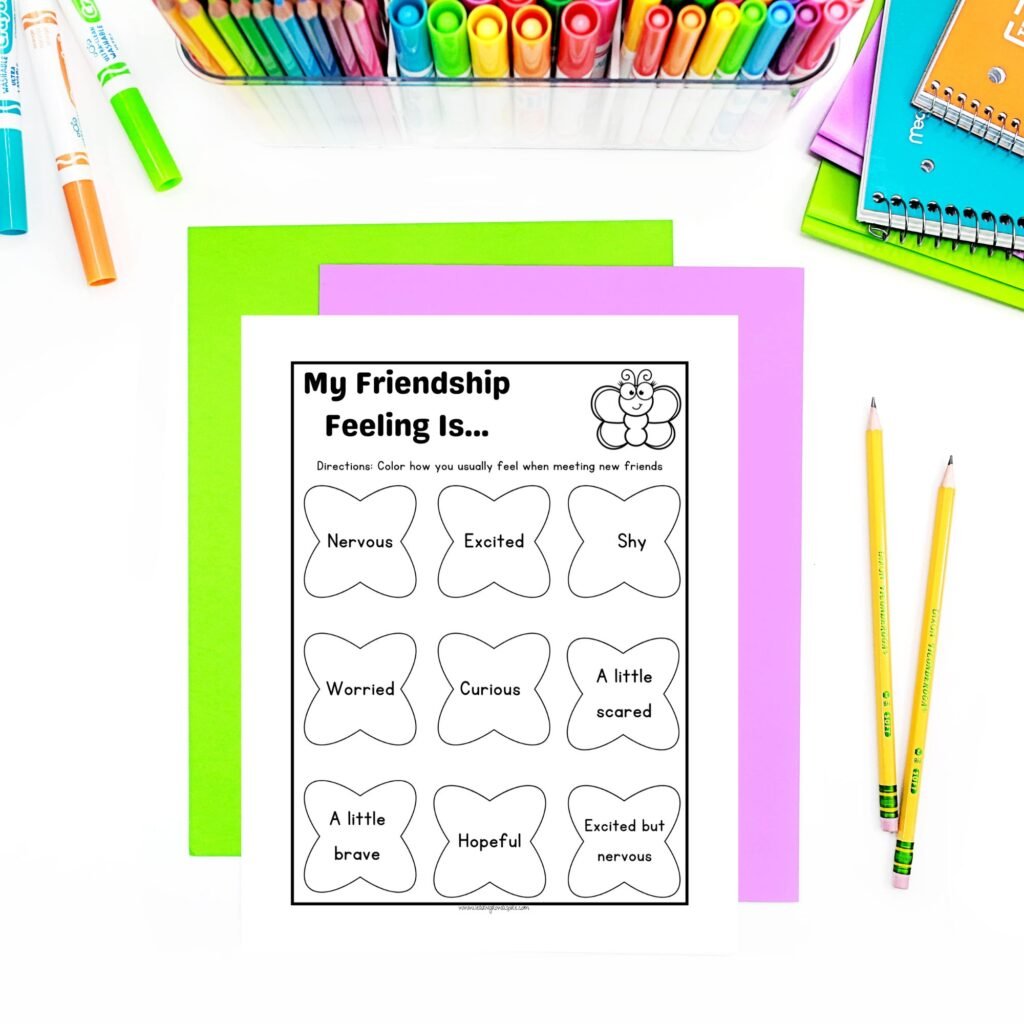
A big part of making and keeping friends comes down to understanding emotions—both your own and other people’s.
For many students, especially in grades 2–4, emotions can feel big, fast, and sometimes confusing.
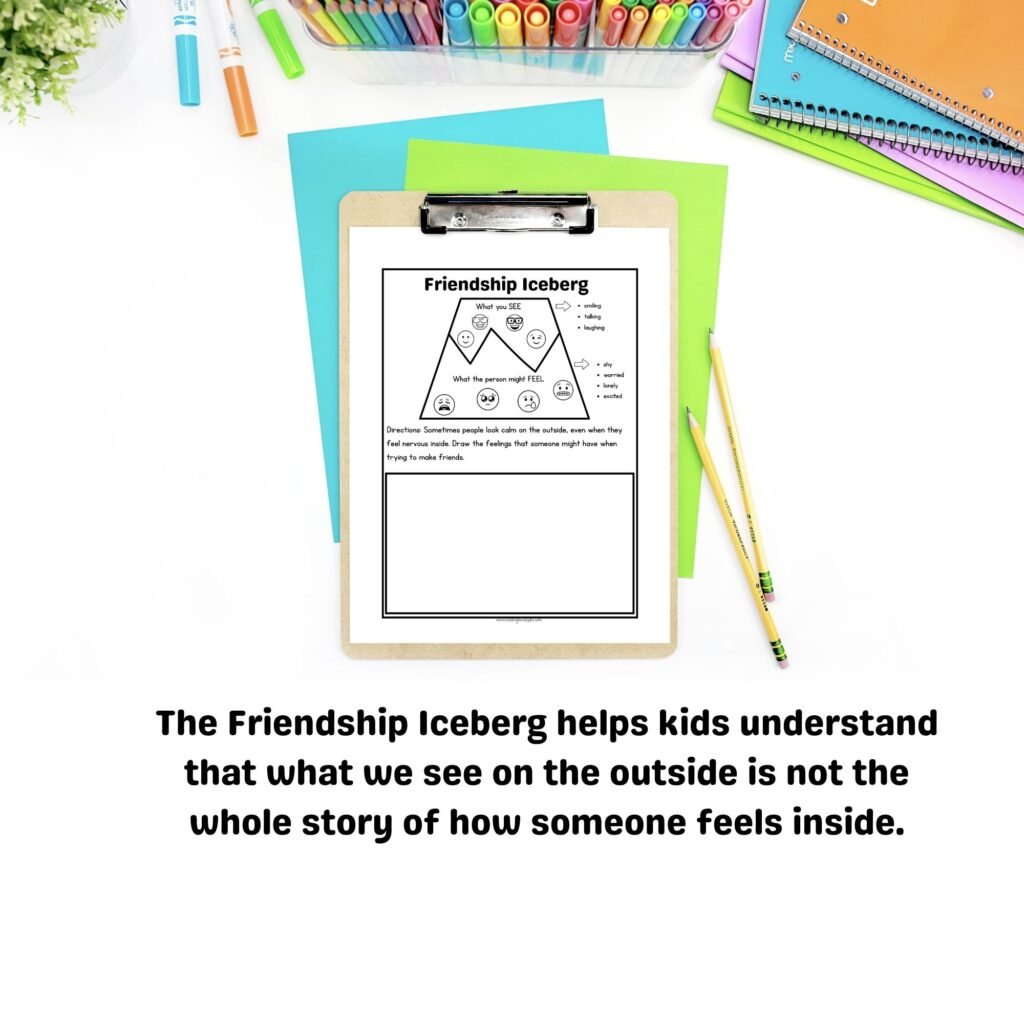
They might struggle to name what they’re feeling in the moment, or they may misread how a classmate is feeling based on tone of voice, facial expressions, or body language.
In the classroom or counselling setting, this often shows up in small but important ways.
A student might think a peer is “mad” when they’re actually just focused, or they might not recognize when someone feels left out during group work. On the flip side, they may also have difficulty managing their own emotions, which can impact how they respond in social situations.
This is why teaching emotional awareness is so important.
Helping students build a vocabulary for feelings—like frustrated, disappointed, nervous, excited, or overwhelmed—gives them a starting point for better communication.
When students can identify what they’re feeling, they’re more likely to express it more calmly and appropriately.
How to Teach Friendship Skills?
Use Role-Playing Activities
Role-playing is a simple but really effective way to help students practice friendship skills in a safe, low-pressure setting.
Instead of just talking about what to do in social situations, students actually get to act them out, which helps the learning stick.
You can use role-play to practice common situations like asking to join a game, starting a conversation, handling rejection, or working through a small disagreement.
At first, giving students sentence starters or short scripts can help reduce anxiety and make it easier for them to participate.
Integrate Social Stories
Social stories are a simple but powerful way to teach friendship skills in a way that feels clear and predictable for students.
They break down social situations into small, easy-to-understand steps so children know what to do and what to expect.
They’re especially helpful for teaching skills like joining a group, starting conversations, handling conflict, and understanding others’ feelings.
By seeing these situations laid out in a story format, students can better understand appropriate responses before they happen in real life.
When paired with discussion or worksheets, social stories help reinforce learning and give students more confidence in their peer interactions over time.
Use Guided Worksheets
Guided worksheets are a great way to help students slow down and really think through friendship situations in a structured way.
Instead of just talking about social skills, students are given space to reflect, write, and respond to real-life scenarios in a more intentional way.
This helps reinforce what they’re learning during discussions, role-playing, or social stories.
Worksheets can support skills like identifying good friendship choices, choosing appropriate responses, and thinking through how their actions affect others.
For many students in grades 2–4, this kind of structured practice helps bridge the gap between understanding a concept and actually using it in real social situations.
If you’re looking for something ready-to-use, the Making Friends Social Story & Friendship Worksheets Activities for Grades 2–4 resource is designed specifically for this purpose.
It includes engaging, structured activities that help students build confidence with friendship skills, practice social situations, and strengthen peer interactions in a clear and supportive way.
It works especially well for classroom SEL lessons, small group counseling, and targeted social skills support.
Practice in Small Groups
Small group practice gives students a safe, low-pressure space to build friendship skills. With fewer peers, students often feel more comfortable participating and trying out new social behaviours.
These sessions are a great place to target skills like starting conversations, joining activities, listening, and handling small conflicts.
Students can also learn by watching and hearing how others respond in similar situations.
Over time, this repeated practice helps students feel more confident and prepared to use these skills in the classroom, at recess, and in everyday peer interactions.
Reinforce Daily in Natural Moments
Friendship skills stick best when they’re reinforced consistently in everyday classroom moments, not just during formal lessons.
The classroom naturally provides so many opportunities – group work, transitions, recess conversations, and partner activities- where students can practice and apply what they’re learning in real time.
Instead of waiting for a “teachable moment” after a problem happens, you can gently guide students as situations unfold.
Quick reminders like encouraging turn-taking, prompting a student to invite a peer, or reinforcing kind language can make a big difference over time.
These small, ongoing moments of support can help students connect what they’ve learned in social stories, worksheets, and small groups to real-life situations.
The more often they hear and practice these skills naturally, the more confident and independent they become in their friendships.
Why Consistency Matters in Friendship Skills Instruction
As I mentioned many times throughout this post, friendship development is not a one-time lesson; it is an ongoing learning process.
Students need:
- Repetition
- Modeling
- Feedback
- Safe practice environments
Even short, consistent SEL lessons can significantly improve peer interactions over time.
Teach Friendships With This Social Story Packet
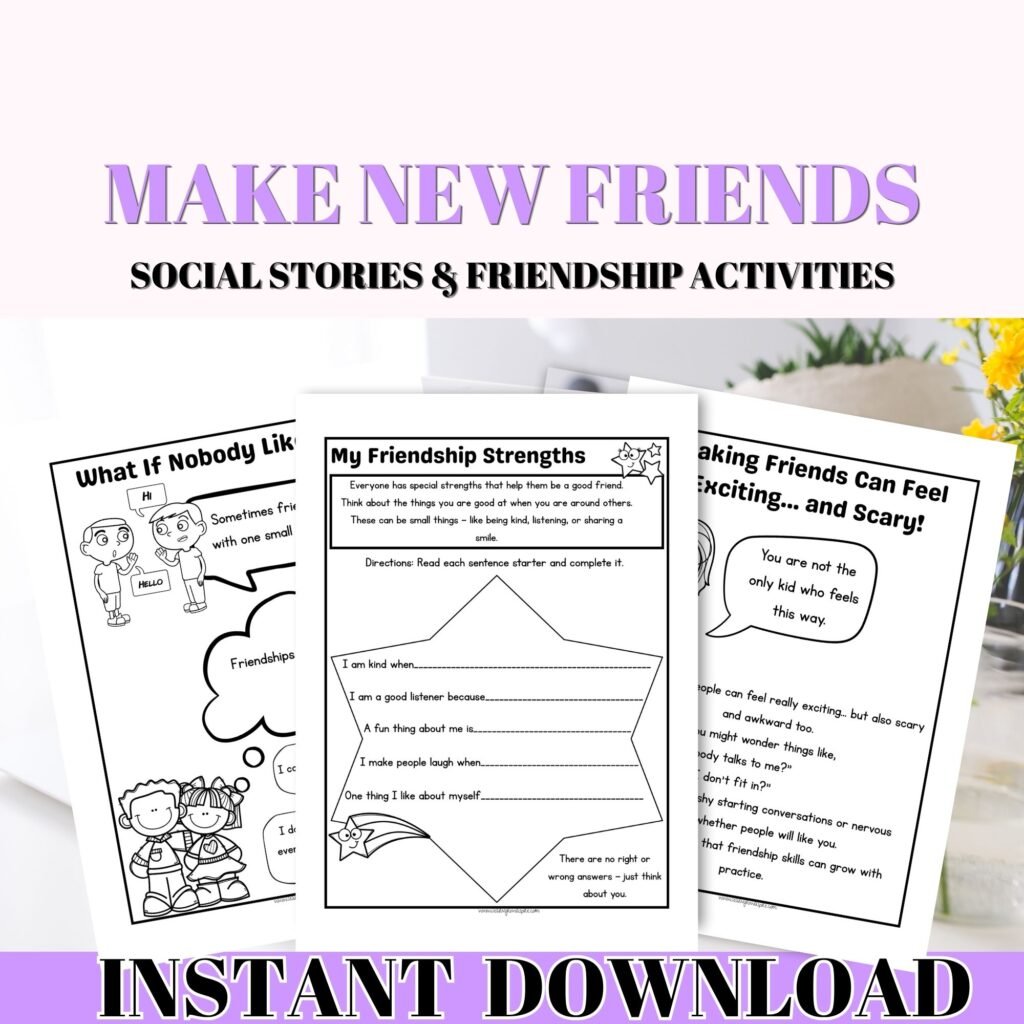
If you’re looking for structured, classroom-ready support, Making Friends Social Story Worksheets for Kids is designed specifically to help students in grades 2–4 build stronger peer relationships through guided instruction and practice.
This resource supports students in learning:
- How to make friends confidently
- How to join peer groups appropriately
- How to navigate social situations
- How to understand friendship expectations
- How to develop empathy and communication skills
It is especially useful for:
- Teachers implementing SEL curriculum
- School counselors running social skills groups
- Special education classrooms
- Behavior intervention support
- Small group friendship lessons
SHOP MAKING FRIENDS SOCIAL STORY ACTIVITIES FOR 2ND, 3RD, OR 4TH GRADES
Social Story For Teaching Friendship
These no-prep printable PDF friendship worksheets and activities are designed to help bridge an important gap in education: teaching students the social skills they need to succeed both inside and outside the classroom.
Friendship is not automatic for every child—it is a learned skill built through instruction, modeling, and practice.
When educators intentionally teach friendship skills through structured SEL activities, students gain more than just classroom success; they gain confidence, belonging, and stronger emotional well-being.
And those outcomes last far beyond the school year.
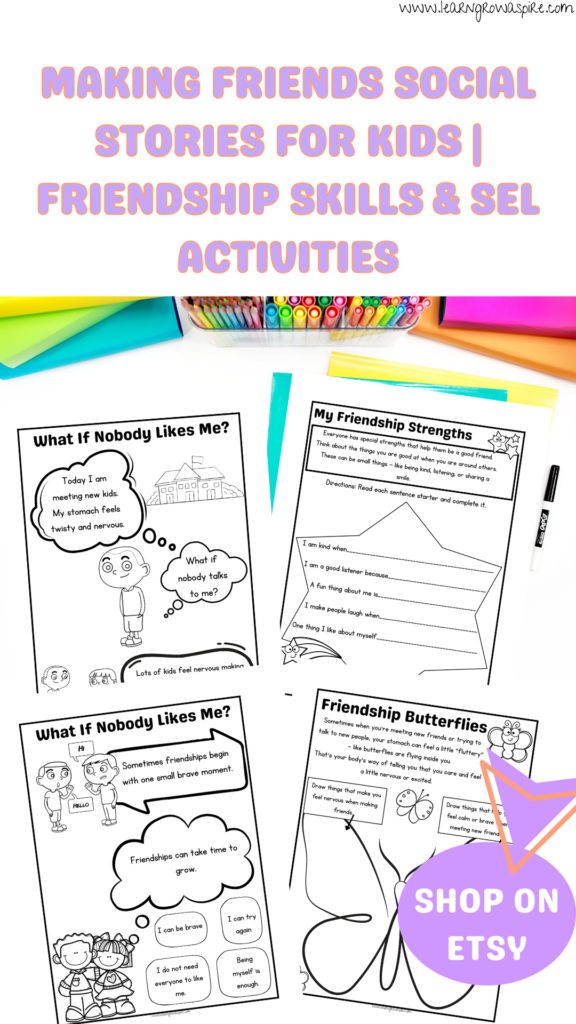
Pin These Friendship Worksheets For Kids
Save these friendship-making worksheets to your social skills Pinterest board so that you can easily find them when needed. And while on Pinterest, please consider following.
Some of the links in this post may be affiliate links. I’m also an Amazon Affiliate and will occasionally link to some of my favorite Amazon products. I will receive a small percentage back if you purchase through my link. You won’t be charged a penny more if you shop through my links. That said, I do NOT recommend anything I do not use and love! Thank you for helping support my blog!

