Finding effective self control worksheets for kids can sometimes feel overwhelming, especially when you’re trying to support real classroom behaviors. Like blurting out, frustration, impulsive reactions, or emotional outbursts.
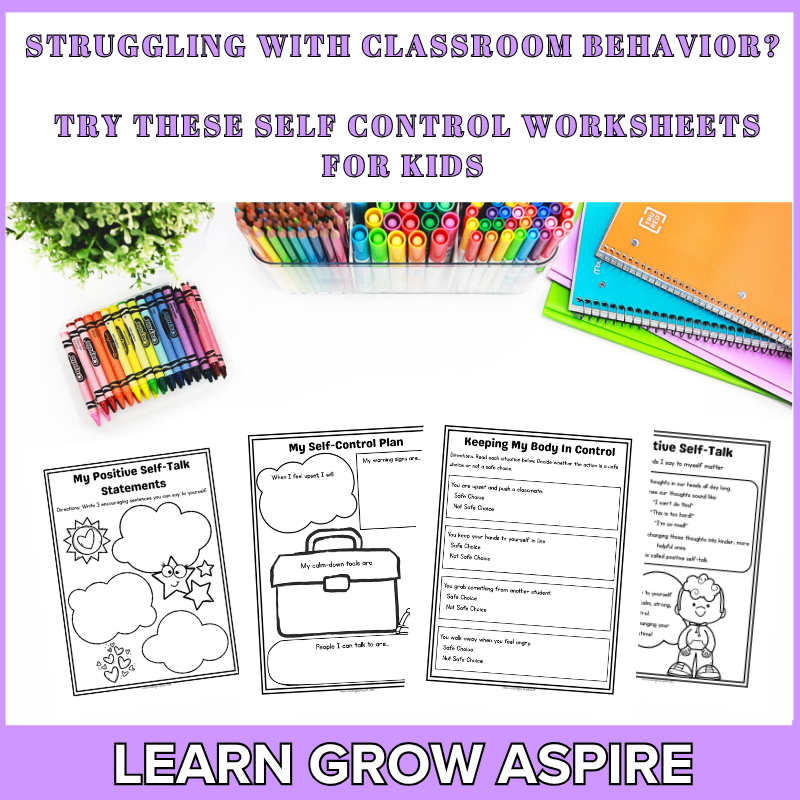
Self-control is something many children are still learning. And it’s not an overnight skill. It takes practice, patience, and the right kind of support.
That’s why I’ve created this fun, engaging, and effective printable PDF workbook to support children. When kids are given opportunities to slow down, think through situations, and practice calming strategies in a safe and supportive way, they begin building skills that help them both inside and outside the classroom.
Why Self-Control Skills Matter?
Self-control affects so many parts of a child’s day.
It helps them to:
- pause before reacting
- manage frustration
- solve problems calmly
- make safer choices
- build stronger friendships
- stay focused during learning activities
For elementary students, these skills are still developing.
Many children react quickly because they are still learning how to handle big emotions, disappointment, frustration, or conflict.
That’s why I firmly believe that teaching self-control needs to be ongoing and practical. Not just something we talk about once during an SEL lesson and leave alone.
What Makes Self Control Worksheets for Kids Actually Helpful?
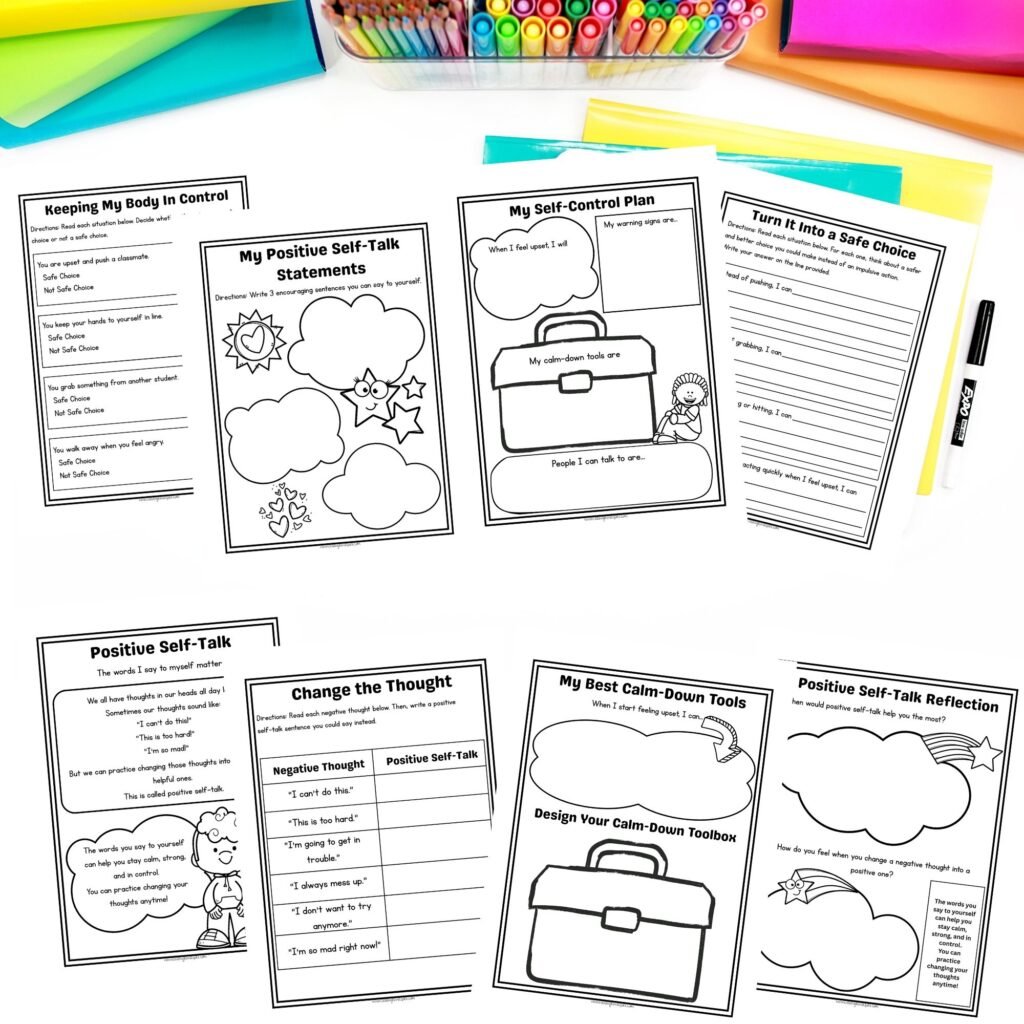
Not all worksheets are equally effective.
The most helpful self control worksheets for kids are the ones that feel relatable, simple, and connected to situations students experience every day at school.
You see, kids learn best when they can:
- think through real-life situations
- reflect on their reactions
- practice coping strategies
- identify emotions and body warning signs
- learn better replacement behaviors
Worksheets that feel too lecture-heavy or unrealistic usually don’t connect with students. But activities that use classroom scenarios, problem-solving, and emotional awareness tend to feel much more meaningful and engaging.
Important Self-Control Skills Kids Need
Recognizing Big Feelings
Before students can manage emotions, they first need to recognize them.
Many children struggle to notice when they are starting to feel:
- angry
- frustrated
- embarrassed
- impatient
- overwhelmed
Helping students identify these feelings early is an important step toward emotional regulation.
Understanding Body Warning Signs
One thing I’ve noticed is that many kids experience physical warning signs before they lose control, but they don’t always recognize them yet.
Things like:
- clenched fists
- fast heartbeat
- tight muscles
- stomping feet
- feeling hot
- wanting to yell
- sweaty fingers
Teaching students to notice these body clues can help them pause before reacting impulsively.
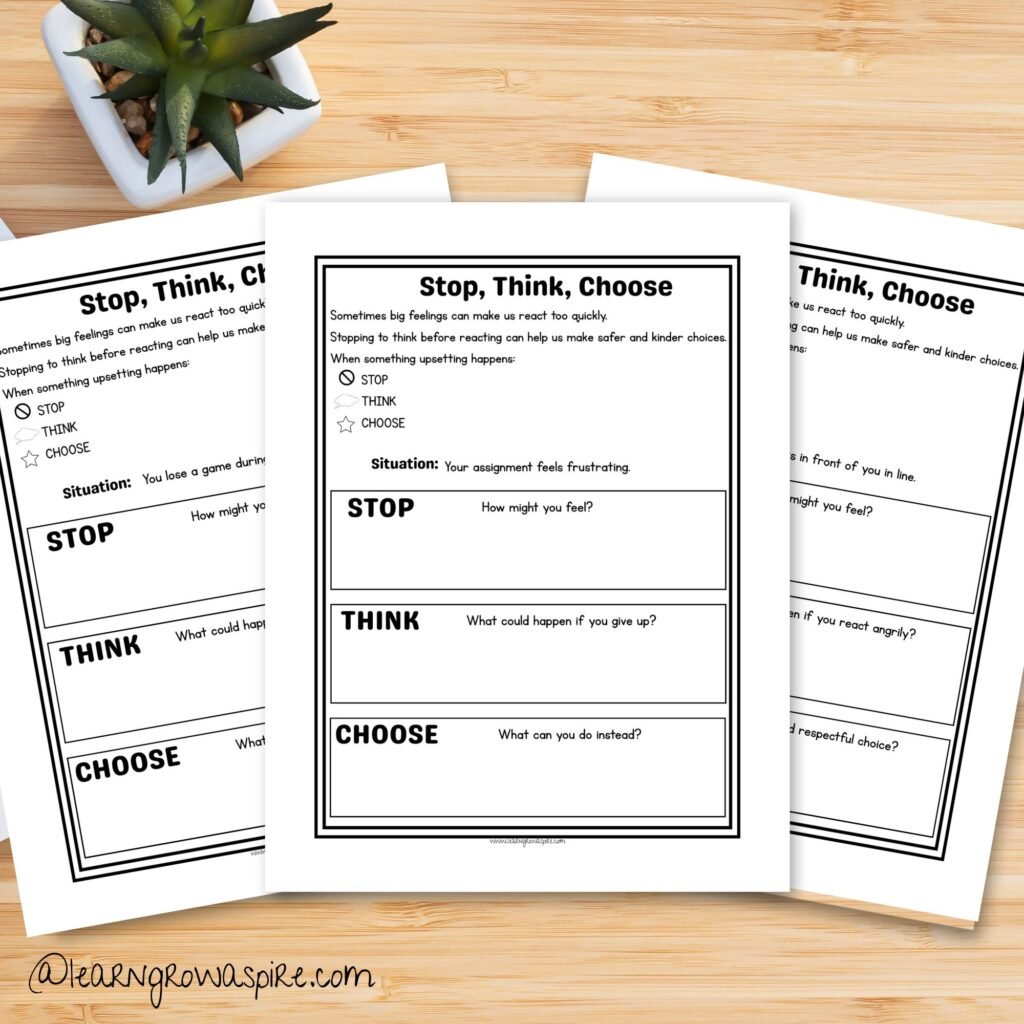
Practicing “Stop, Think, and Choose”
One of the simplest strategies for helping kids build self-control is teaching them to stop, think, and choose.
This gives students an easy framework they can actually remember during difficult moments.
Instead of reacting immediately, they begin learning how to slow down and think about better choices.
Building Calm-Down Strategies
Students also need calming tools they can use independently throughout the day.
Some simple coping strategies include:
- deep breathing
- positive self-talk
- asking for help
- taking a break
- counting slowly
- walking away calmly
The more students practice these skills, the more confident they become using them during real situations.
Ways to Use Self-Control Activities in Your Classroom
These types of SEL activities work well for:
- morning meetings
- small group SEL lessons
- counseling sessions
- calm corner activities
- behavior intervention support
- early finisher work
- whole-class discussions
Many teachers also use self-control worksheets as part of their classroom behavior support because they encourage reflection and problem-solving rather than punishment.
Self-Control Worksheets & Activities For Kids
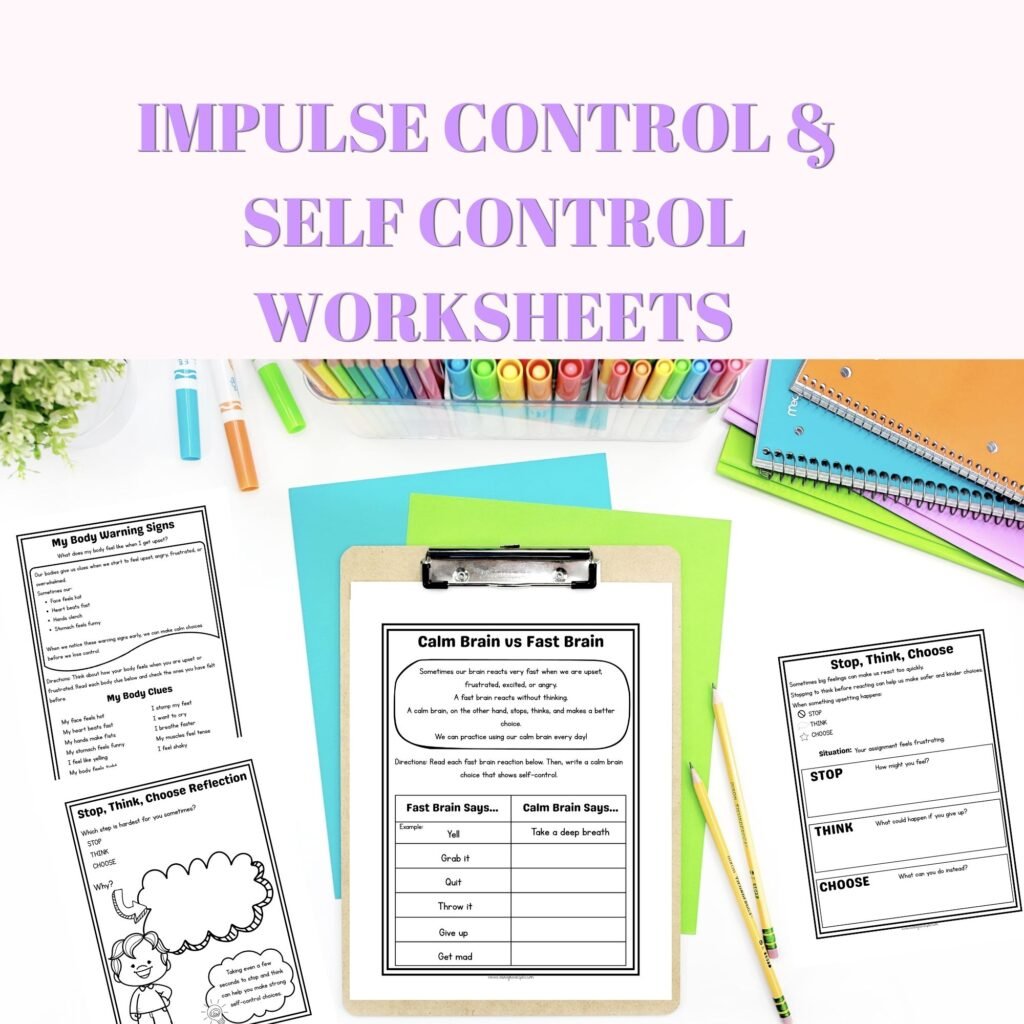
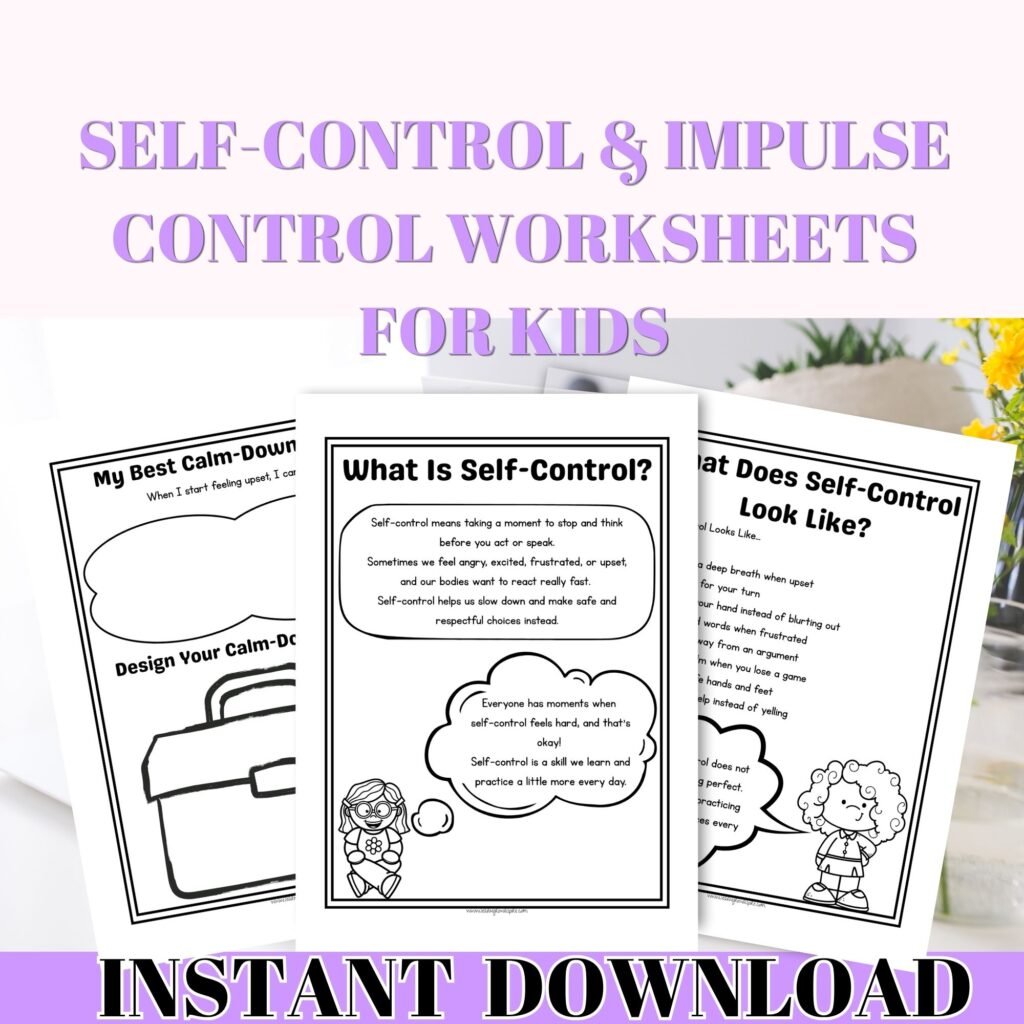
I recently created a set of Self-Control Worksheets & Activities for students in Grades 2–4.
I wanted the activities to feel practical, supportive, and easy for teachers to use during everyday classroom situations.
The resource includes activities that help students:
- Identify impulsive vs. self-control choices
- Practice emotional regulation
- Recognize body warning signs
- Build positive self-talk
- Use coping skills
- Make better choices during frustrating situations
Some of the activities included are:
- What Would You Do? scenarios
- Calm Brain vs Fast Brain
- Stop, Think, Choose activities
- Self-Control or Impulsive sorting pages
- Calm-Down Toolbox activities
- Positive Self-Talk worksheets
- Safe Hands / Safe Body activities
These activities are designed to help students practice self-control skills in an encouraging, realistic way rather than a shame-based one.
You can check out the full resource here:
Self Control Worksheets & Activities for Kids on Etsy
Why You Need These Self Control Printables
Teaching self-control is not about expecting children to be perfect all the time.
It’s about helping students learn how to:
- recognize emotions
- slow down
- reflect on their choices
- and practice better responses over time
With consistent support and engaging SEL activities, students can build stronger emotional regulation skills and feel more successful both socially and academically.
If you are looking for engaging self control worksheets for kids, giving students opportunities to practice these skills in real-life situations can make a meaningful difference in the classroom.
SHOP SELF CONTROL WORKSHEETS FOR KIDS
You May Also Enjoy These Posts
- How to teach kids to pause before speaking (Think it or say it)
- How to teach personal boundaries to kids
- 60 Morning meeting questions for kids
Pin These Self Control Activities
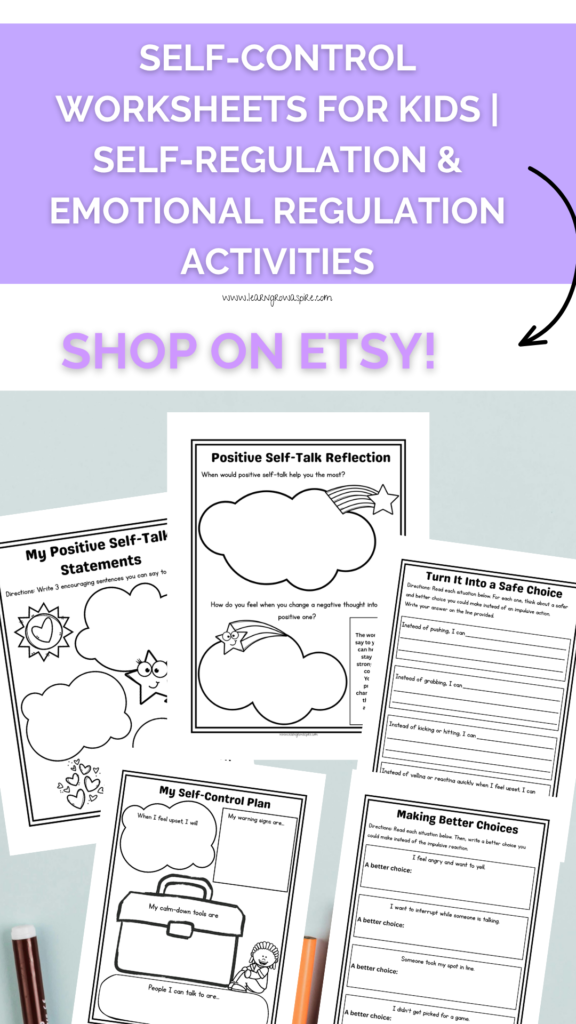
Make sure to save these self control worksheets and activities to your coping skills Pinterest board so that you can easily find them when needed. And while on Pinterest, please consider following me.
Some of the links in this post may be affiliate links. I’m also an Amazon Affiliate and will occasionally link to some of my favorite Amazon products. I will receive a small percentage back if you purchase through my link. You won’t be charged a penny more if you shop through my links. That said, I do NOT recommend anything I do not use and love! Thank you for helping support my blog!

