If you’ve ever wondered how to teach kids responsibility at home without constant reminders, bribes, or frustration, you are not alone.
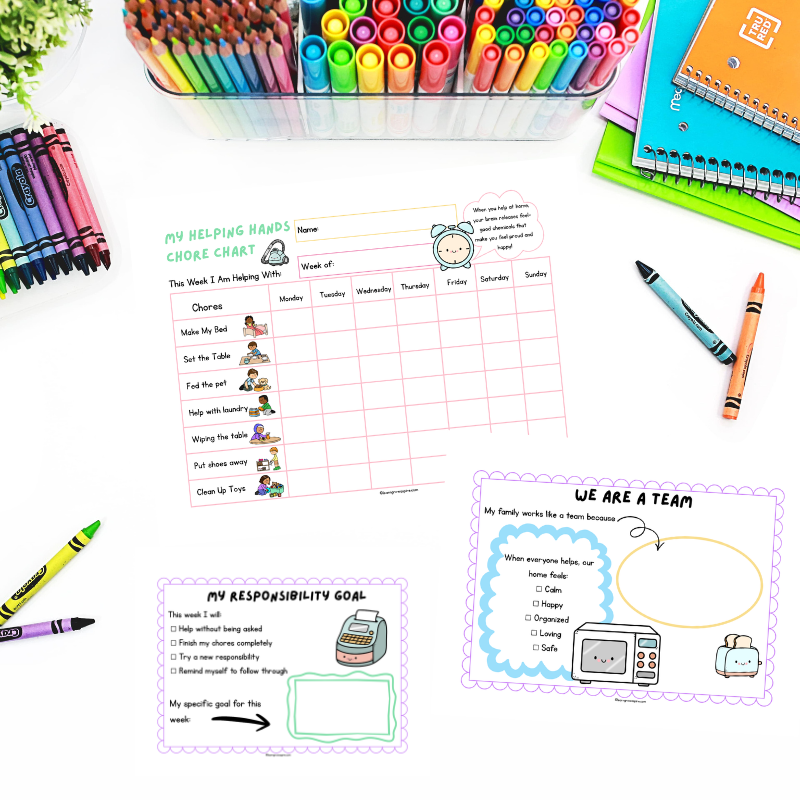
As parents, we want our children to help more — set the table, clean up their toys, feed the pet, or take ownership of small tasks. Buuut at the same time, we don’t want to turn home into a battle zone. Right?
As a mom of two, here’s what I’ve found:
Responsibility is not taught through nagging.
It’s built through connection, modeling, and meaning.
And when our children understand that helping = kindness, everything changes, not just for them. But for everyone.
What Responsibility Really Means for Kids
Responsibility is not about being perfect.
It means:
-
Doing what needs to be done
-
Taking care of shared spaces
-
Following through
-
Becoming someone others can count on
For children ages 7–10, especially, this is a powerful developmental stage. They begin to understand fairness, teamwork, and contribution.
When we frame responsibility as contribution rather than obligation, children feel capable instead of controlled.
Why Teaching Responsibility Early Matters
From a child development perspective, responsibility builds:
-
Executive functioning skills
-
Emotional regulation
-
Leadership ability
When children help at home, they feel needed. And feeling needed builds self-worth.
Research consistently shows that children who contribute to family life develop stronger problem-solving skills and higher self-esteem later in life.
But here’s the key:
It must feel meaningful.
So how can we as parents make it feel meaningful?
Here’s How I Teach Responsibility at Home
When I work with children (and in my own home), I don’t start with a chore chart.
I start with a conversation.
I ask:
-
What does responsibility mean to you?
-
How does it feel when someone helps you?
-
How do you think it feels when you help someone?
Then we connect helping to kindness.
For example:
When a child sets the table, we talk about how that makes dinner easier for everyone.
When they clean up after play, we talk about how a tidy space helps everyone feel calm.
We reflect on feelings:
“How did helping make you feel?”
That reflection is where the growth happens.
How to Encourage Responsibility Without Rewards
If you want to teach responsibility without relying on sticker charts or prizes, try this:
Make It About Teamwork
Use phrases like:
“We’re a team.”
“How can we help each other today?”
Give Ownership
Instead of assigning everything, ask:
“What is one responsibility you want to take on this week?”
Reflect on Feelings
After helping, ask:
“How did that feel?”
Children begin to connect contribution with pride and confidence.
Focus on Effort
Say:
“I noticed you cleaned up without being asked. That shows responsibility.”
Recognition of character > reward for task.
Why I Created these Helping Hand Printables
Here’s what I noticed with my own kids at home.
Kids don’t resist responsibility — they resist being controlled.
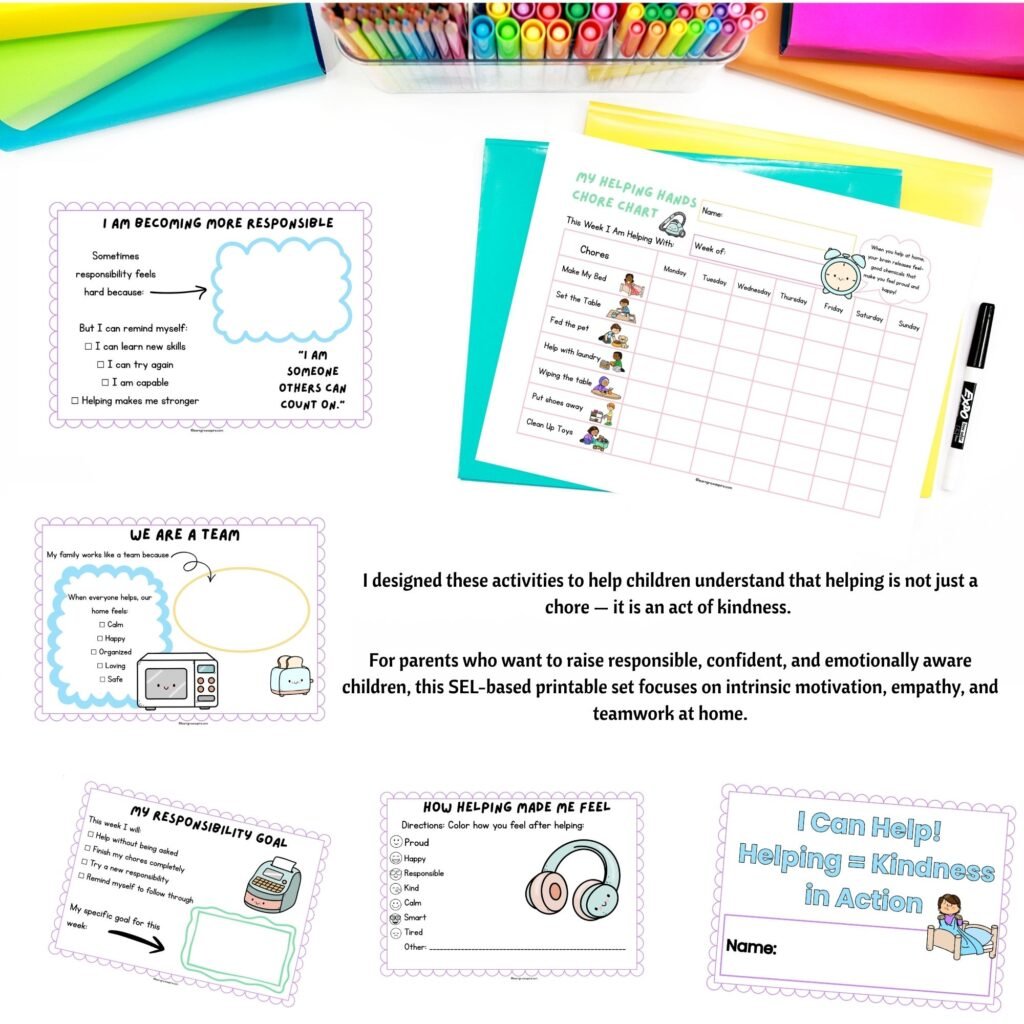
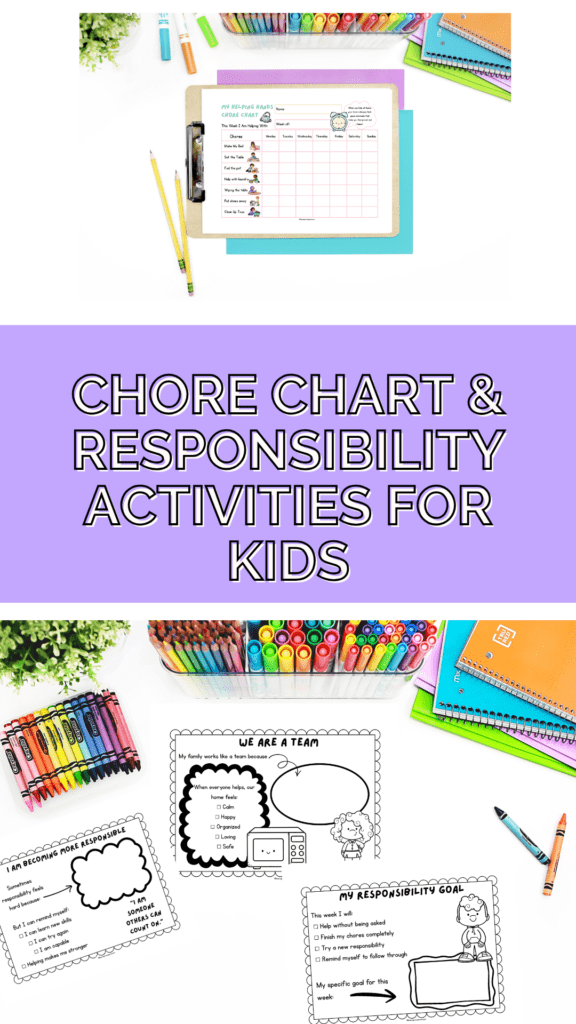
So I created a set of printable worksheets for ages 7–10 that focus on:
-
Understanding responsibility
-
Reflecting on how helping feels
-
Seeing the family as a team
-
Setting personal responsibility goals
-
Building intrinsic motivation
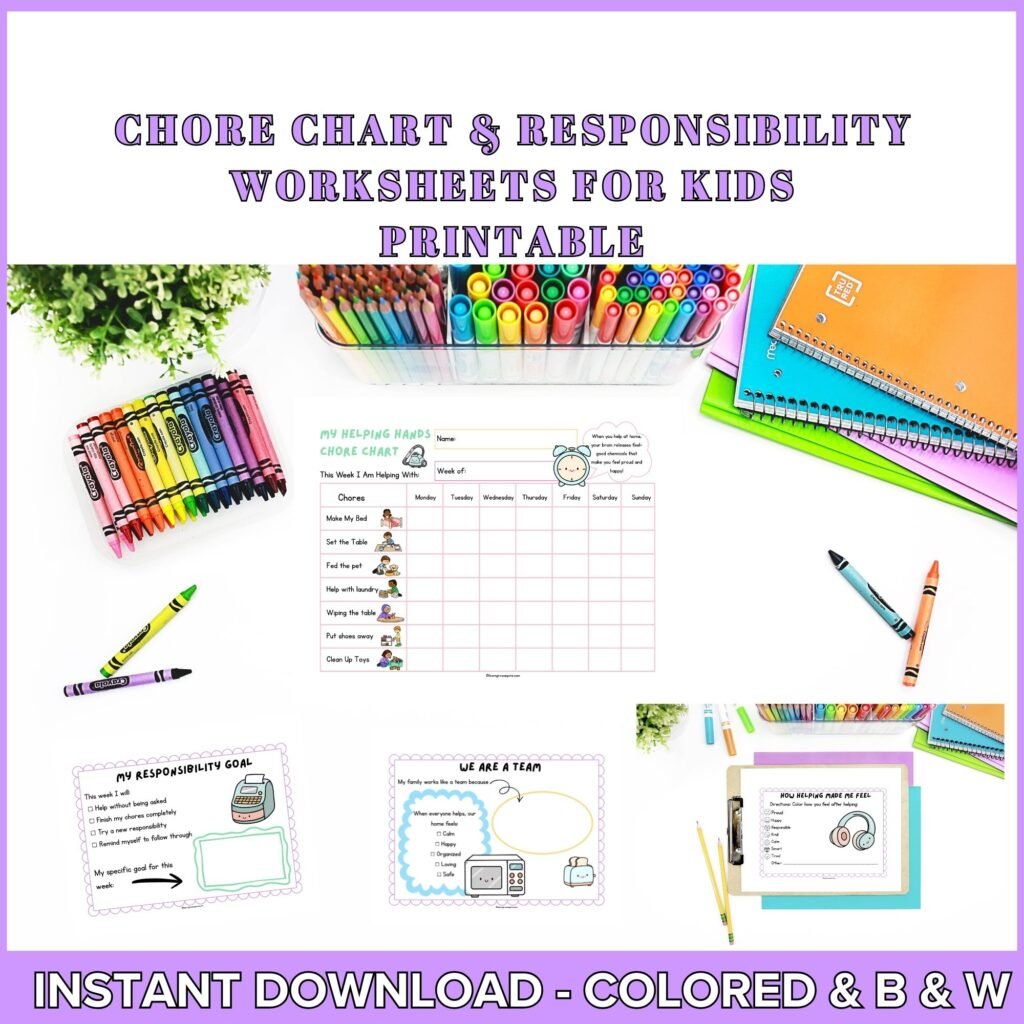
It includes:
-
A responsibility-focused chore chart
-
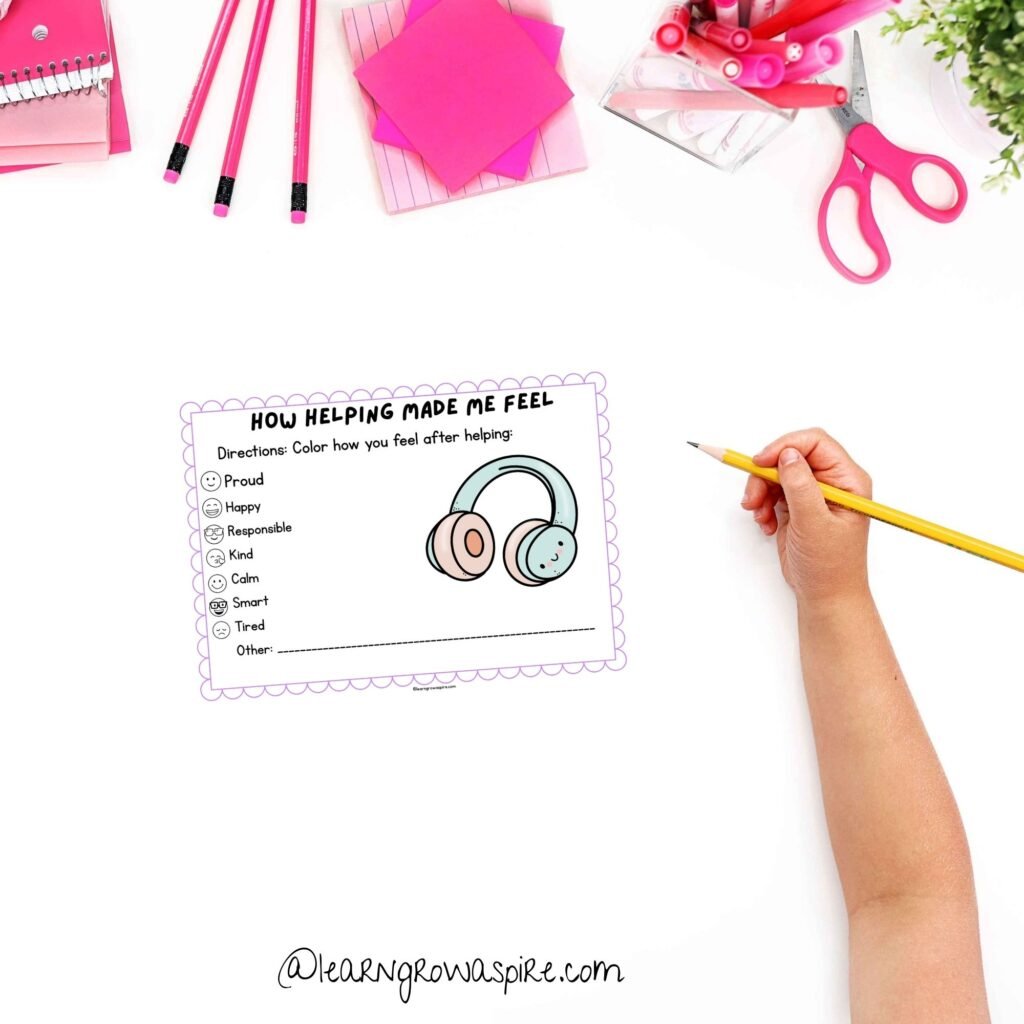
A “How Helping Made Me Feel” reflection page
-
A “We Are a Team” worksheet
-
A growth mindset responsibility page
-
A personal goal-setting sheet
-
Color + black and white versions
It’s not a reward chart. It’s a character-building tool.
If you want structured guidance while still encouraging emotional growth, then you would want to grab this printable pdf chore chart and responsibility worksheets for your kiddos.
Even If You Don’t Purchase…
Here’s something you can try today:
Tonight at dinner, ask your child:
“What is one way you helped someone today?”
Then ask:
“How did that make you feel?”
That single conversation can begin building intrinsic responsibility. Because when children feel capable and valued, they naturally want to contribute.
Raising Responsible Kids Starts at Home
Teaching kids responsibility isn’t about control.
It’s about:
-
Building trust
-
Encouraging ownership
-
Modeling kindness
-
Creating teamwork
Small, consistent actions shape strong character. And the most powerful lesson we can teach children is this – helping is not just a task. Helping is kindness in action.
Shop Chore Chart PDF & Responsibilities PDF
Shop these “helping hands” for kids’ activities on Etsy.
Explore More Resources Here On The Blog
You may also want to check out these posts:
- Teach kids confidence with positive self-talk.
- Art therapy worksheets for kids printable pdf
- Activities to foster a growth mindset
- Free printable encouraging lunch box notes for kids
Pin How To Teach Kids Responsibility At Home
If you found this helpful, save it to your character-building for kids Pinterest board or share it with a friend or family member who may find this post helpful. And while on Pinterest, please consider following me on the platform.
Some of the links in this post may be affiliate links. I’m also an Amazon Affiliate and will occasionally link to some of my favorite Amazon products. I will receive a small percentage back if you purchase through my link. You won’t be charged a penny more if you shop through my links. That said, I do NOT recommend anything I do not use and love! Thank you for helping support my blog!

