If you’re a parent, teacher, or counselor looking for tone of voice activities for teens in a printable PDF format, you’re in the right place.
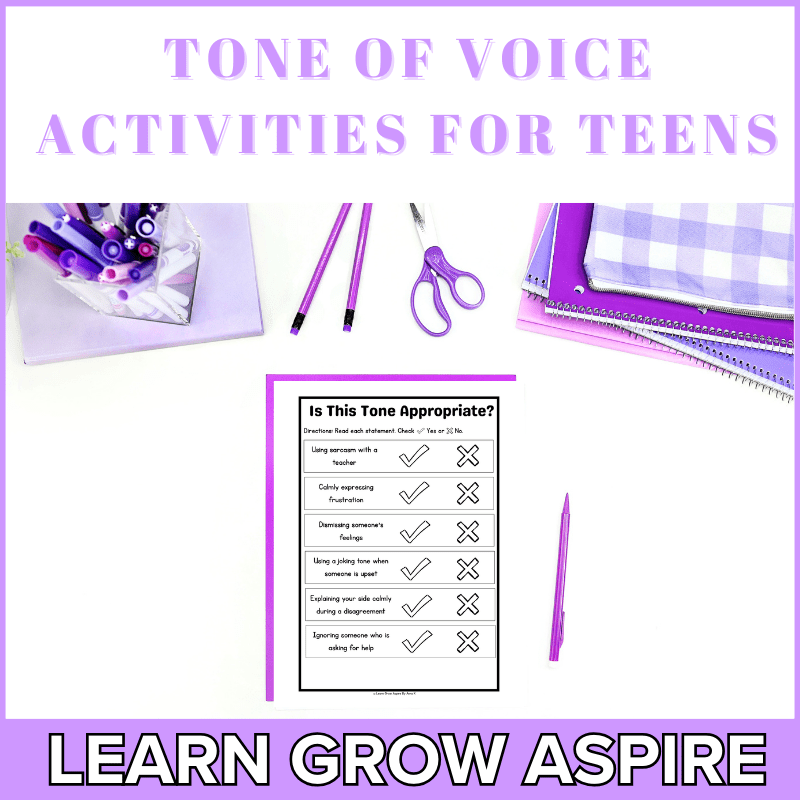
This post will help you understand why tone matters so much for teens, how miscommunication happens, and practical activities you can use to teach tone awareness in a supportive, non-judgmental way.
Tone of voice plays a powerful role in how teens are understood by others and how they understand themselves. A single sentence can sound respectful, sarcastic, defensive, or kind depending entirely on tone. For teenagers, who are already navigating intense emotions, social pressure, and growing independence, tone of voice can easily become a source of conflict at home, in the classroom, and with peers.
By the end of this post, you’ll walk away with concrete strategies you can use right away and an optional ready-to-use worksheet resource designed specifically for teens.
Why Tone of Voice Is So Important for Teens?
The truth is many teens don’t intend to sound rude, dismissive, or sarcastic, but that’s often how they’re perceived.
Tone of voice is shaped by emotion, stress, past experiences, and even neurodevelopment.
Teens are still developing impulse control and emotional regulation, which means tone often comes out before they’ve had time to think it through.
Tone of voice affects:
- Peer relationships and friendships
- Teacher-student interactions
- Parent-teen communication
- Conflict resolution
- Self-advocacy skills
When teens understand how their tone impacts others, they gain a valuable life skill that supports emotional intelligence, empathy, and healthy communication.
Common Tone of Voice Challenges Teens Face
Before diving into activities, it helps to understand where teens struggle most.
1. Tone vs. Intent Mismatch – Teens often say, “That’s not how I meant it,” after a conflict. Their intent may be neutral or even positive, but their tone tells a different story.
2. Emotional Spillover – Strong emotions like frustration, embarrassment, or anxiety can hijack tone, even in simple conversations.
3. Digital Communication Confusion – Text messages, social media comments, and emails lack vocal cues, making tone easy to misinterpret.
4. Authority Dynamics – Teens may unintentionally use a defensive or dismissive tone with adults, escalating situations they didn’t mean to escalate.
Recognizing these patterns helps us adults approach tone-of-voice teaching with empathy rather than punishment.
How Teaching Tone of Voice Helps Teens Long-Term?
Tone awareness is definitely not about controlling teens; it’s about empowering them.
When teens learn tone of voice skills, they:
- Communicate more clearly
- Reduce misunderstandings
- Build stronger relationships
- Handle conflict more calmly
- Advocate for themselves respectfully
These are skills teens carry into adulthood, college, work environments, and personal relationships.
Effective Tone of Voice Activities For Teens
Below are practical, teen-appropriate tone of voice activities that can be used at home, in classrooms, or during counseling sessions.
Many of these work especially well when paired with our printable tone of voice worksheets for teens.
1. Same Words, Different Tone
Give teens a neutral sentence such as:
“I’m fine.”
Have them rewrite or act it out using different tones:
- Calm
- Sarcastic
- Defensive
- Respectful
- Angry
This activity helps teens see how tone changes meaning, even when words stay the same.
2. Tone Sorting Activity
Provide short statements and ask teens to sort them into categories:
- Helpful tone
- Neutral tone
- Unhelpful tone
Then discuss:
- How would this sound to someone else?
- How could it be rephrased?
This encourages reflection without shaming.
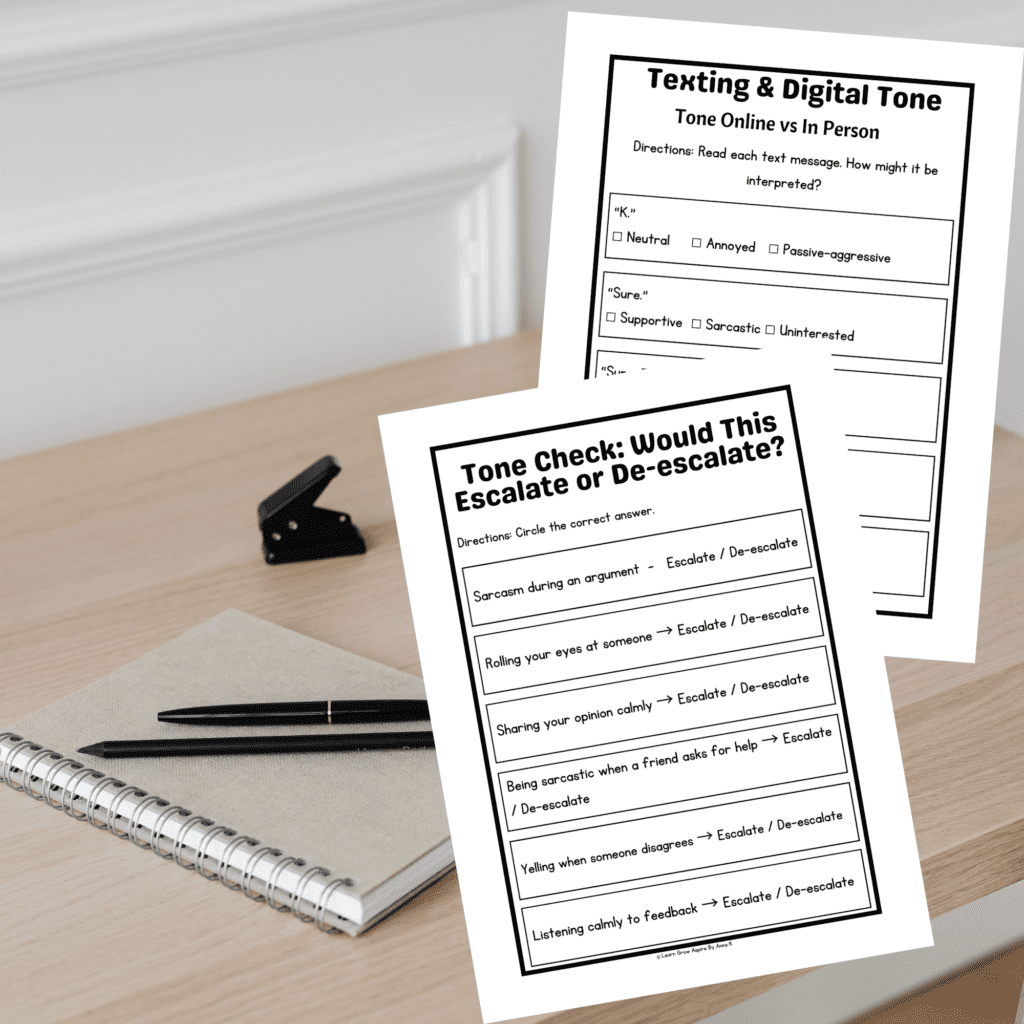
3. Tone Check: Escalate or De-escalate?
Present common teen scenarios such as:
- Responding to a teacher’s correction
- Replying to a parent’s request
- Texting a friend during a disagreement
Teens decide whether a response would escalate or de-escalate the situation—and explain why.
4. Emotion-to-Tone Connection
Ask teens to match emotions to tones:
- Frustration → sharp or short tone
- Anxiety → defensive tone
- Confidence → calm, clear tone
This builds emotional awareness and helps teens pause before responding.
5. Digital Tone Awareness
Show teens short text messages and ask:
- How could this be interpreted?
- What tone might the reader hear?
- How could emojis, punctuation, or word choice change the tone?
This is especially helpful for modern communication.
Why These Worksheets Works For Teaching Tone of Voice?
Teens often shut down during lectures, however worksheets invite private reflection. These tone of voice activities for teens will alow them to:
- Think before responding
- Practice skills without pressure
- Revisit concepts multiple times
- Build self-awareness independently
These worksheets also give your a structured way to guide conversations without turning them into power struggles.
Suggested Ways To Use These Printable PDF Worksheets
Here are some suggested ways you can consider when using these worksheets with your teens:
In the Classroom
- Use as part of social-emotional learning (SEL)
- Pair with role-play or group discussion
- Assign as independent reflection work
In Counseling or Therapy
- Use as session prompts
- Support emotional regulation goals
- Encourage journaling and discussion
At Home
- Work through one page at a time
- Discuss real-life examples
- Focus on growth, not perfection
Ready-to-Use Tone of Voice Worksheets PDF for Teens
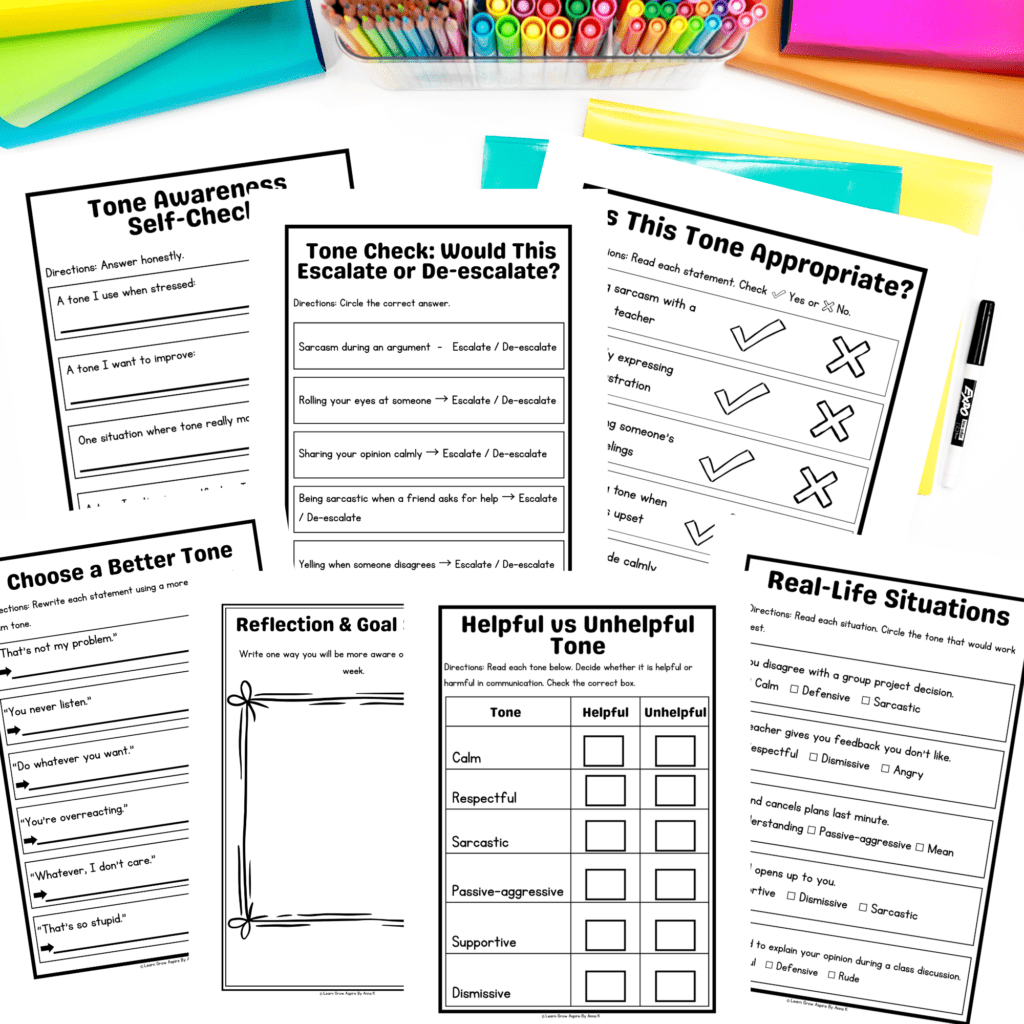
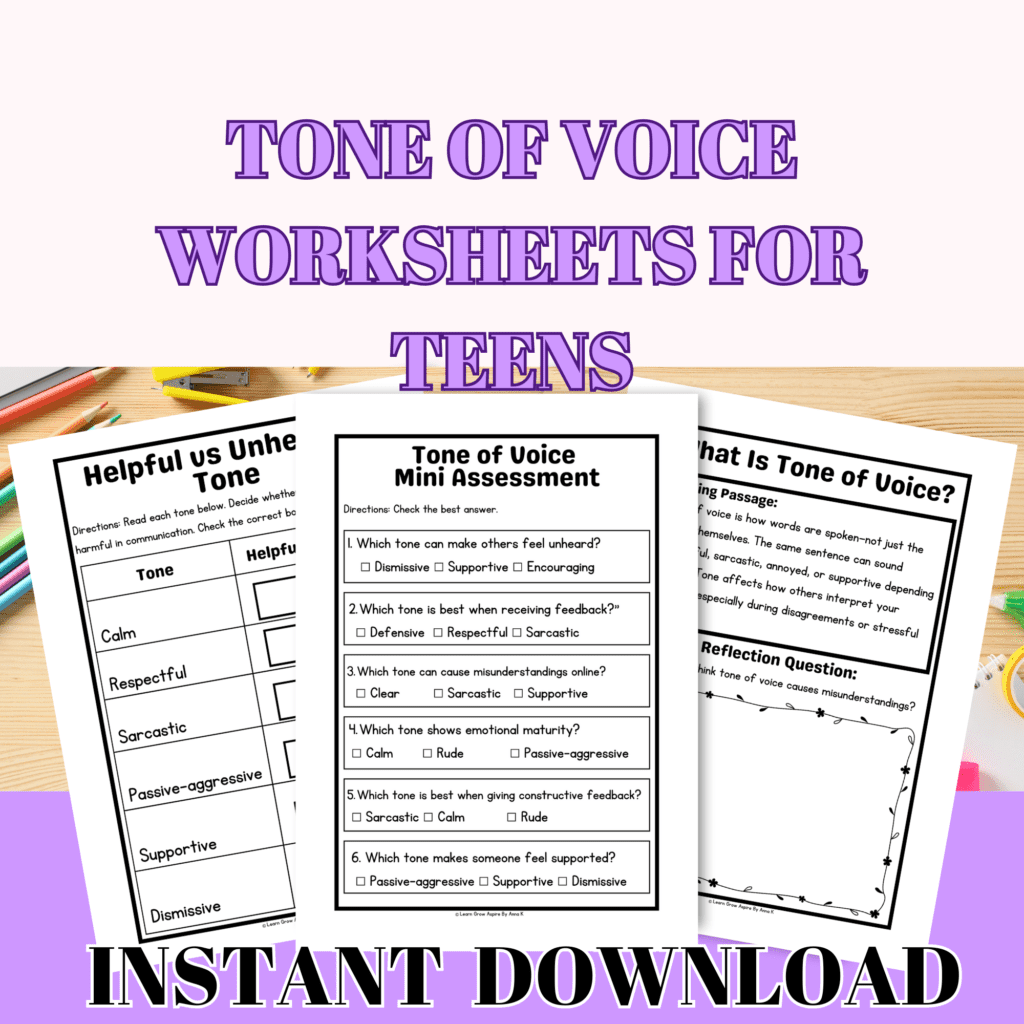
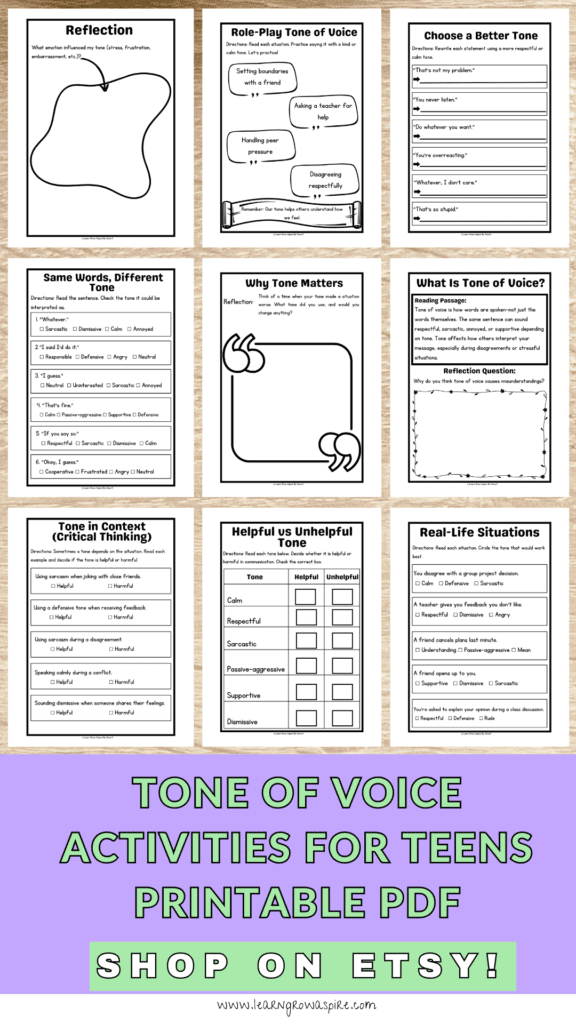
If you’re looking for a complete, teen-friendly resource, I’ve created a Tone of Voice Worksheets for Teens PDF designed specifically to support communication skills in a practical and relatable way.
This printable resource includes:
- Tone comparison activities
- Real-life teen scenarios
- Digital communication tone practice
- Self-reflection and tone awareness check-ins
- Clear instructions written for teens
It’s ideal for parents, teachers, school counselors, and therapists who want a structured yet flexible tool.
Shop Tone of Voice Worksheets for Teens (PDF) on Etsy!
Tips for Teaching Tone Without Power Struggles
Tone of voice is a skill—and skills take practice.
Here are some tips you can use when teaching tone of voicwe to avoid power sturggles with your teen/s:
- Focus on curiosity, not correction
- Ask reflective questions instead of giving lectures
- Normalize mistakes as part of learning
- Praise awareness, not just behavior change
Tone Of Voice Activities For Teens Printable PDF
Helping teens understand tone of voice is one of the most impactful communication skills we can teach.
It supports empathy, self-expression, and emotional regulation – skills that matter far beyond the teen years.
Whether you use the activities shared in this post or a structured tone of voice activities PDF for teens, the goal is the same: helping teens feel heard while learning how to communicate in ways that build, rather than damage, relationships.
With patience, practice, and the right tools, teens can learn that how they say something is just as important as what they say.
SHOP TONE OF VOICE WORKSHEETS & ACTIVITIES FOR TEENS ON ETSY!
More Resources For Teens
Here are some more emotional regulations and coping skill resources for teens that you may be interested in:
- 9 ways to help teens build resilience
- How to improve communication skills in teens
- People pleasing worksheets for teens
- How to help teens overcome their inner critic
Save These Teens Tone of Voice Worksheets PDF
Make sure to save Tone Of Voice Activities For Teens to your teens coping skills Pinterest board so that you can easily access it when needed. And while on Pinterest, I will appreciate if you can follow me ion the platform.
Some of the links in this post may be affiliate links. I’m also an Amazon Affiliate and will occasionally link to some of my favorite Amazon products. I will receive a small percentage back if you purchase through my link. You won’t be charged a penny more if you shop through my links. That said, I do NOT recommend anything I do not use and love! Thank you for helping support my blog!
