In this post, we’ll explore how to improve communication skills in teens, why communication is challenging for teens, and common barriers they face.
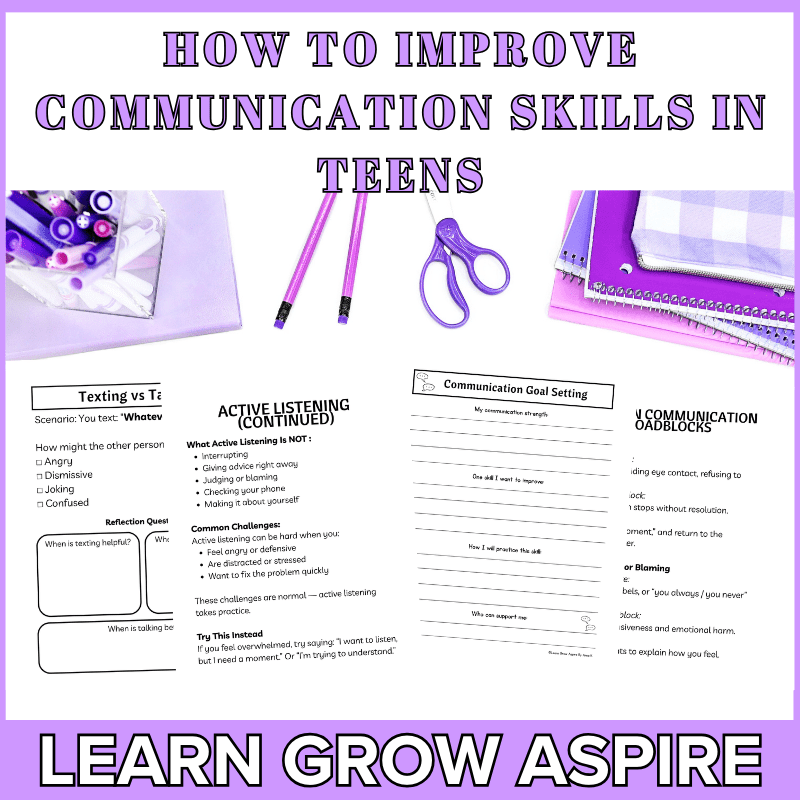
Communication is one of the most important life skills a teenager can develop. Yet, for many teens, expressing thoughts, emotions, and needs clearly can feel overwhelming – as they navigate rapid emotional growth, academic pressure, social challenges, and digital communication.
Strong communication skills don’t just come naturally.
The good news?
With the right strategies and tools, communication is a skill that can be taught, practiced, and strengthened over time. Allowing teens to build confidence, express themselves respectfully, and form healthier relationships at home, school, and beyond.
Why Communication Skills Are Important for Teens?
Teen years are a critical period for developing lifelong habits. Communication skills impact almost every area of a teen’s life.
Including but not limited to:
-
Friendships and peer relationships
-
Family dynamics
-
Classroom participation
-
Emotional regulation
-
Future workplace success
Teens who communicate effectively are more likely to:
-
Advocate for themselves
-
Handle conflict calmly
-
Express emotions in healthy ways
-
Build self-esteem and confidence
On the other hand, teens who struggle with communication may shut down, lash out, or avoid difficult conversations altogether.
Why Teens Struggle With Communication?
Understanding the why behind communication challenges is key before trying to fix them.
1. Emotional Development Is Still in Progress – Teen brains are still developing, especially the areas responsible for impulse control and emotional regulation. This can lead to emotional reactions before clear communication.
2. Fear of Judgment – Many teens worry about saying the “wrong thing.” Fear of embarrassment, rejection, or criticism can cause them to stay silent.
3. Limited Vocabulary for Emotions – Teens often feel emotions intensely but lack the language to explain what they’re experiencing.
4. Overreliance on Digital Communication – Texting and social media limit face-to-face communication practice, making real conversations feel uncomfortable.
5. Lack of Explicit Instruction – Most teens are expected to “just know” how to communicate, but rarely are they directly taught how.
Practical Strategies to Help Teens Communicate Better
Here are 7 strategies that will help the teens in your life improve their communication effectively:
1. Create a Safe, Judgment-Free Space
Teens communicate best when they feel safe. Encourage open dialogue without immediate correction, lectures, or punishment.
Try responding with curiosity instead of criticism. You can consider saying something along the lines of: – “That sounds frustrating. Can you tell me more?”
2. Teach Emotional Awareness First
Before teens can communicate clearly, they must recognize what they’re feeling.
Help your teens with:
-
Identify emotions
-
Name them accurately
-
Understand triggers
Using emotion charts, reflection prompts, or guided worksheets can make this process easier and less awkward.
3. Model Healthy Communication
Teens learn more from what they observe than what they’re told. So make sure to model:
-
Active listening
-
Calm tone
-
Respectful disagreement
-
Clear boundaries
When adults communicate respectfully, teens are more likely to mirror those behaviors.
4. Teach “I” Statements
“I” statements reduce defensiveness and encourage accountability.
Help your teens to formulate I statements – See example below:
I feel ___ when ___ because ___. I need ___.
Example:
“I feel overwhelmed when I’m interrupted because I lose my focus. I need a few minutes to finish.”
Practicing this skill builds confidence and emotional maturity.
5. Practice Active Listening Skills
Communication isn’t just about speaking; it’s also about listening.
Teach the teens in your life to:
-
Maintain eye contact
-
Avoid interrupting
-
Repeat or reflect back on what they hear
-
Ask clarifying questions
Role-playing exercises work especially well here.
6. Break Communication Into Manageable Skills
Instead of treating communication as one big concept, break it into teachable parts:
-
Assertive vs. passive communication
-
Tone of voice
-
Body language
-
Respectful disagreement
-
Setting boundaries
This makes learning feel achievable instead of overwhelming.
7. Use Structured Worksheets and Guided Activities
Many teens struggle with open-ended conversations. Structured tools provide clarity and reduce anxiety.
These effective communication worksheets will help your teens to:
-
Organize their thoughts
-
Practice responses
-
Reflect privately before speaking
-
Build skills at their own pace
This is especially helpful for teens who are shy, anxious, or easily overwhelmed.
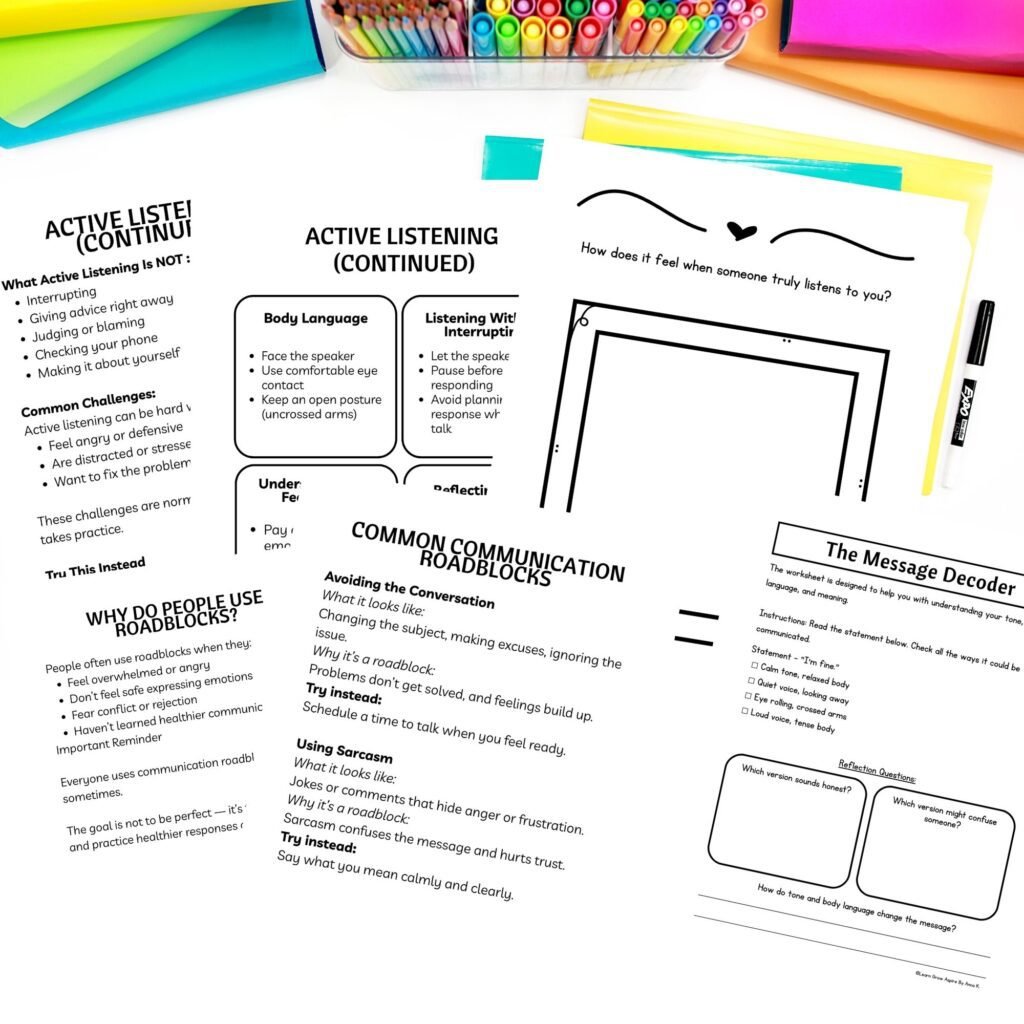
How Can These Communication Worksheets Support Your Teen’s Growth?
These printable pdf worksheets provide a low-pressure environment for teens to help them learn more about communication and build on their own communication skills without fear of judgment.
These worksheets include:
-
Clear instructions
-
Real-life scenarios
-
Guided reflection
-
Skill repetition
-
and will help teens increase their confidence over time
They’re ideal for:
-
Parents supporting teens at home
-
Teachers in middle and high school classrooms
-
Counselors and therapists
-
Homeschool settings
A Practical Tool to Support Teens
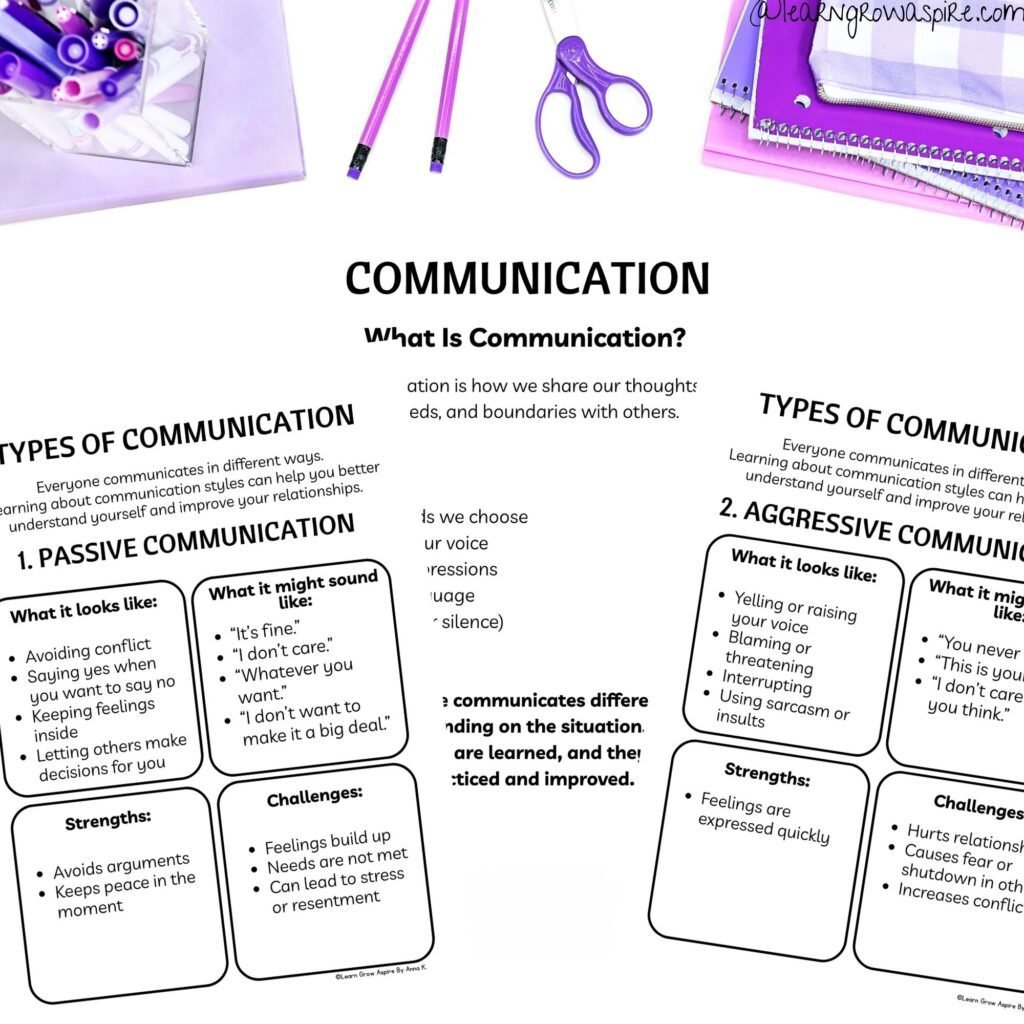
If you’re looking for a ready-to-use, teen-friendly resource, structured worksheets can make a powerful difference.
My Effective Communication Worksheets for Teens are designed to:
-
Teach assertive communication
-
Improve listening skills
-
Strengthen emotional expression
-
Help teens respond calmly in real-life situations
-
Encourage self-reflection and growth
These worksheets are:
-
Easy to understand
-
Age-appropriate for teens
-
Perfect for independent work or guided discussions
-
Ideal for ongoing skill-building
Shop My Teens Communication Printable Worksheets PDF
They work beautifully alongside the strategies shared in this article and will save you hours of planning.
Tips for Using Communication Worksheets Effectively
To get the most impact out of these worksheets:
-
Start with one skill at a time
-
Discuss answers together when appropriate
-
Encourage honesty, not perfection
-
Revisit worksheets regularly
-
Celebrate small improvements
Consistency matters more than speed.
Communication Is a Skill, Not a Personality Trait
Strong communication doesn’t mean being outgoing or talkative. It means being clear, respectful, and confident — and every teen can learn that.
With patience, guidance, and the right tools, teens can:
-
Express themselves clearly
-
Navigate conflict calmly
-
Build healthier relationships
-
Develop confidence that lasts into adulthood
Teaching communication skills is one of the greatest gifts we can give the teens in our lives. And it’s never too late to start!
Shop Communication Worksheets On Etsy!
Other Teen-Related Blog Posts
Here are some other blog posts you may be interested in to help the teens in your life build strong emotional intelligence.
- People pleasing worksheet for teens
- How teens can silence their inner critic
- Depression worksheets for teens
- How to help teens deal with criticism
Pin These Communication Skills In Teens
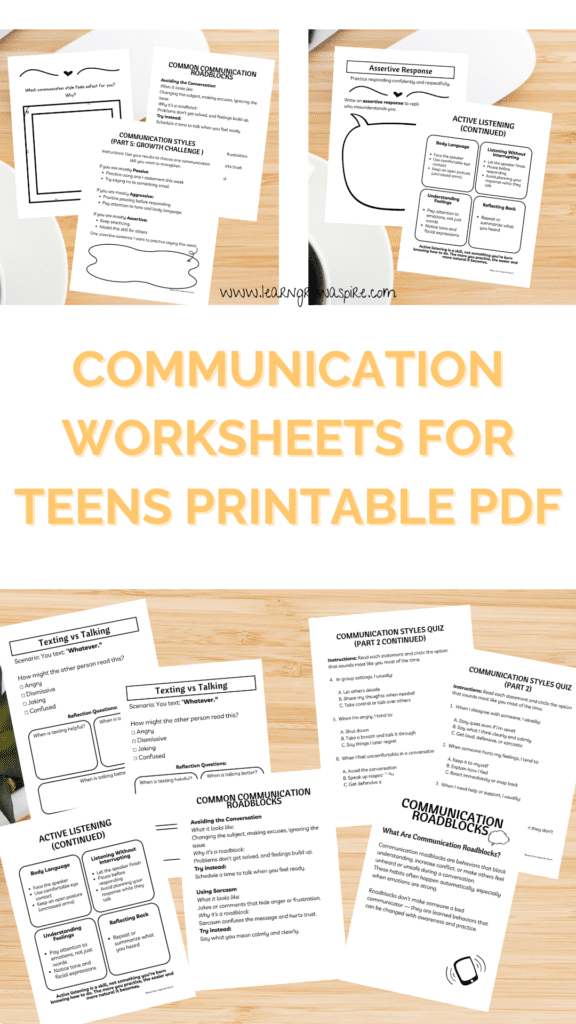
Make sure to save these effective communication skills for teens to your Teens’ SEL Pinterest board. And while on Pinterest, please consider following me on the platform.
Some of the links in this post may be affiliate links. I’m also an Amazon Affiliate and will occasionally link to some of my favorite Amazon products. I will receive a small percentage back if you purchase through my link. You won’t be charged a penny more if you shop through my links. That said, I do NOT recommend anything I do not use and love! Thank you for helping support my blog!
