How to help kids overcome social anxiety is a question many of us parents, teachers, and school counselors face daily.
For sure, social anxiety can make everyday moments — such as trying a new piece of equipment at the park, joining a game, or talking to new friends — feel overwhelming for our kids.
While it can be stressful for us as parents to watch, research and evidence-based strategies show that with support, children can learn to manage their anxiety, build confidence, and thrive socially.
At Learn Grow Aspire, we create tools grounded in social-emotional learning (SEL) and child development research to help children develop coping skills and emotional resilience.
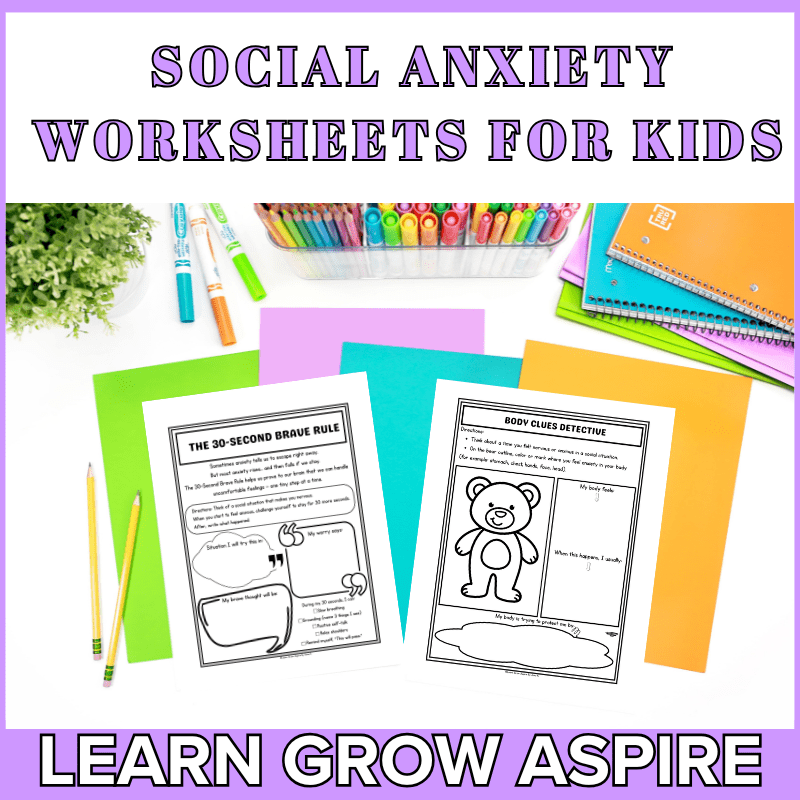
One resource we love to use with kids is our Social Anxiety Worksheets for Kids, designed to be practical, engaging, and supportive.
7 Steps To Help Kids Overcome Social Anxiety
Here are 7 simple yet effective ways you can help your kids overcome social anxiety:
1. Recognize and Name Their Feelings
The first step in helping children with social anxiety is acknowledging that their feelings are real — and normal.
So instead of minimizing their worries, perhaps you can try:
-
Listening actively and calmly to them.
-
Naming the emotion: “It seems like you feel nervous about talking to new kids. I’m correct?”
-
Validating their experience: “It’s okay to feel scared — many kids feel that way.”
Why does this work?
You see, helping kids name and validate their feelings often helps children feel understood and teaches them that anxiety is something they can learn to manage rather than something shameful.
2. Break Challenges into Small, Manageable Steps
Social anxiety doesn’t disappear overnight. Children often feel overwhelmed by large tasks, so breaking challenges into small, achievable steps helps them approach them gradually.
For example:
-
Are they nervous about speaking in class? Then why not start by answering a question to a trusted adult, then a small group, then the whole class?
-
Are they avoiding recess games? Guide them to begin by standing near peers, then gradually join in for a short activity.
Celebrate each step your child makes — courage is progress, no matter how small.
3. Teach Practical Coping Strategies
Research supports giving children tools to manage anxiety in real-time.
These strategies are simple, and you can share them with your kids right now as you are reading this post.
-
Grounding techniques (naming 5 things you see, hear, and feel)
-
Positive self-talk: “I can try this even if I feel nervous.”
-
Visualization of successful interactions
Why does this help?
Coping strategies empower children to respond to anxiety instead of avoiding situations entirely.
4. Encourage “Bravery Practice.”
Avoidance reinforces anxiety. One evidence-based method is structured, safe exposure:
-
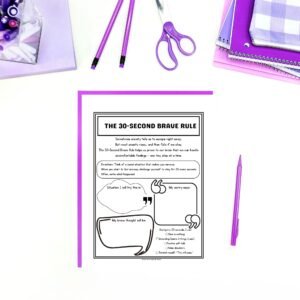
Try timed challenges, like staying in a slightly uncomfortable situation for 30 seconds before leaving.
-
Practice short social interactions in safe environments repeatedly.
-
Use supportive language: “Bravery doesn’t mean not being nervous — it means trying anyway.”
Tip: Gradual, achievable steps build confidence without overwhelming the child.
5. Model Calm and Confident Behavior
Children often mirror adult behavior. Modeling calm, positive coping strategies is highly effective:
-
Show your own strategies: “I feel nervous before a meeting too, so I take a deep breath first.”
-
Reflect together: “What worked for me? What might work for you?”
6. Make Practice Fun and Engaging
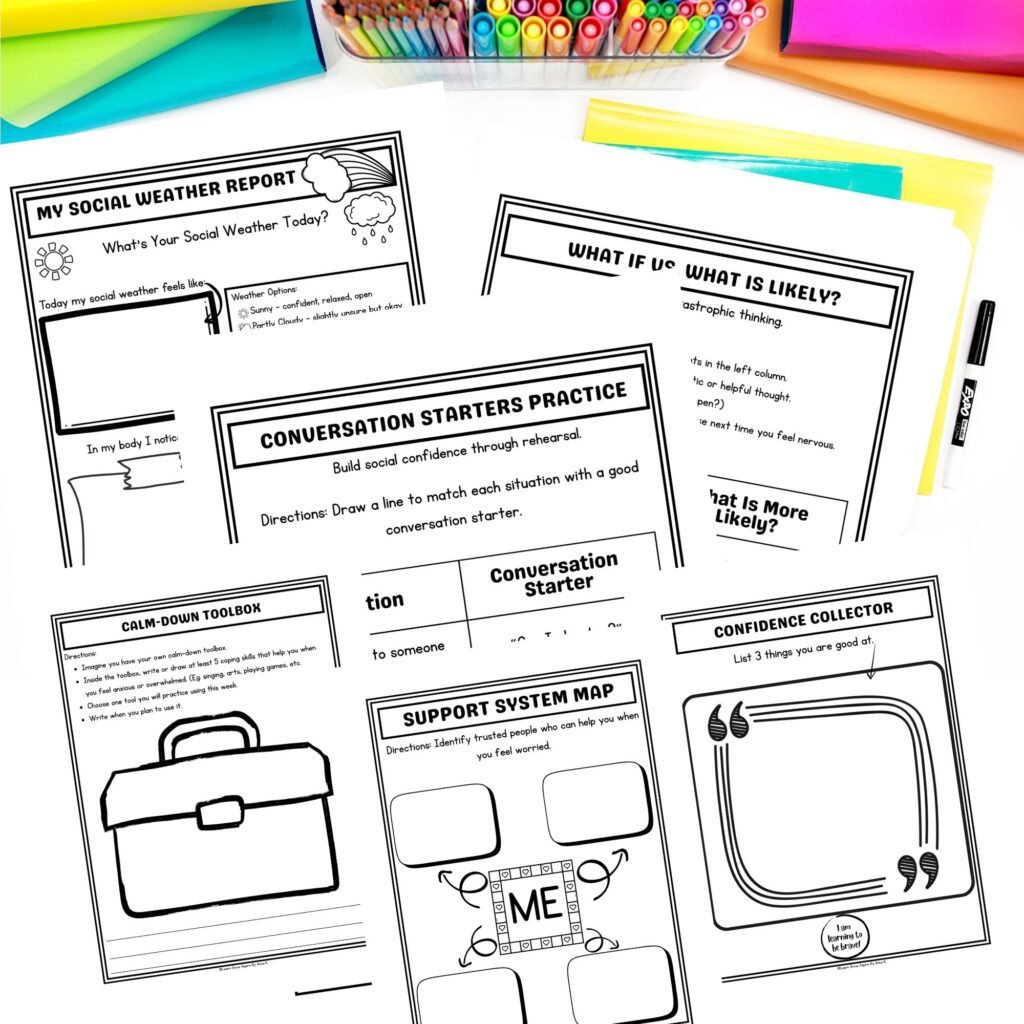
Kids are more likely to practice social skills when activities are hands-on, visual, and playful. Tools like my Social Anxiety Worksheets for Kids provide:
-
Thought-reframing exercises (“What if… vs. What’s more likely?”)
-
Coping skills toolbox activities
-
Brave practice planning pages
-
Affirmation and positive self-talk exercises
-
Kid-friendly, low-prep printables
These worksheets are designed to help students build coping skills, confidence, and resilience — all in a structured, supportive way.
7. Encourage Reflection and Growth
After practice, reflection is key. So ask your kids:
-
What worked?
-
How did it feel?
-
What could be done differently next time?
Reflection reinforces learning, highlights progress, and shows kids that social anxiety is manageable.
How to Help Kids Overcome Social Anxiety
Helping children overcome social anxiety requires patience, consistency, and empathy.
Small steps, practical tools, and supportive guidance make a huge difference. Over time, children learn that they can face social situations with confidence, even if nerves are present.
If you’re looking for a ready-to-use, practical, and engaging resource, check out our social anxiety worksheets for kids.
I’ve designed these worksheets for parents, teachers, and counselors. These worksheets provide evidence-informed activities that help children build coping skills, manage social anxiety, and grow their confidence — one small, brave step at a time.
Because helping kids overcome social anxiety isn’t just about reducing worry — it’s about helping them learn, grow, and aspire to be the best version of themselves.
SHOP SOCIAL ANXIETY WORKSHEETS FROM MY STANSTORE!
Other Blog Posts You May Like
Here are some other posts you may want to check out as well:
- Art therapy worksheets and activities for kids
- Tone of voice activities for kids printable PDF
- Activities to foster a growth mindset in kids
Pin These Social Anxiety Worksheets For Kids
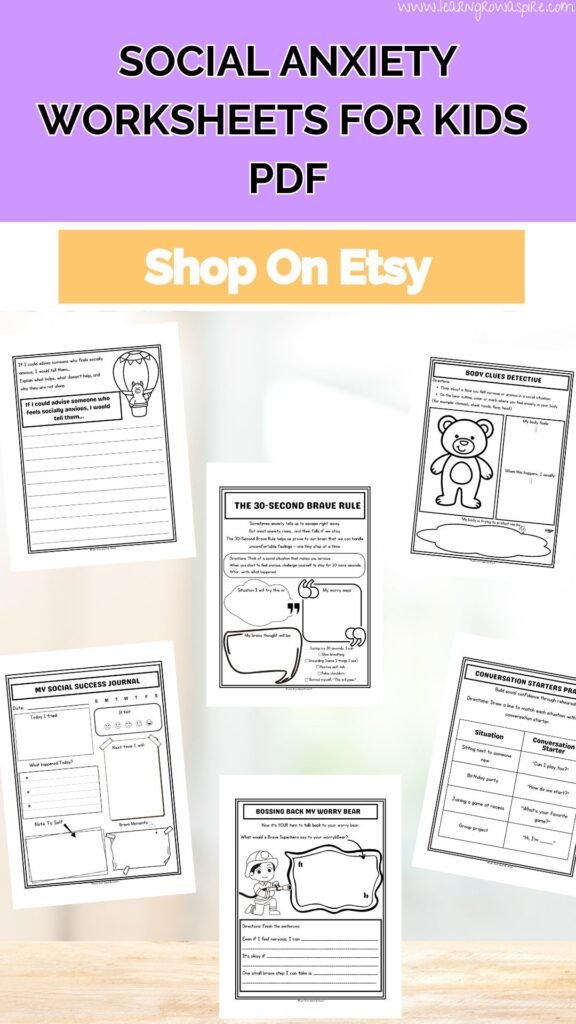
Save these tips and worksheets to your coping skills for kids Pinterest board. And while on Pinterest, please follow me.
Some of the links in this post may be affiliate links. I’m also an Amazon Affiliate and will occasionally link to some of my favorite Amazon products. I will receive a small percentage back if you purchase through my link. You won’t be charged a penny more if you shop through my links. That said, I do NOT recommend anything I do not use and love! Thank you for helping support my blog!

Leave a Reply