If you’re wondering how to help kids deal with embarrassment, then you’ll find so much value in this post.
You see many children struggle with those uncomfortable “oops” moments, whether it’s giving a wrong answer, tripping in the hallway, struggling in gym class, or feeling like everyone is watching them.
For some students, embarrassment can lead to shutting down, avoiding participation, or losing confidence in the classroom.
The good news is that with the right support, kids can learn how to handle these moments and grow stronger from them.
Why Do Kids Feel Embarrassed?
Similar to us adults, children often feel embarrassed when they believe others are judging them or paying close attention to their mistakes.
In a classroom setting, this feeling can be especially intense and can often look like:
-
Answering a question incorrectly
-
Making a mistake in front of classmates
-
Being laughed at (or thinking they are)
-
Not understanding how to solve a math equation right away
At this age, kids are still developing emotional awareness, which means they may not yet have the tools to manage these feelings effectively.
Why Teaching Coping Skills for Embarrassment Matters
When kids don’t learn how to manage embarrassment, it can affect their willingness to participate and take risks in learning. Over time, this may impact their confidence and academic growth.
Teaching children coping strategies for embarrassment helps them:
-
Build resilience
-
Develop a growth mindset
-
Feel safe making mistakes
-
Gain confidence in themselves
These are essential social-emotional skills that support both academic and personal success.
5 Simple Ways to Help Kids Cope With Embarrassment
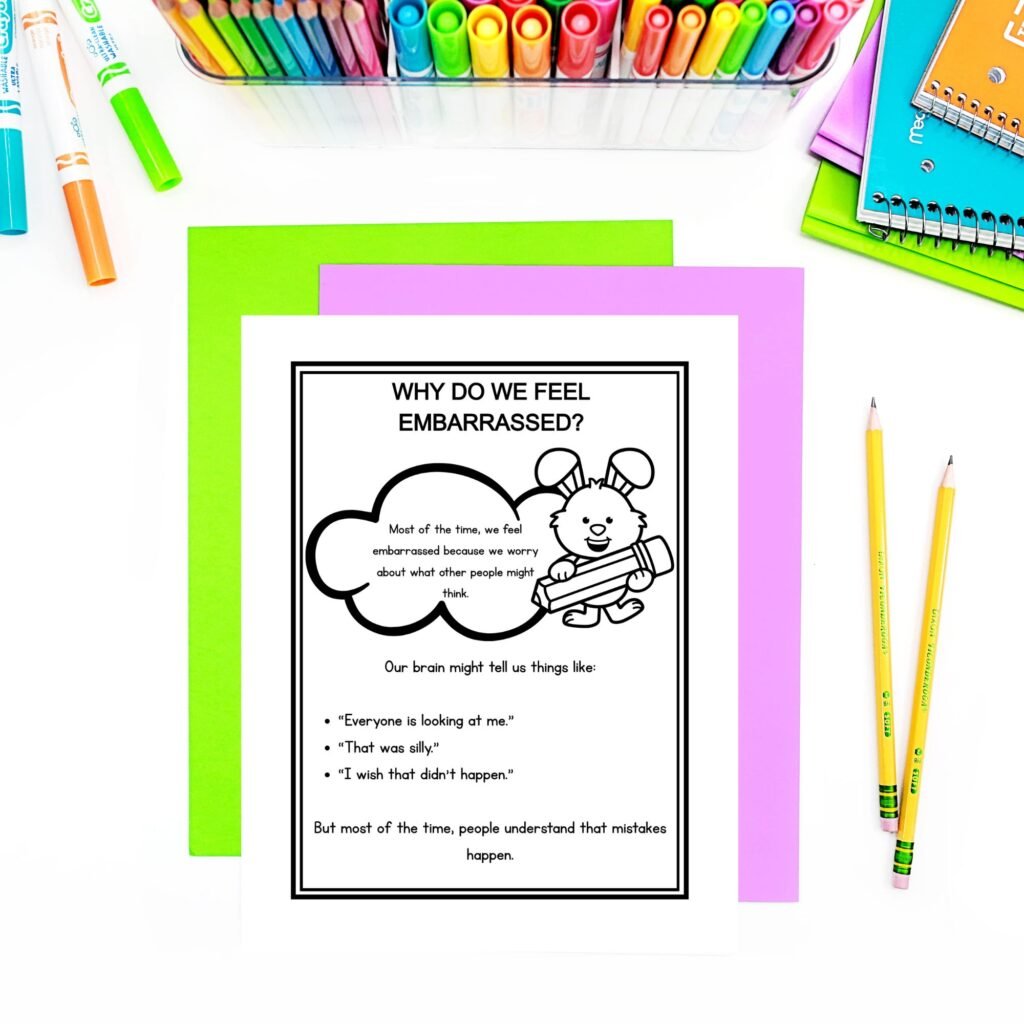
1. Normalize Mistakes
Remind your students or kids at home that mistakes are a natural and important part of learning. Through mistakes, we learn new ways to improve on the things we don’t know yet.
When kids understand that everyone makes mistakes, it helps reduce feelings of embarrassment and fear.
You can also model this by sharing your own small mistakes and how you handled them. This shows students that it’s okay to be imperfect and that mistakes don’t define them but rather help them grow.
2. Encourage Positive Self-Talk
Help kids notice when they are being hard on themselves and guide them to replace those thoughts with kinder, more encouraging ones.
Negative self-talk like “I’m not good at this” can quickly lower confidence, especially after a mistake.
Teach simple phrases such as “I can try again,” “I’m still learning,” or “Everyone makes mistakes.”
With practice, these positive thoughts can help children feel calmer, more confident, and willing to keep trying.
3. Teach “Bounce Back” Thinking
Instead of focusing on what went wrong, guide students to think about what they can do next. This helps shift their mindset from frustration to problem-solving.
Encourage simple reflections like, “What can I try differently?” or “What did I learn?” This kind of thinking builds resilience and gives kids the confidence to move forward after a mistake.
4. Build Empathy Skills
Ask children how they would support a friend in the same situation. This helps them shift their perspective and respond with kindness instead of harsh self-judgment.
When kids realize they wouldn’t be mean to a friend for making a mistake, it becomes easier to treat themselves with the same understanding. This reduces fear of judgment and builds a more supportive classroom environment.
5. Use Social-Emotional Learning Activities
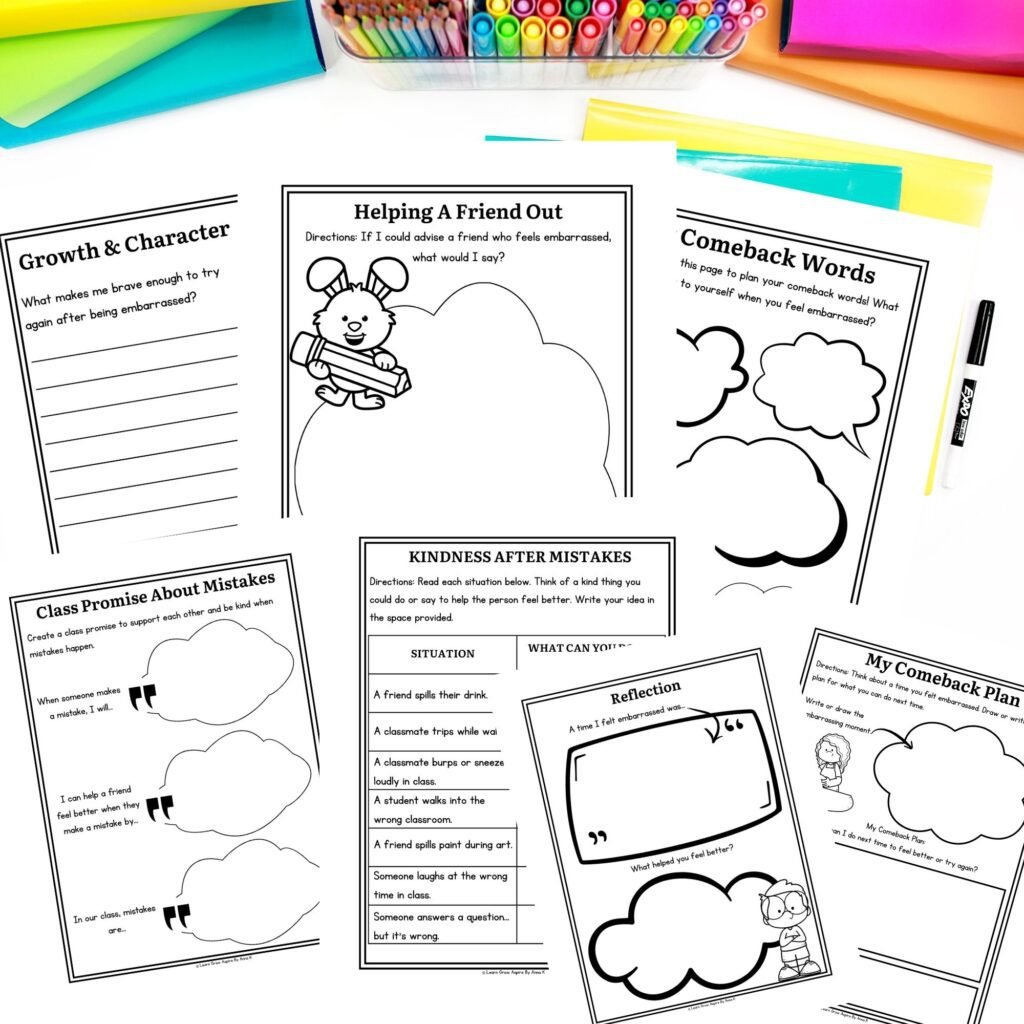
Hands-on activities are one of the most effective ways to teach these skills. SEL worksheets, reflection prompts, and role-playing scenarios give kids the opportunity to practice in a safe and structured way.
Simple SEL Activities That Build Confidence
If you’re a teacher or parent, incorporating social-emotional learning activities for embarrassment and confidence doesn’t have to be complicated.
Here are a few ideas:
-
Have students write or draw about a time they felt embarrassed
-
Practice positive self-talk through sentence starters
-
Discuss real-life classroom scenarios and possible responses
These types of activities help children move from feeling stuck to feeling capable.
Making Mistakes Worksheet For Kids PDF
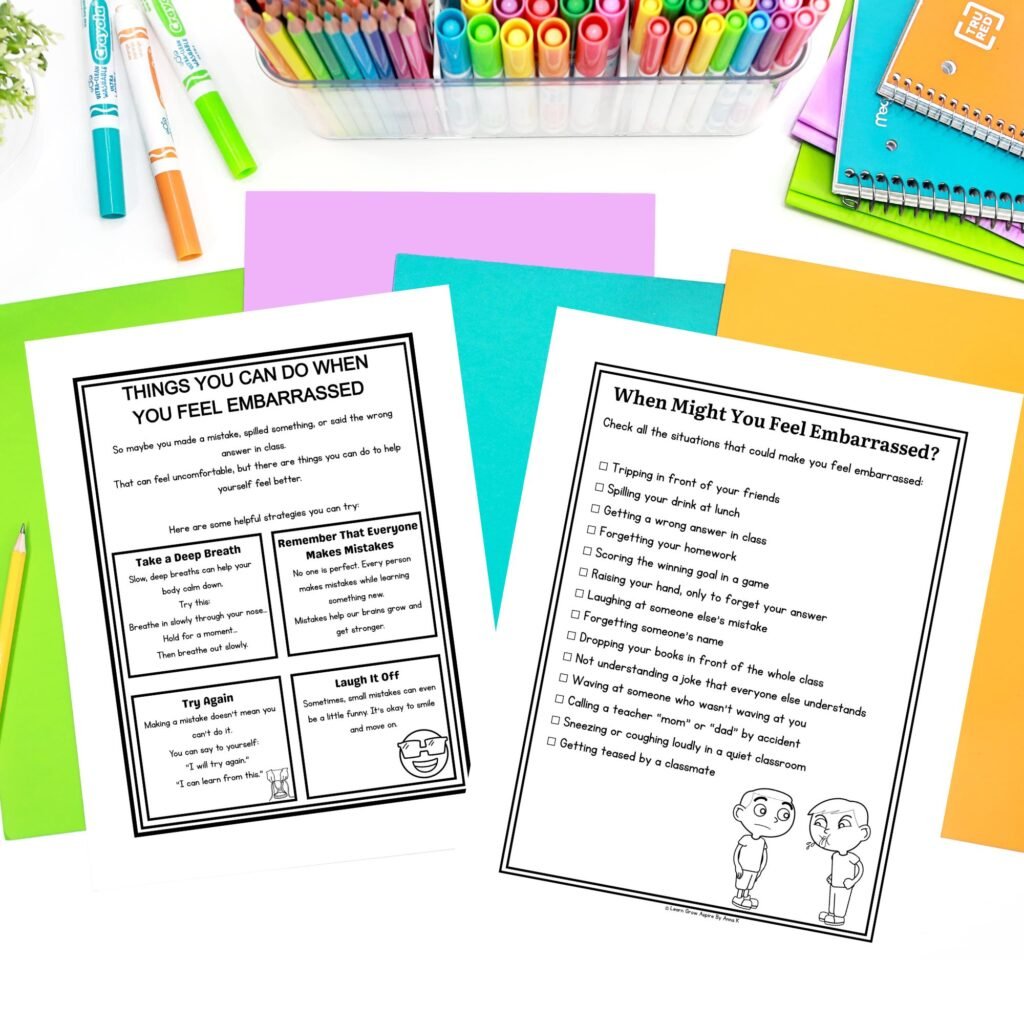
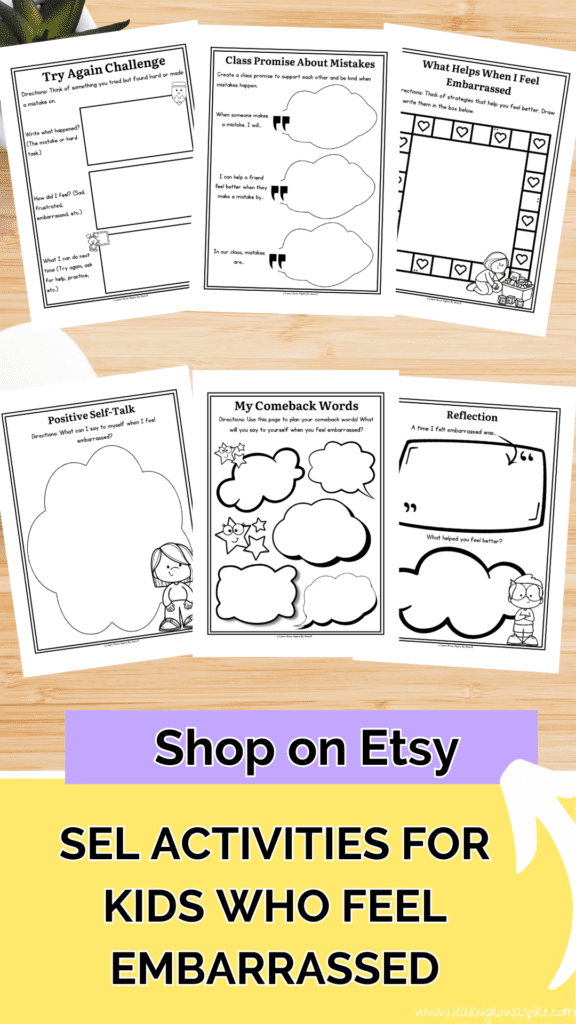
To make this even easier, I’ve created a set of Embarrassment & Mistake Recovery SEL Worksheets to help students with building their confidence after making mistakes
These worksheets will also help students to develope coping skills to handle an embarrassing situation, and encourage positive self-talk. As well as develop empathy and social awareness.
They’re ideal for classroom SEL lessons, school counseling sessions, or at-home learning support.
SHOP MAKING MISTAKES & OVERCOMING EMBARRASSMENT PRINTABLE PDF PACKET
Supporting Kids Emotional Growth
Helping kids deal with embarrassment is one of the most valuable ways we can support their emotional development.
When children understand that mistakes are normal and that they have the tools to handle them, they become more willing to participate, take risks, and try again.
And that’s where real confidence begins.
More SEL Resources For Kids
Here are some other blog posts you may be interested in:
- 25 Calm down strategies for kids that actually work
- 7 Ways to encourage honesty in kids
- Printable worksheets for children experiencing loss
- How to teach accountability in a way that actually works
Pin These Making Mistakes Printables For Kids
Make sure to save these worksheets to your Pinterest SEL board so that you can easily find them when needed. And while on Pinterest, please consider following me on the platform.
Some of the links in this post may be affiliate links. I’m also an Amazon Affiliate and will occasionally link to some of my favorite Amazon products. I will receive a small percentage back if you purchase through my link. You won’t be charged a penny more if you shop through my links. That said, I do NOT recommend anything I do not use and love! Thank you for helping support my blog!

Leave a Reply