Helping children navigate divorce and separation is never easy, especially for kids between the ages of 7 and 11. Because children at this age are only now beginning to understand relationships, fairness, and emotional complexity.
So, whether you’re a parent, teacher, or therapist, it’s essential for us to help children through this transition in a way that protects their emotional well-being and reminds them that they are deeply loved by both parents.
Today, in this blog post, I will walk you through practical, compassionate strategies that you can use in helping children navigate divorce with confidence and care.
The Emotional Impact of Divorce on Children
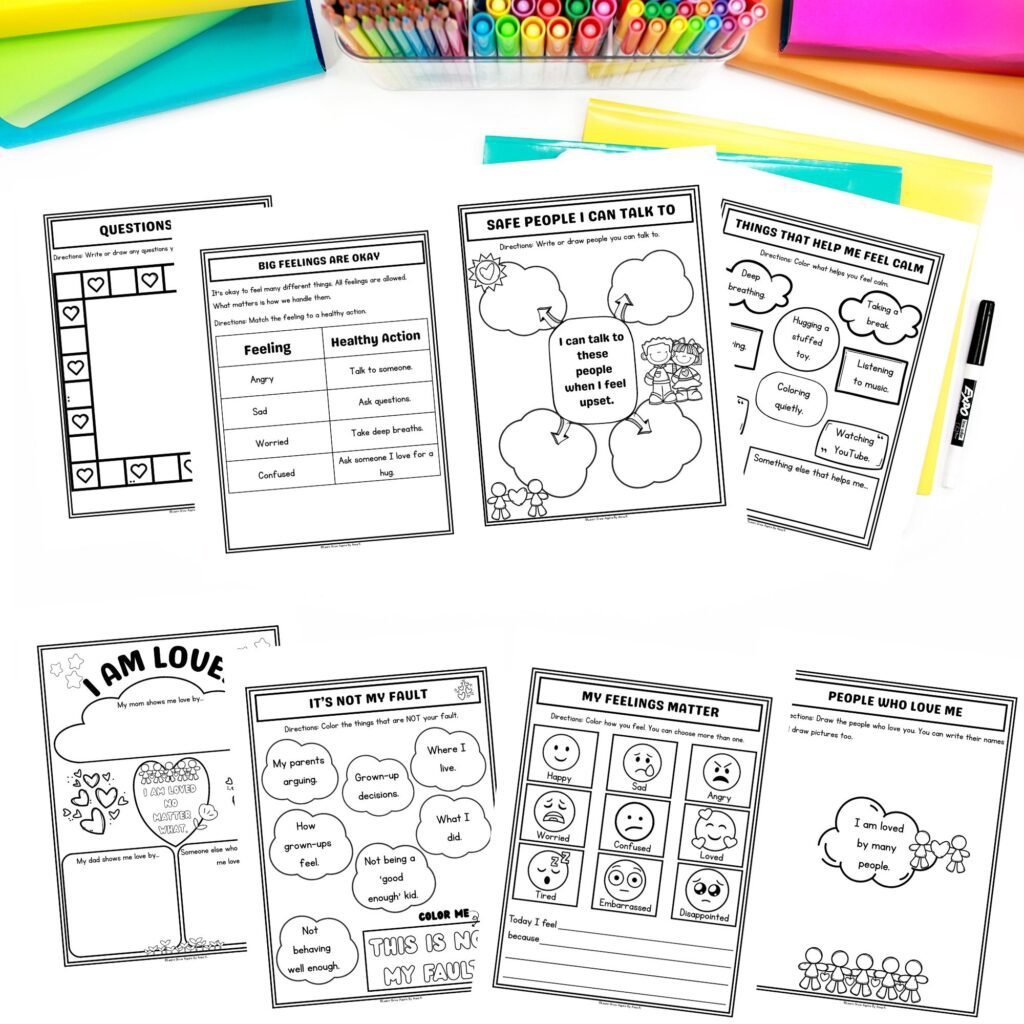
When helping children navigate divorce, it’s important to first understand how they may experience it internally.
Children ages 7–11 often:
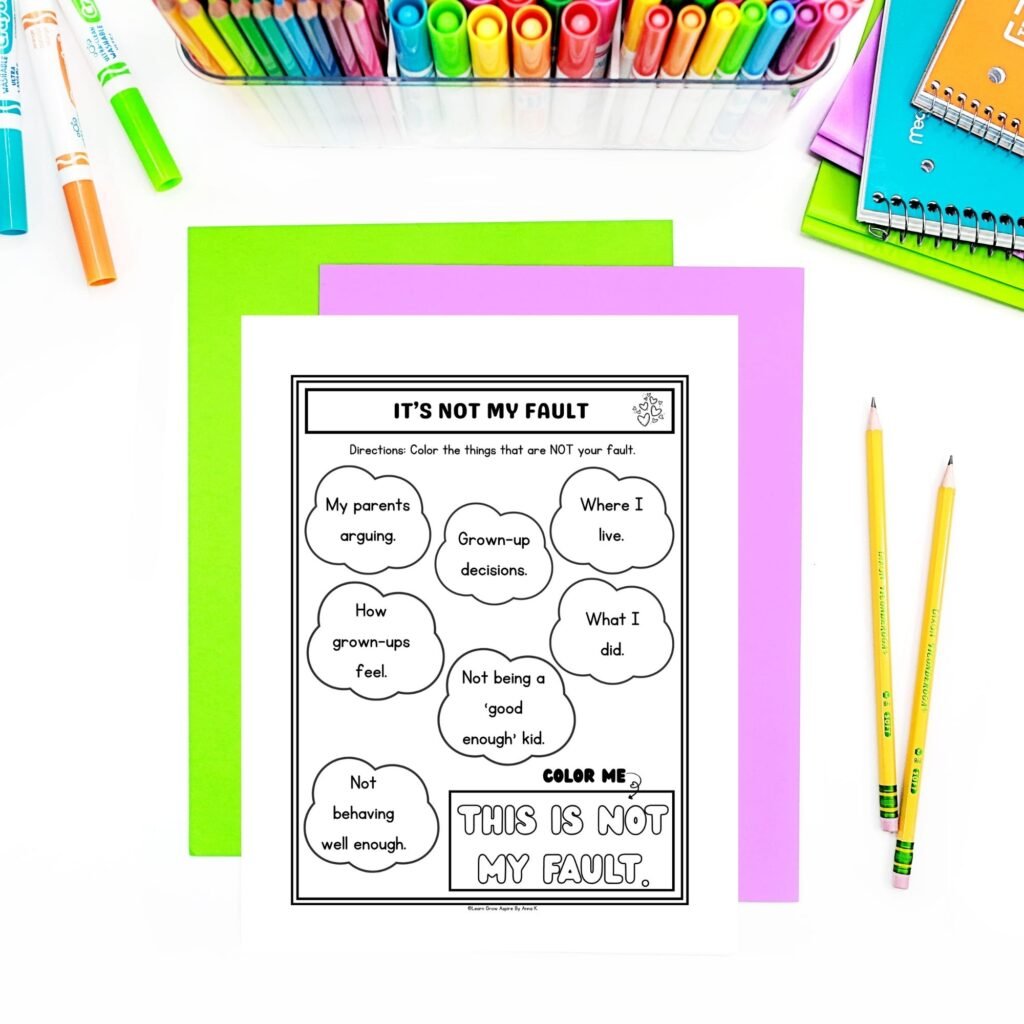
- Wonder if the divorce is their fault
- Feel caught between parents
- Experience anxiety about changes in routine
- Struggle with anger, sadness, or confusion
- Have difficulty focusing at school
Not all children will openly express these feelings. Some may act out, while others may withdraw.
Recognizing these responses will help children navigate divorce positively.
How to Minimize the Impact of Divorce on Kids?
Here are 6 things you can do to help minimize the impact of divorce on kids:
1. Reassure Them That They Are Loved (Again and Again)
A core part of helping children navigate divorce is consistently reinforcing and reminding them of one simple truth:
“This is not your fault, and both of your parents love you.”
Even if you’ve said it before, children need to hear it over and over because repetition helps things to stick.
Here’s How You Can Do This:
- Repeating to your child or kids that what’s happening right now is not their fault and that they are deeply loved by their parents.
- Avoiding trash-talking the other parent with or in front of them.
- Reinforcing that love does not change, even if circumstances do ( this is so, so important).
This reassurance will build emotional security during an uncertain time.
2. Create Stability Through Routine
Helping children navigate divorce becomes easier when their world feels predictable.
Divorce often disrupts routines, which can increase anxiety. Creating stability helps children feel safe.
Here’s How You Can Do This:
- Keeping daily routines (bedtime, homework, meals) consistent.
- Using visual schedules for transitions between homes.
- Preparing children in advance for changes.
As classroom teachers and therapists, maintaining a stable classroom or session routine can provide a much-needed sense of normalcy.
3. Encourage Healthy Emotional Expression
A big part of helping children navigate divorce is giving them space to express what they’re feeling—without pressure. You see, children may not always have the words, but they still need an outlet to freely express themselves.
You Can Support This By:
- Asking gentle, open-ended questions.
- Using feelings charts or emotion check-ins
- Encouraging drawing, journaling, or creative play
Some children will talk right away. Others may take time. Both ways are okay.
4. Validate Their Feelings Without Trying to Fix Them
This is a BIG one! I know as a parent, sometimes I try to fix things immediately to give my kiddos comfort. Definitely something I’ve been working on.
When helping children navigate divorce, it’s important to remember that validation is more powerful than solutions.
Instead of trying to “fix” their emotions, acknowledge them.
For example:
- “It makes sense that you feel sad. This is a big change.”
- “A lot of kids feel confused when their parents separate.”
Validation helps children feel understood and feel seen, which is essential for emotional processing.
5. Watch for Signs They May Need Extra Support
While helping children navigate divorce, it’s important to recognize when a child may need additional support.
Look for:
- Ongoing sadness or withdrawal
- Increased anger or behavioral changes
- Sleep or appetite issues
- Difficulty at school
If these challenges persist, a therapist or school counselor can provide additional guidance and support.
6. Use Guided Activities to Support Emotional Processing
One of the most effective ways of helping children navigate divorce is through structured, child-friendly activities.
Worksheets and guided prompts can give children a safe space to explore their thoughts and feelings.
Helpful activities include:
- Identifying and naming emotions
- Reflecting on family relationships
- Practicing positive self-talk
- Exploring what makes them feel safe and loved
These tools gently guide children toward emotional understanding and resilience.
Helping Children Navigate Divorce
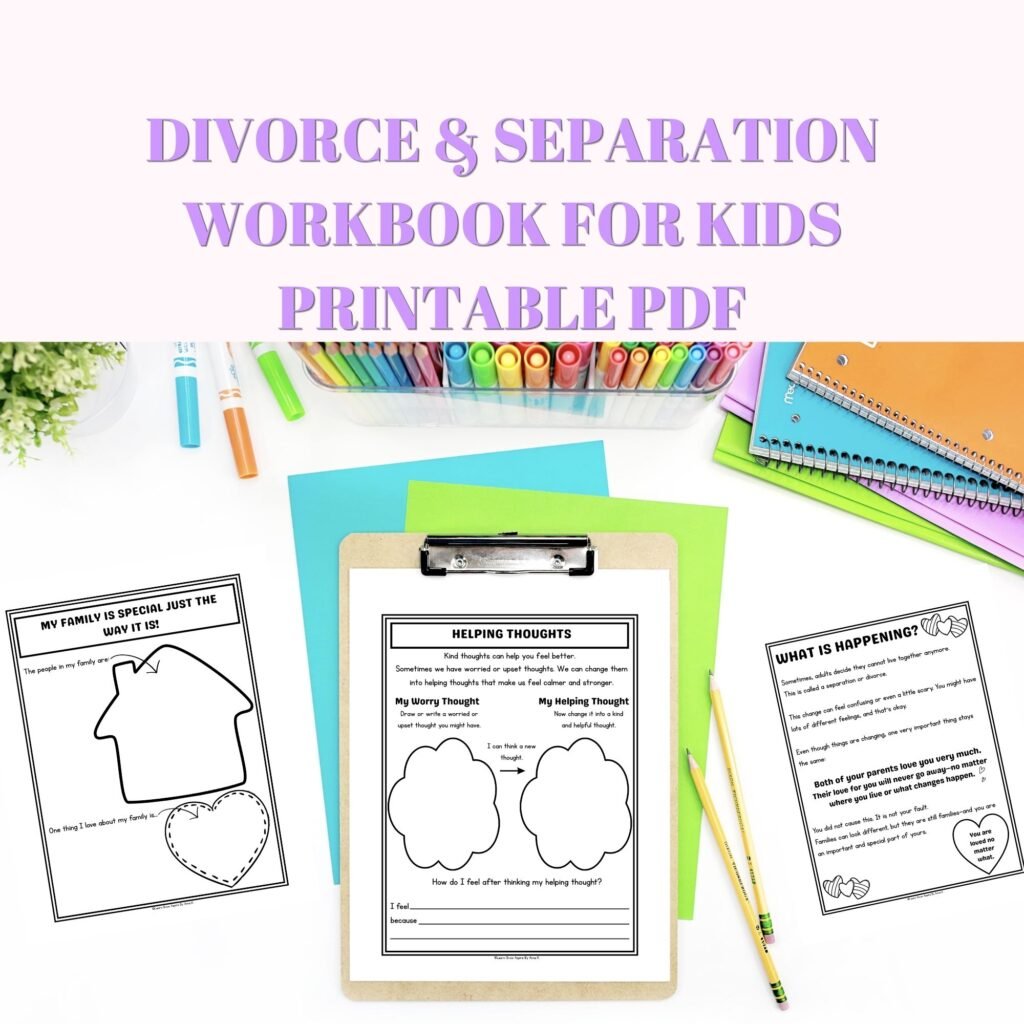
If you’re looking for a simple, effective way to support a child during this time, I’ve created a Divorce & Separation Workbook for Kids designed specifically for ages 7–11.
This printable workbook was created with the goal of helping children navigate divorce in a gentle, age-appropriate way.
Inside, you’ll find:
- Emotion-focused worksheets
- “I Am Loved” affirmation activities
- Reflection prompts for deeper understanding
- A simple script to help adults start meaningful conversations
- Parent and teacher guidance
This resource is designed to help children:
- Feel heard and supported
- Understand their emotions
- Build confidence and resilience
- Remember, they are loved by both parents
You can take a closer look at this resource over on my Etsy storefront.
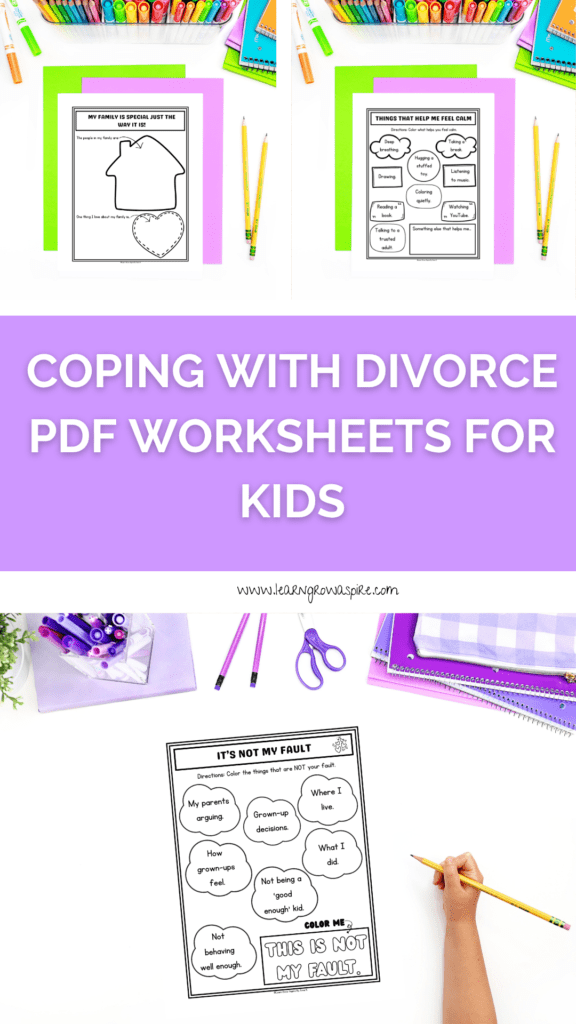
Coping With Divorce PDF Worksheets For Kids
Helping children navigate divorce takes patience, empathy, and consistency. While you can’t remove the challenges of separation, you can shape how a child experiences and processes it.
By offering reassurance, creating stability, and providing opportunities for emotional expression, you will be giving children the tools they need to move forward with confidence.
Most importantly, you are helping them hold onto one powerful truth:
They are loved—always.
SHOP COPING WITH DIVORCE & SEPARATION WORKSHEETS FOR KIDS PDF
Pin These Child Therapy Divorce Activities
Make sure to save these ways in which you can help your kids, students, or clients cope with divorce and separation. And while on Pinterest, please consider following me on Pinterest.
Some of the links in this post may be affiliate links. I’m also an Amazon Affiliate and will occasionally link to some of my favorite Amazon products. I will receive a small percentage back if you purchase through my link. You won’t be charged a penny more if you shop through my links. That said, I do NOT recommend anything I do not use and love! Thank you for helping support my blog!
