Think It or Say It is one of the most powerful (and simple) life skills we can teach to our kids to help them pause before speaking, choosing words that are kind, thoughtful, and socially appropriate.
Lately, I’ve been hearing kids say things such as:- “Why is he limping?”, “Eww, your food is gross!” “I’m wayyy better than you at this game.” “You’re sooo chopped.”
Perhaps you’ve heard this (and more) as well.
And, instantly felt that secondhand cringe.
You’re not alone, my friend. I feel it allll the time.
The truth is, kids are naturally honest. However, at the same time, honesty without a filter can hurt others, damage friendships, and even affect kids’ social confidence over time.
The good news is, it doesn’t have to be this way because kids aren’t trying to be rude. They’re still learning how to filter their thoughts, and kind communication is a teachable skill.
And one of the most powerful ways we can teach it to our kids is through a simple concept called “Think it… or say it?”
Why Kids Struggle With Saying the “Right” Thing
Before we correct the behavior, it’s important to understand that children are still developing and they say things quickly without thinking, not always understanding how words affect others.
In early childhood and even into the elementary years, the brain is still learning how to pause before reacting.
So when kids blurt things out, it’s not a character flaw but rather a skill gap.
And, as I mentioned earlier, skills can be taught.
What “Think It or Say It” Teaches Kids
The Think It or Say It concept helps children slow down and ask themselves:
- Is it kind?
- Is it helpful?
- Is it the right time?
If the answer is no… it might be something to keep as a thought instead of saying out loud.
This simple habit will help kids build:
- Stronger communication skills
- Better social skills and friendships
- Increased empathy and emotional intelligence
- Improved self-regulation and impulse control
It’s a foundational social-emotional learning (SEL) skill that supports kids both in and out of the classroom.
Why Teaching a “Social Filter” Matters
If we don’t guide our children, they may unintentionally:
- Hurt others’ feelings
- Damage friendships
- Lower someone’s confidence or self-esteem
- Struggle socially at school
But when we explicitly teach Think It or Say It, we’re helping kids develop a social filter, a skill they will use for life.
This is especially important for:
- Elementary classrooms
- School counselling sessions
- Kids with ADHD or impulsivity challenges
- Social skills groups
5 Simple Ways to Teach Think Before You Say It
1. Model Thoughtful Language
Kids watch everything we say.
Instead of reacting with:
“That was rude.”
Perhaps, you could say something along the lines of:
“Let’s think, was that something to think or say?”
2. Use Everyday Moments as Teaching Opportunities
Real-life examples stick best.
Ask questions like:
- “Would that make someone feel good or uncomfortable?”
- “Is that a say it or think it moment?”
3. Teach a Simple “Kindness Filter.”
Give kids an easy framework:
- Is it true?
- Is it kind?
- Is it necessary?
This pairs perfectly with Think It or Say It activities for kids.
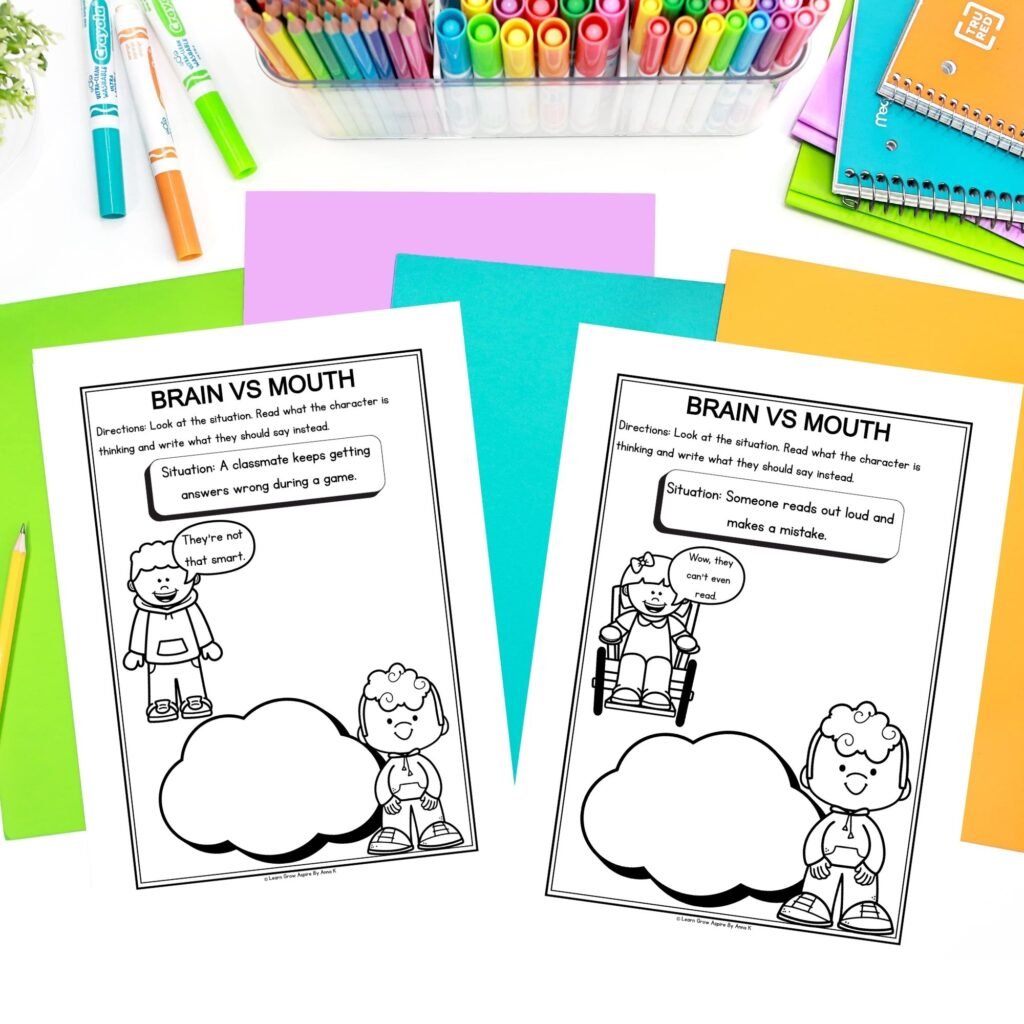
4. Practice With Role-Playing
Role play builds confidence and understanding.
Try scenarios like:
- Someone made a mistake
- You don’t like someone’s drawing
- A friend looks different
Then ask – “What could you say instead?”
5. Keep It Positive (Not Punitive)
Avoid shaming language.
So, instead of:
“Don’t say that!”
We can try saying:
“Let’s try saying that in a kinder way.”
This keeps kids open to learning rather than shutting down.
Ways to Reinforce This Skill (So It Actually Sticks)
When it comes to kids, talking about it once isn’t enough.
Kids need consistent, hands-on practice with real-life scenarios to truly understand when to think it and when to say it.
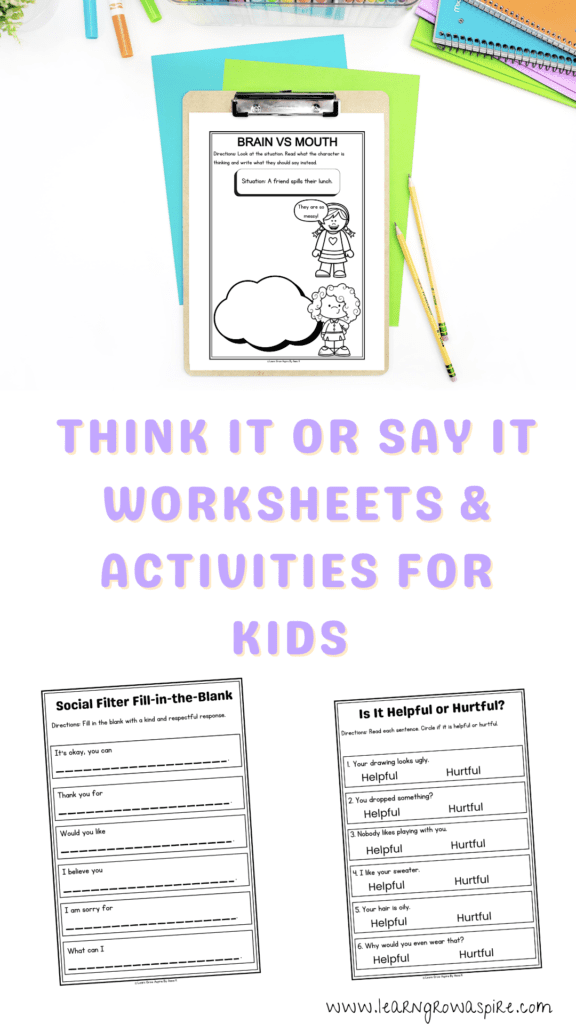
That’s why structured Think It or Say It worksheets and activities can be so effective.
A Simple, Effective Tool for Teaching Think It or Say It
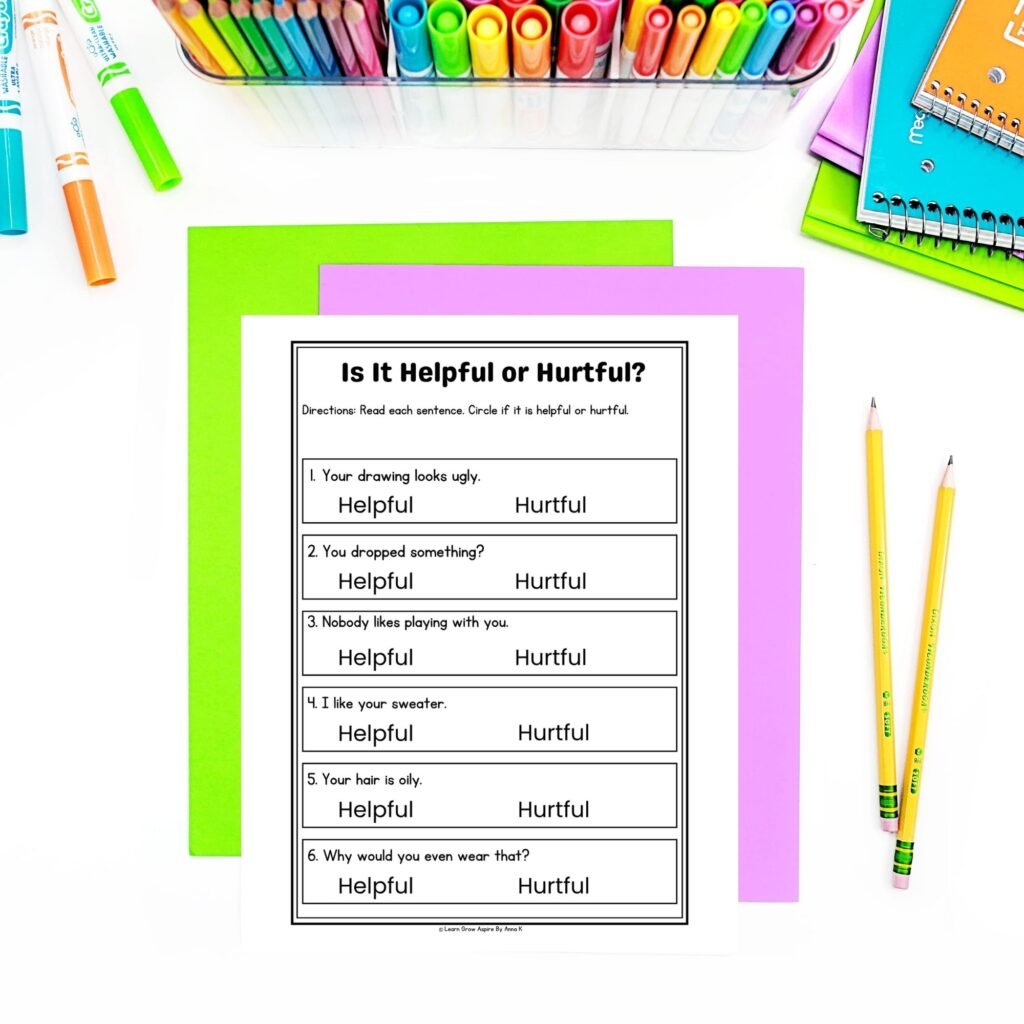
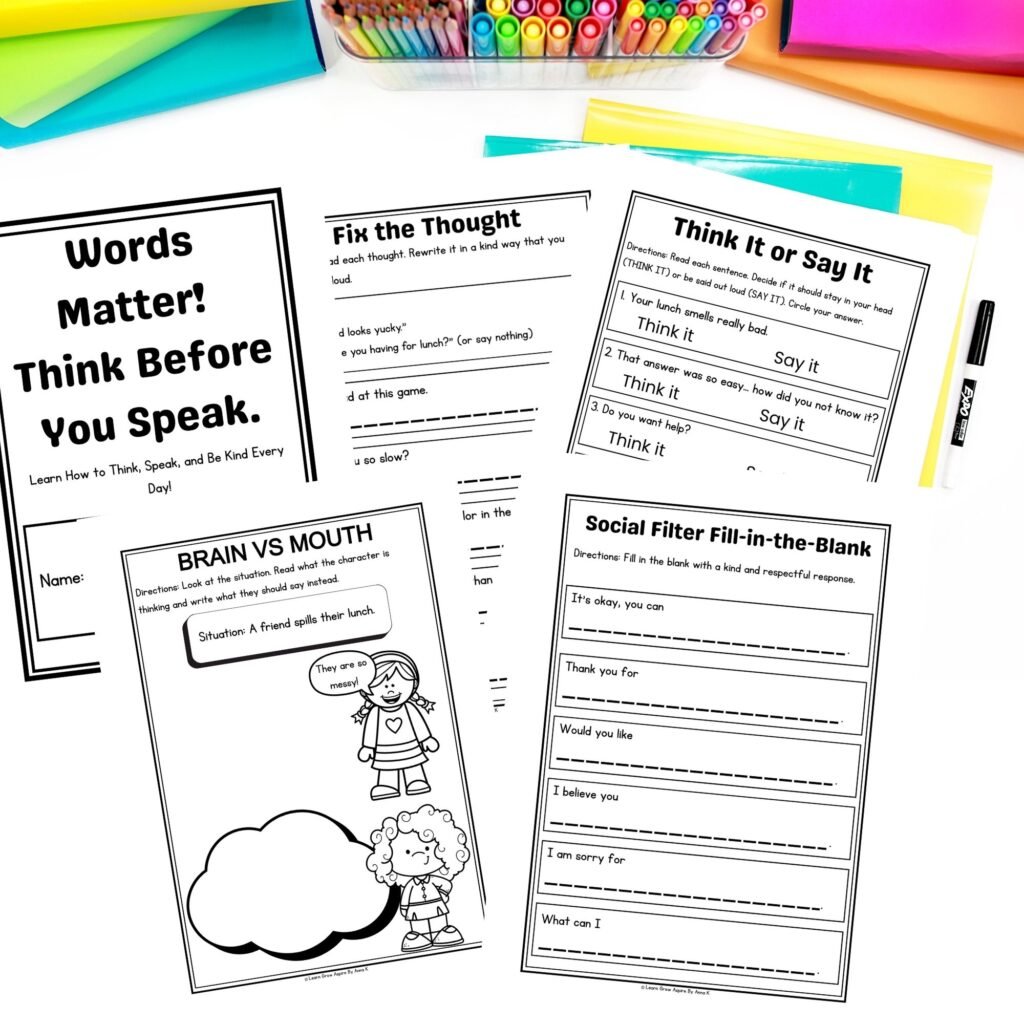
If you’re looking for an easy way to teach and reinforce this skill, I’ve thoughtfully created these – Think It or Say It Worksheets for Kids.
These printable SEL activities are designed to help children:
- Recognize appropriate vs. inappropriate comments
- Practice real-life social situations
- Strengthen their social filter
- Build empathy and awareness in a safe way
They’re ideal for:
- Teachers (SEL lessons & classroom management)
- School counsellors (small groups & sessions)
- Parents (at-home social skills practice)
Why This Approach Works
The reason these activities are so effective is that they:
- Move beyond telling into active learning
- Give kids real examples to think through
- Build decision-making skills in social situations
- Help kids internalize the concept
Instead of memorizing rules, kids will learn how to apply them.
Raising Kind, Confident Communicators
At its core, teaching Think before we speak isn’t about stopping kids from speaking.
It’s about helping them:
- Think before they speak
- Choose words that build others up
- Feel confident in social situations
- Develop lifelong communication skills
Because when kids learn how to use their words wisely, they don’t just avoid hurting others, they build stronger connections.
Think It or Say It Activities For Kids
The think before we speak strategy for kids is a simple shift that will create a powerful impact.
With consistent modeling, practice, and the right tools, kids can learn to:
- Pause before speaking
- Use a social filter
- Communicate with kindness and confidence
And that’s a skill they’ll carry for life.
If you’re ready to start teaching this in a fun, engaging way, make sure you grab these printable PDF worksheets.
Pin These Think It, Or Say It PDF Printables
Make sure to save these printable PDFs to your SEL Pinterest board so that you can easily find them when needed. And while on Pinterest, please consider following me on the platform.
Some of the links in this post may be affiliate links. I’m also an Amazon Affiliate and will occasionally link to some of my favorite Amazon products. I will receive a small percentage back if you purchase through my link. You won’t be charged a penny more if you shop through my links. That said, I do NOT recommend anything I do not use and love! Thank you for helping support my blog!

