If you’re wondering how to teach personal boundaries to kids, you’re not alone. The struggle is real when it comes to helping children understand personal space, saying “no,” and respecting others.
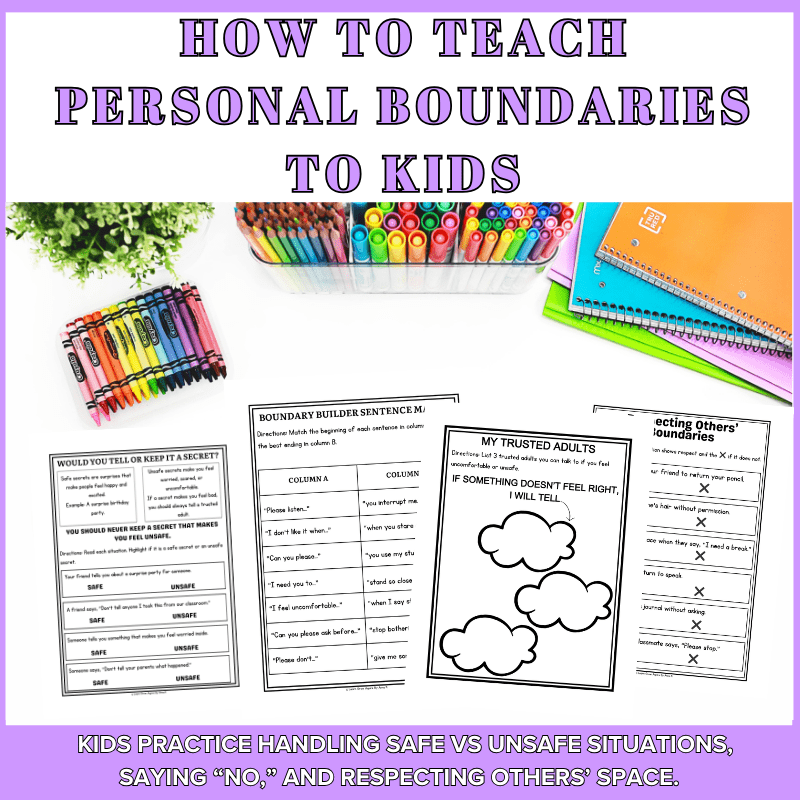
The good news is – with the right tools and guidance, you can teach boundaries to your kiddos in simple, everyday ways. Teaching them to protect their space, express their feelings, and build healthy relationships.
What Are Personal Boundaries for Kids?
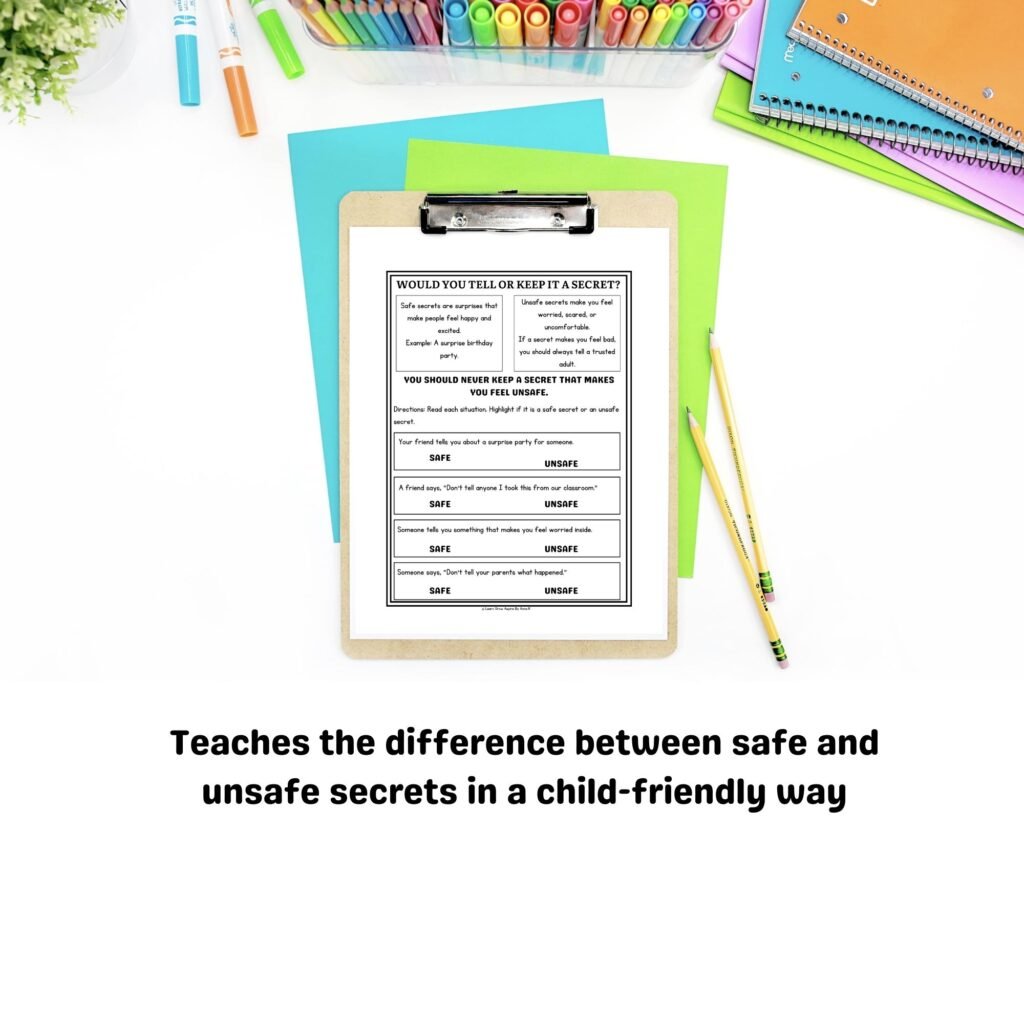
A simple way to explain personal boundaries to kids would be describing them as invisible lines that help them to understand what is okay and not okay when it comes to their body, feelings, and space.
And that the three main types of boundaries they need to be aware of are:
-
Body boundaries – understanding touch and consent
-
Emotional boundaries – recognizing and expressing feelings
-
Personal space – respecting physical distance
When your kiddos understand these, they’ll feel more confident and safe in their daily interactions.
Why It’s Important to Teach Boundaries Early
Children who learn boundaries early are more likely to:
Speak up for themselves
Respect others’ feelings and space
Build positive friendships
Feel safe in different environments
Without these skills, kids may struggle with communication, confidence, and social situations.
5 Simple Ways to Teach Personal Boundaries to Kids
1. Use Clear, Simple Language
Honestly, this one makes a bigger difference than people think. Kids don’t need long explanations or big words—they just need things said in a way that actually makes sense to them.
Instead of over-explaining boundaries, keep it simple and direct. Think about how you’d say it in a real moment, not like you’re giving a lesson. For example:
-
“Your body belongs to you.”
-
“You can say no if you don’t like something.”
-
“If it feels wrong, you can tell me.”
That’s it. Short, clear, and easy to remember.
Also, try to say things in the moment when they actually happen. If a child looks uncomfortable because someone is too close, you can gently say, “You can ask for space if you need it.” Those little real-life reminders stick way more than a long talk ever will.
And don’t worry about saying it perfectly—what matters most is that kids hear the message again and again in a calm, supportive way. Over time, they start to repeat those same words on their own… and that’s when you know it’s really working
2. Practice Real-Life Scenarios
This is where things really start to click for kids.
You can explain boundaries all day, but until they actually practice what to say and do, it’s hard for them to use those skills in real life.
Think of it like this, kids need a chance to “try it out” in a safe, low-pressure way first. You can bring up simple, everyday situations like:
-
“What would you do if someone took your pencil without asking?”
-
“What could you say if someone stood too close to you?”
Keep it casual, almost like a conversation. You don’t need to make it feel like a lesson. Sometimes I’ll just say, “Hmm… what would you say in that situation?” and let them think it through.
You can even role-play a little (kids actually love this more than we think). Take turns being the person crossing the boundary and the person speaking up. It might feel a bit silly at first, but it helps them build confidence.
The goal isn’t to get the “perfect” answer—it’s just to help them get comfortable using their voice. The more they practice in these small moments, the easier it becomes for them to speak up when it really matters.
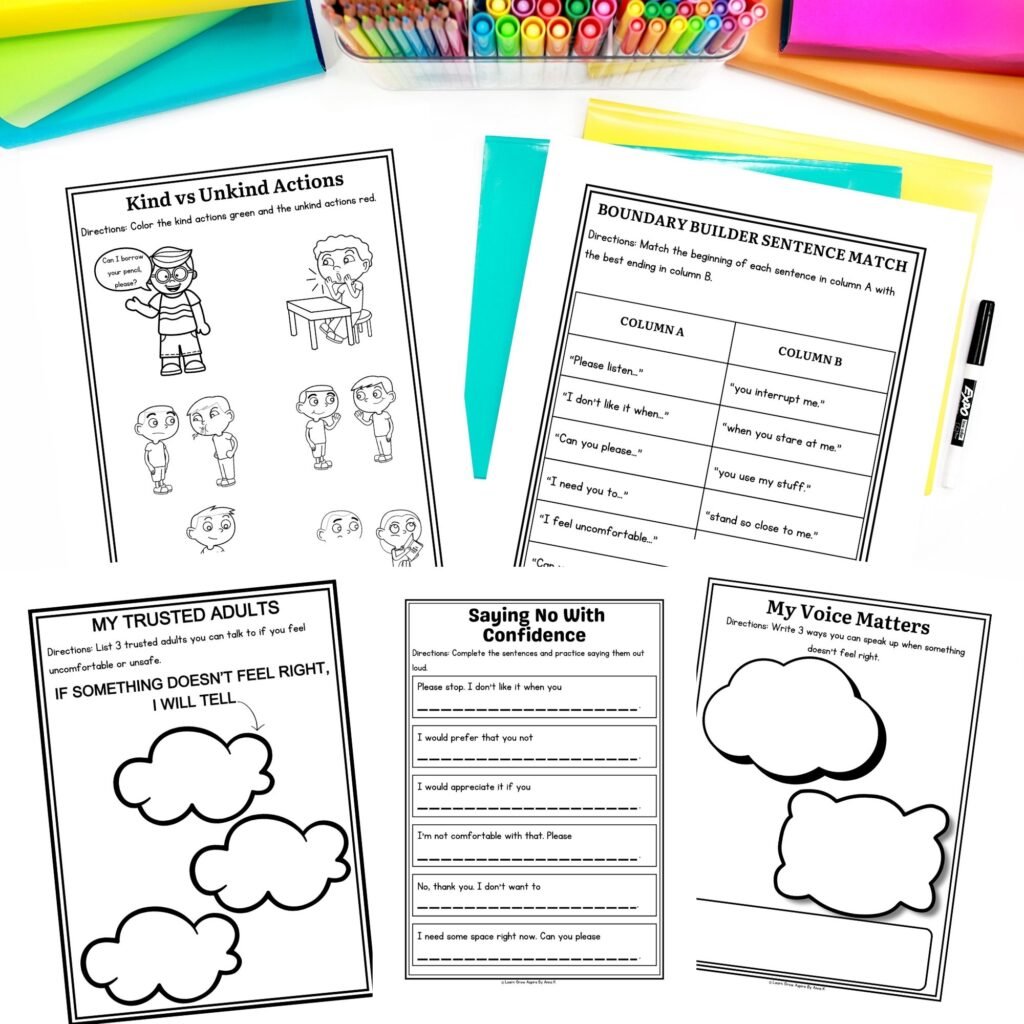
3. Teach Boundary Phrases
This one is huge—because a lot of the time, kids want to speak up… they just don’t know what to say.
Instead of expecting them to figure it out in the moment, we can give them simple, ready-to-use phrases they can actually remember. Think of it like giving them a little script they can pull from when they need it.
Keep the phrases short and natural, like:
-
“Please stop.”
-
“I don’t like that.”
-
“Can you ask first?”
-
“I need some space.”
You don’t need a long list—just a few strong ones they can practice and feel comfortable using.
It also really helps for kids to practice saying them out loud. Even just casually, like, “Let’s try saying that together.” The more they hear themselves say the words, the more confident they’ll feel using them in real situations.
And here’s the important part—remind them it’s okay to be firm. They don’t have to be mean, but they are allowed to be clear.
Over time, you’ll start to hear them use these phrases on their own… and that’s when you know it’s really sticking.
4. Model Respectful Behavior
Kids are always watching—way more than we realize. They pick up on how we talk, how we react, and how we treat others.
So one of the best ways to teach boundaries is simply by modeling them in everyday moments.
For example, you can:
-
Ask before borrowing something, even small things
-
Respect when someone says “no” without pushing back
-
Use kind and respectful words, even when you’re frustrated
These little actions might seem simple, but they send a powerful message. You’re showing kids what boundaries actually look like in real life—not just talking about them.
And when they see it consistently, they start to mirror it. They begin asking, respecting, and speaking kindly on their own… and that’s when those skills really start to stick.
5. Use Social-Emotional Learning Activities
This is honestly where everything starts to come together. Talking about boundaries is important, but kids really learn when they get to do something with it.
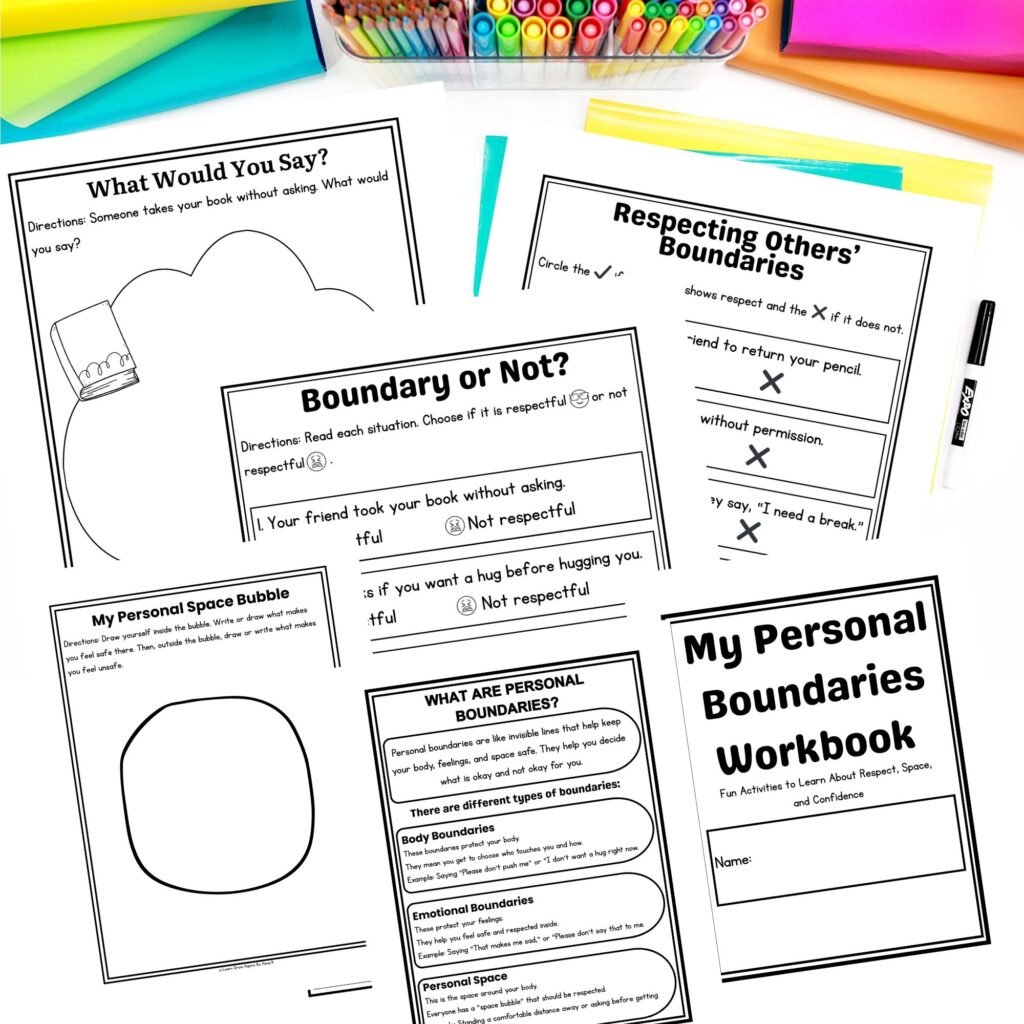
That’s where simple SEL activities can make a big difference. Things like worksheets, role-play, drawing, or even quick discussions give kids a chance to actually practice these skills instead of just hearing about them.
For example, you might give them a situation like, “Someone keeps interrupting you—what would you say?” or have them draw a comic strip showing a character setting a boundary. It doesn’t have to be complicated—just something that gets them thinking and responding.
The best part is that these activities feel more like fun than learning. Kids stay engaged, and at the same time, they’re building real-life skills like confidence, communication, and empathy.
And the more they practice in these small, safe ways, the more natural it becomes for them to use those same skills in real situations.
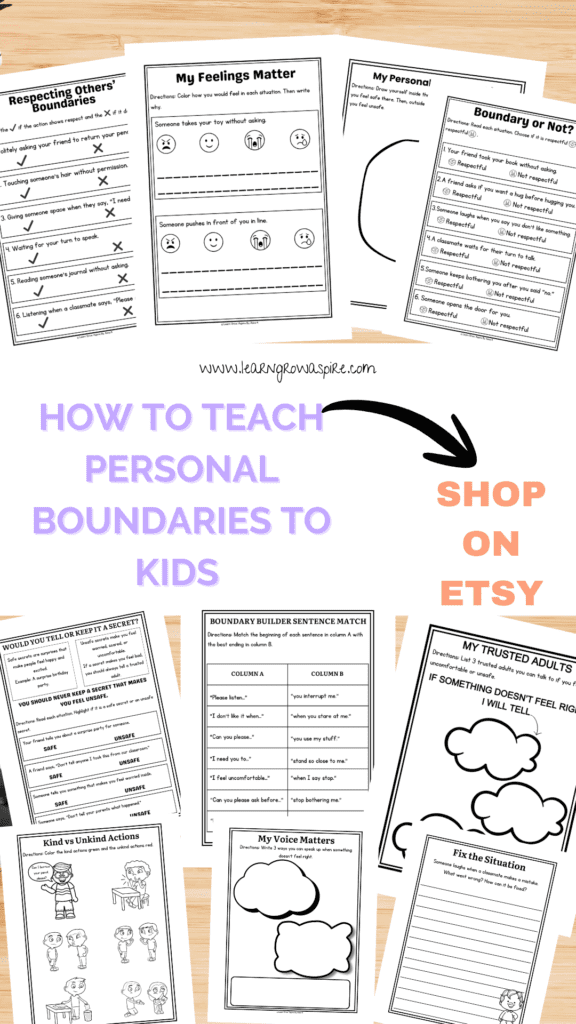
To save you time, I’ve put together a fun and engaging personal boundaries PDF worksheet for kids.
SHOP BOUNDARIES PRINTABLE PDF FOR KIDS
A Simple Way to Teach All of This (Without the Prep)
If you’re a teacher or parent, planning all these activities can take time.
To make it easier, I created a set of Personal Boundaries for Kids Worksheets (Printable PDF) designed to support these skills in a fun and engaging way.
These worksheets help children:
✔ Practice real-life boundary situations
✔ Build confidence and communication skills
✔ Understand personal space and emotions
✔ Learn to say “no” in a respectful way
They’re perfect for classroom SEL lessons, counseling, or at-home learning.
SHOP BOUNDARIES PRINTABLE PDF FOR KIDS
Personal Boundaries Worksheets For Kids
Learning how to teach personal boundaries to kids is one of the most valuable things we can do to support their growth.
When children understand how to set boundaries, respect others, and speak up for themselves, they develop confidence that will benefit them for years to come.
With simple strategies and the right tools, you can help kids feel safe, empowered, and ready to handle real-life situations.
You May Also Like These Posts
Here are some other SEL posts that you may be interested in:
- 25 Calm down strategies for kids that actually work
- What to do when a chile lies (without damaging trust)
- Printable worksheets for children experiencing loss
- How to teach accountability in a way that actually works
Pin These Setting Boundaries For Kids Activities
Make sure to save these personal space worksheets for kids to your Pinterest SEL board. And while on Pinterest, please follow me on the platform.
Some of the links in this post may be affiliate links. I’m also an Amazon Affiliate and will occasionally link to some of my favorite Amazon products. I will receive a small percentage back if you purchase through my link. You won’t be charged a penny more if you shop through my links. That said, I do NOT recommend anything I do not use and love! Thank you for helping support my blog!
