Teaching children kindness and empathy is one of the most important parts of helping them grow into thoughtful, responsible humans. But when conflicts happen, whether it’s a disagreement with a friend, a hurtful comment, or a fight between siblings, we find ourselves asking the same question: how do we actually teach kids what to do next? Learning how to teach kids to say sorry and forgive isn’t always as simple as telling them to apologize.
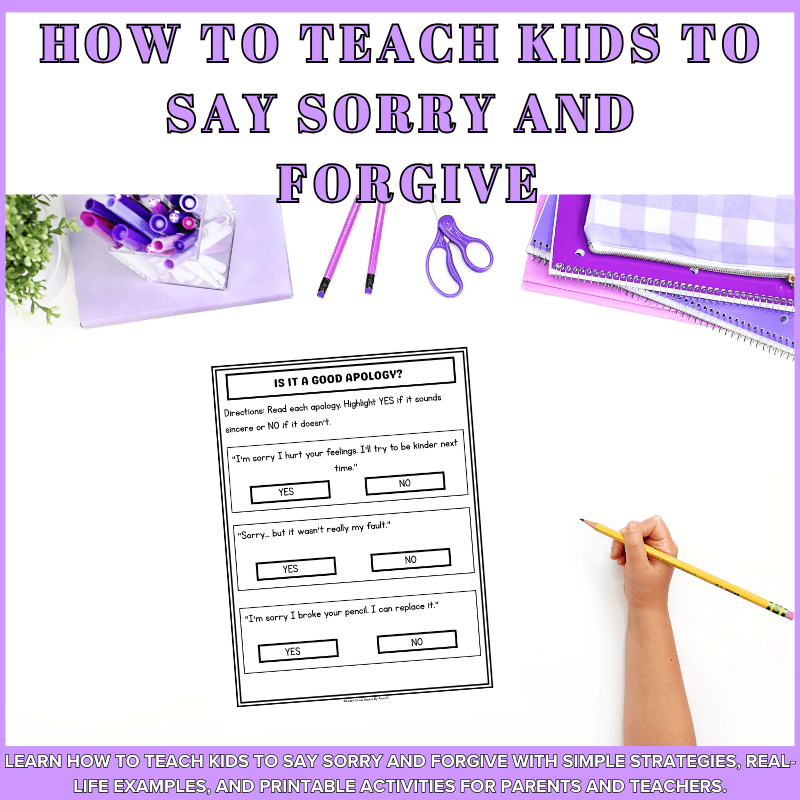
We need to provide our kids with guidance to help them understand why apologies matter, how their actions affect others, and how forgiveness can help repair relationships.
When kids learn these skills early, they begin to develop empathy, emotional awareness, and stronger friendships.
In this post, I’ll share with you how you can teach the kids in your life to say sorry and forgive in meaningful ways, along with simple strategies you can use to help children practice kindness, take responsibility for mistakes, and build healthier relationships with others.
Why Saying Sorry Matters for Kids
When children learn to apologize, they begin to understand something very important: – Their actions affect other people.
This awareness is a key part of developing empathy.
And a meaningful apology teaches kids to:
• take responsibility for their actions
• recognize how others feel
• repair relationships
• make better choices next time
Without learning these skills early, children may struggle later with conflict resolution, friendships, and communication.
Helping kids understand the importance of saying sorry creates a foundation for healthy relationships throughout their lives.
What a Real Apology Looks Like
Many children think an apology is simply saying the “I’m sorry.”
But a real apology has a few important parts.
A sincere apology usually includes 4 aspects:
1. Acknowledging the mistake – “I’m sorry I knocked over your blocks.”
2. Showing understanding – “I know that made you sad.”
3. Trying to make things right – “Can I help you rebuild it?”
4. Doing better next time“Next time I will be more careful.”
Teaching children these steps helps them move from forced apologies to meaningful ones.
Why Forgiveness Is Just as Important
Now that we’ve covered the importance of helping kids to apologize sincerly. Let’s take a look at forgiveness.
While apologizing is important, forgiveness plays an equally powerful role.
Children sometimes hold onto hurt feelings because they don’t yet understand how forgiveness works.
Forgiveness does not mean ignoring the problem or pretending nothing happened. Instead, it means choosing to let go of anger and move forward.
When kids learn to forgive, they begin to develop:
• emotional resilience
• empathy toward others
• healthier friendships
• better conflict resolution skills
Learning forgiveness helps children understand that everyone makes mistakes—and everyone deserves a chance to make things right.
Common Situations Where Kids Need to Practice Apologizing
Kids experience small conflicts every day. These everyday moments are perfect opportunities to teach apology and forgiveness skills.
Some common situations include:
• taking a toy without asking
• saying something hurtful during an argument
• pushing or bumping into someone accidentally
• laughing when another child makes a mistake
• breaking something that belongs to someone else
Instead of simply telling a child to “say sorry,” guiding them through the situation helps them understand why the apology matters.
How To Help Your Kids Learn These Skills
Teaching children to apologize and forgive works best when adults model and practice these behaviors with them.
Here are a few simple strategies that help.
1. Model Apologies Yourself
Children learn by watching adults.
When you make mistakes, apologize sincerely so that your kiddos can see what a real apology looks like. Kids imitate us more than we could imagine.
2. Talk About Feelings
Helping kids name emotions builds empathy.
Ask questions like:
• “How do you think your friend felt?”
• “How would you feel if that happened to you?”
These conversations help children understand the impact of their actions.
3. Practice Through Real-Life Scenarios
Role-playing situations can help kids practice apologizing and problem-solving in a safe way.
For example:
“What could you say if you accidentally broke your friend’s pencil?”
Practicing responses helps kids feel more confident during real conflicts.
4. Focus on Fixing the Problem
Apologies are stronger when they include actions.
Encourage kids to ask: – “How can I make this better?”
This teaches responsibility and problem solving.
Making Social-Emotional Learning Fun for Kids
Kids learn best when lessons are interactive and engaging.
Activities like:
• reflection prompts
• scenario-based discussions
• kindness challenges
• apology sentence practice
• forgiveness exercises
can help children understand these concepts in a deeper and more meaningful way.
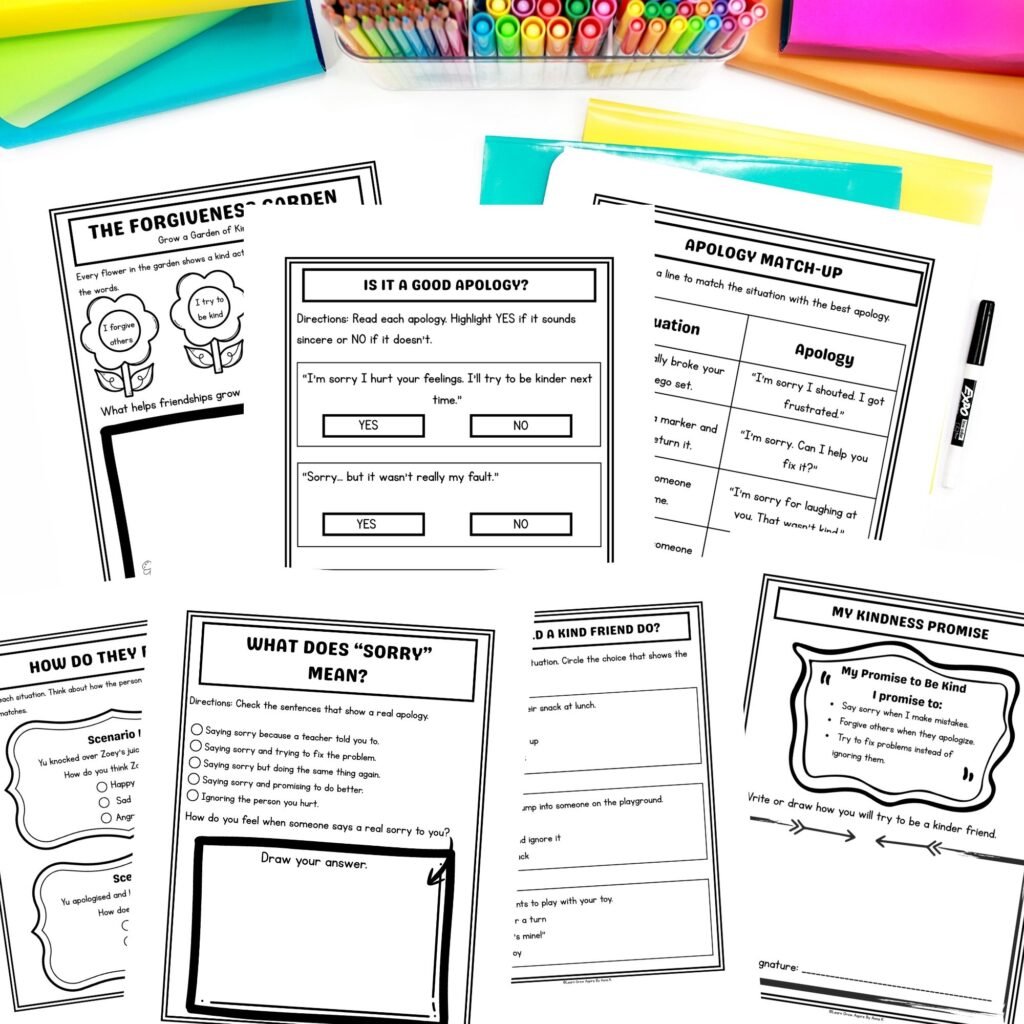
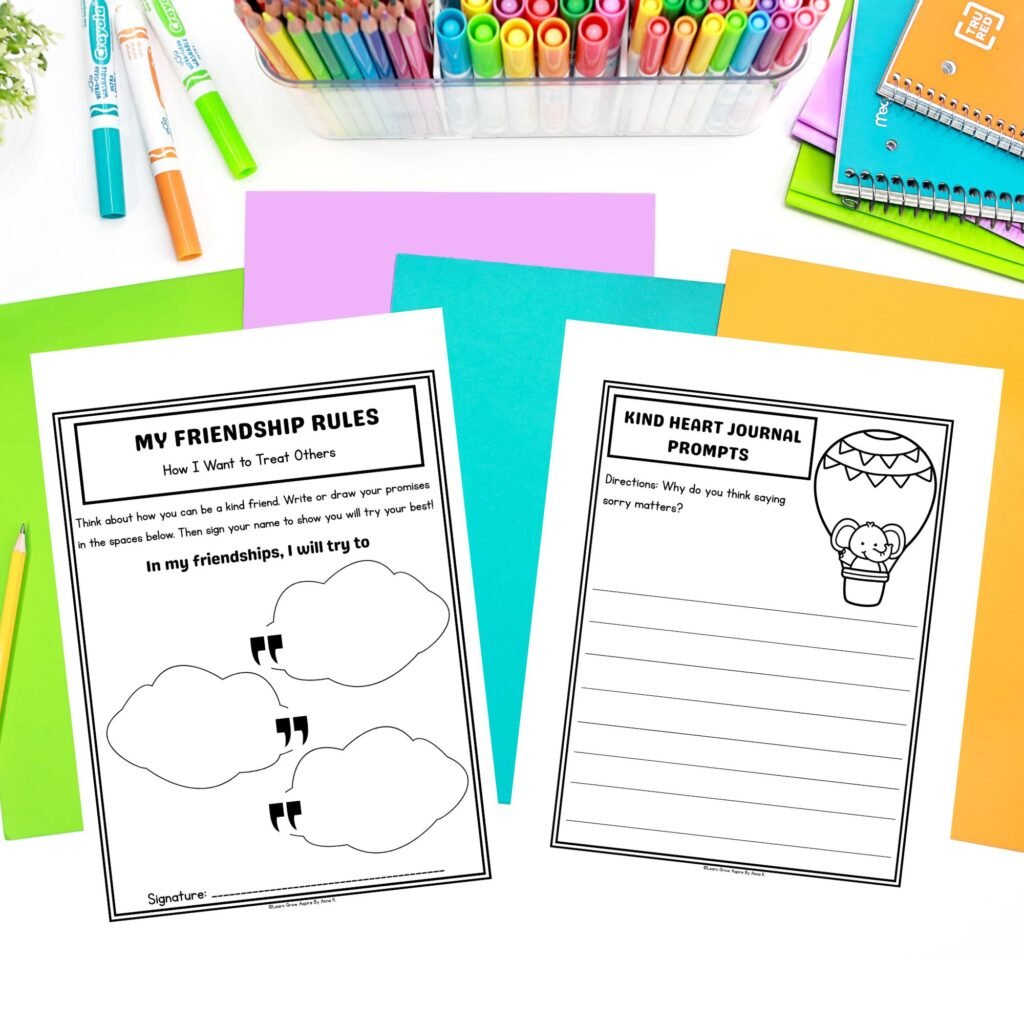
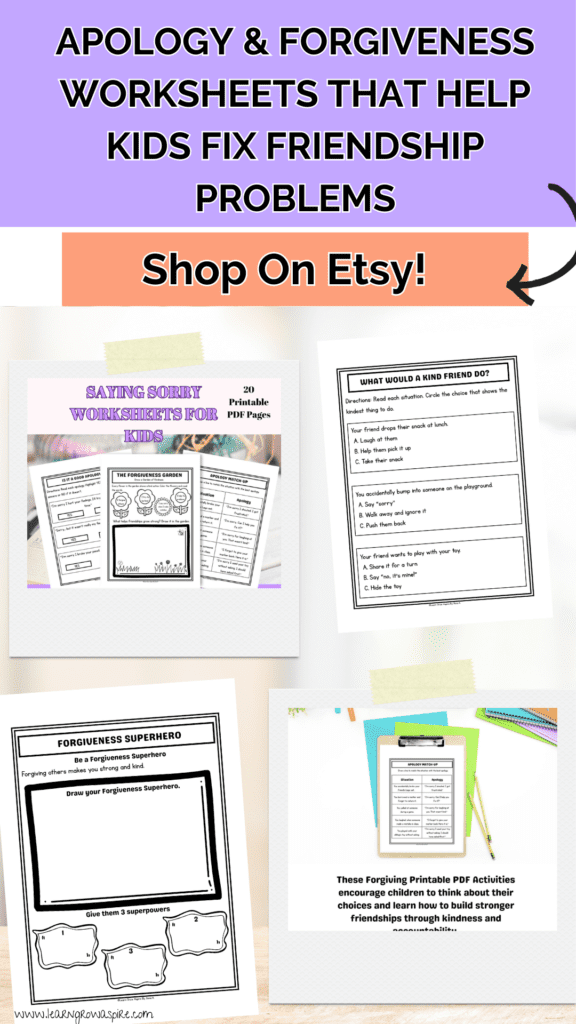
For this reason, I’ve create a set of SEL worksheets to support conversations about kindness, apologies, and forgiveness.
A Helpful Resource for Teaching Apology and Forgiveness
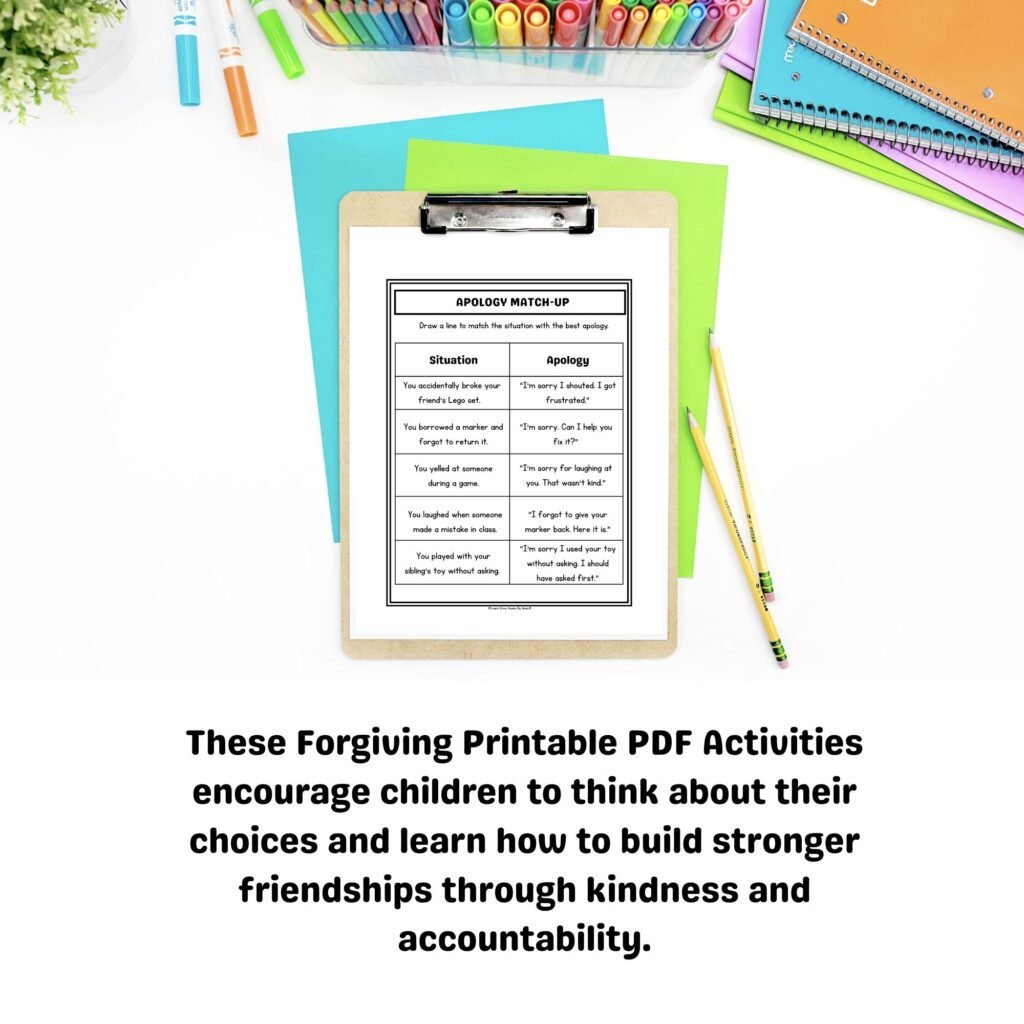
To make these conversations easier, I created a set of Saying Sorry, Apologizing, and Forgiveness Worksheets designed especially for elementary students.
These printable activities help children:
• understand what a sincere apology looks like
• practice meaningful apology sentences
• explore how others feel when mistakes happen
• match real-life situations with thoughtful apologies
• reflect on kindness, empathy, and forgiveness
They are perfect for:
✔ classrooms
✔ homeschool lessons
✔ school counseling sessions
✔ social emotional learning activities
✔ parents teaching kindness at home
If you’d like to take a closer look at these worksheets on my Etsy storefront.
How To Teach Kids To Say Sorry And Forgive
Teaching our children to say sorry and forgive others is one of the most valuable lessons we can give them.
These skills will help them build empathy, strengthen friendships, and develop emotional intelligence that will serve them for the rest of their lives.
Conflicts are inevitable, but with the right guidance, they can become powerful opportunities for growth.
When children learn that mistakes can be repaired with honesty, kindness, and forgiveness, they begin to understand something truly important:
Pin These Apologize Worksheets For Kids PDF
Make sure to save these printable pdf worksheets to your SEL Pinterest board, so that you can easily access them when needed. And while on Pinterest, please consider folloing me onthe platform.
Some of the links in this post may be affiliate links. I’m also an Amazon Affiliate and will occasionally link to some of my favorite Amazon products. I will receive a small percentage back if you purchase through my link. You won’t be charged a penny more if you shop through my links. That said, I do NOT recommend anything I do not use and love! Thank you for helping support my blog!
