Hearing a child tell a lie can be frustrating and even heartbreaking. Whether it’s denying a mistake, blaming someone else, or hiding the truth, we immediately wonder what to do when a child lies and how best to respond in a way that actually teaches honesty.
The good news is that lying is a normal part of childhood development.
Most children lie at some point as they learn about rules, consequences, and social expectations.
While lying should still be addressed. It’s important to understand that it usually comes from fear, embarrassment, imagination, or wanting to avoid trouble. Not necessary from a bad character.
Learning what to do when a child lies can help you turn these challenging moments into powerful teaching opportunities.
With the right approach, you can guide your child towards honesty while also strengthening trust, emotional awareness, and responsibility.
In this post, we’ll explore:
-
Why children lie
-
What lying means at different ages
-
Practical strategies for responding calmly and effectively
-
How to teach children the value of honesty
By the end of this blog post, you’ll have clear, practical tools to help children understand why honesty matters and how to make better choices in the future.
Why Do Children Lie?
Before reacting to a lie, it helps to understand that children rarely lie with malicious intent. In most cases, lying is a coping strategy rather than a character flaw.
Here are the most common reasons children lie.
1. Fear of Getting in Trouble
This is the most common reason children lie. If a child believes telling the truth will lead to punishment or disappointment, they may try to avoid consequences by hiding the truth.
My son once told me he had no idea who ate all the Oreos. When I asked him about it again, he hesitated for a moment and then admitted he had eaten them but didn’t want to get in trouble.
In that moment, it reminded me that when children lie, it’s often not about trying to be dishonest. Many times, it’s simply because they’re worried about how we adults will react.
Yes… This happens in my house too, and I’m not even ashamed to admit it.
2. Avoiding Embarrassment
Children sometimes lie because they feel embarrassed about a mistake or a failure.
Your kiddos might say they finished their homework when they didn’t, simply because they feel ashamed or worried about being judged.
3. Imagination and Fantasy (Especially in little kids)
Younger children, especially preschool and early elementary students, often blur the line between imagination and reality.
When my son was younger, he swore that his teddy was real. And I realize that this was not intentional deception. But he was simply exploring storytelling and creativity.
4. Wanting Approval or Attention
Some children lie to make themselves look better or to gain praise from adults or peers. For example, a child may exaggerate an achievement to feel accepted or admired.
5. Testing Boundaries
As children enter their middle and high school era, they sometimes lie to test limits and see how adults react. This is part of learning about rules, trust, and consequences.
Is Lying Normal in Child Development?
Yes!
Lying can appear at different stages of childhood. Below is a breakdown for you:
Ages 3–5 – Children experiment with imagination and may say things that aren’t true without fully understanding honesty.
Ages 6–8 – Children begin to understand the difference between truth and lies, but may still lie to avoid trouble.
Ages 9–12 – Children are more aware of social expectations and may lie to protect themselves, their friends, or their reputation.
Understanding these stages will help you as a parent or teacher respond with guidance instead of a harsh disciplining strategy.
What to Do When a Child Lies
When a child lies, the goal is not simply to catch them in the act. The goal is to teach honesty and build trust.
Here are some strategies to help you do just so, and the best part – they work!
1. Stay Calm
Your initial reaction matters.
If a child feels they will be yelled at or shamed, they may become more defensive and continue lying to protect themselves.
Instead, pause and respond calmly.
You might want to say something along the lines of:
“I’m more interested in understanding what happened than getting upset.”
You see, a calm response creates an environment where the child feels safer telling the truth.
2. Focus on the Truth, Not Just the Lie
Rather than labeling the child as “a liar,” focus on the behavior.
Children internalize labels quickly. If they feel they are seen as dishonest, they may begin to believe it.
Instead, emphasize the importance of truth.
For example:
“Everyone makes mistakes, but telling the truth helps us fix them.”
This approach teaches responsibility while protecting the child’s self-esteem.
3. Give Children a Chance to Tell the Truth
Sometimes children lie because they panic.
If you already know what happened, gently give them a second opportunity to be honest.
For example:
“I noticed the marks on the wall. Can you tell me what happened?”
When children feel they have a chance to correct themselves, they are more likely to practice honesty.
4. Avoid Overly Harsh Punishment
Severe punishments often increase lying, not reduce it.
If the consequence for telling the truth feels unbearable, children learn to hide mistakes instead of admitting them.
Focus on logical consequences instead.
For example:
If a child lies about making a mess, the consequence could simply be helping clean it up.
5. Praise Honesty
Positive reinforcement is powerful.
When a child tells the truth—especially about something difficult—acknowledge their honesty.
You might say:
“I appreciate that you told the truth. That takes courage.”
This builds a strong connection between honesty and positive attention.
6. Model Honesty Yourself
Children learn more from what adults do than from what adults say.
If adults exaggerate, make excuses, or tell “small lies,” children notice.
Model honesty in everyday situations. When you make a mistake, admit it openly.
This shows children that being truthful is normal and respected.
7. Teach Problem-Solving Skills
Sometimes children lie because they don’t know how to handle a mistake.
Helping them develop problem-solving skills reduces the need to hide the truth.
For example:
“If something breaks or goes wrong, we can work together to fix it.”
This teaches children that mistakes are opportunities to learn.
What NOT to Do When a Child Lies
Certain reactions can unintentionally make lying worse.
Avoid:
- Shaming or humiliating the child – This damages trust and can create anxiety.
- Calling the child a liar – Labels can affect a child’s identity and behavior.
- Interrogating aggressively – This may cause children to become defensive and double down on the lie.
- Setting unrealistic expectations – Children are still learning honesty. Mistakes will happen.
How Teachers Can Address Lying in the Classroom
As a classroom teacher, you would have encountered lying in many forms – unfinished homework, blaming others, or denying behavior.
A few strategies that you can consider using are:
Create a classroom culture that values honesty. When students feel safe admitting mistakes, they are more likely to tell the truth.
Use conversations rather than accusations.
For example:
“Help me understand what happened here.”
Encourage accountability while keeping the focus on learning and growth.
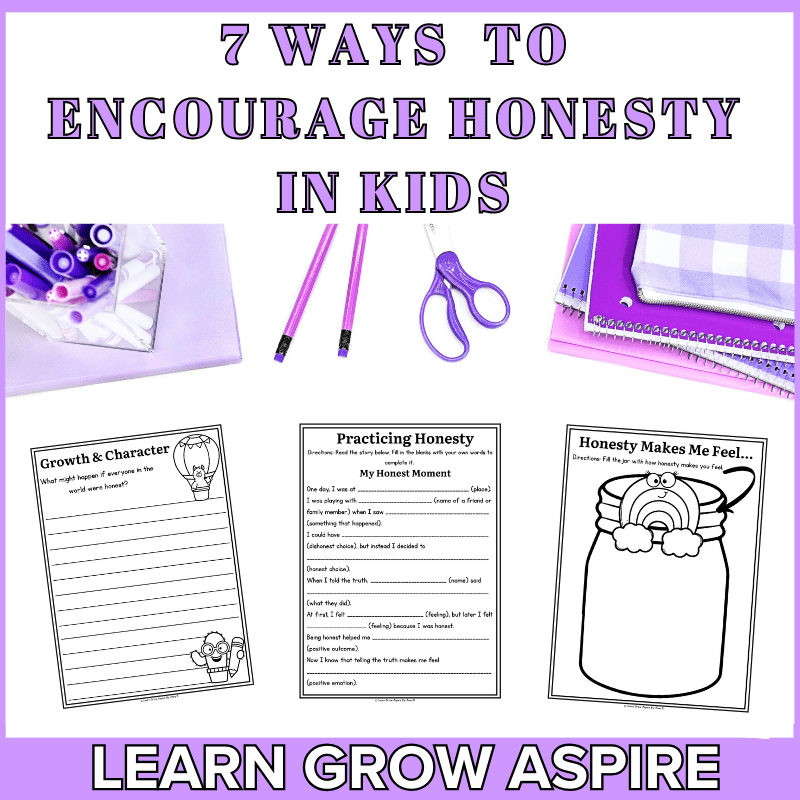
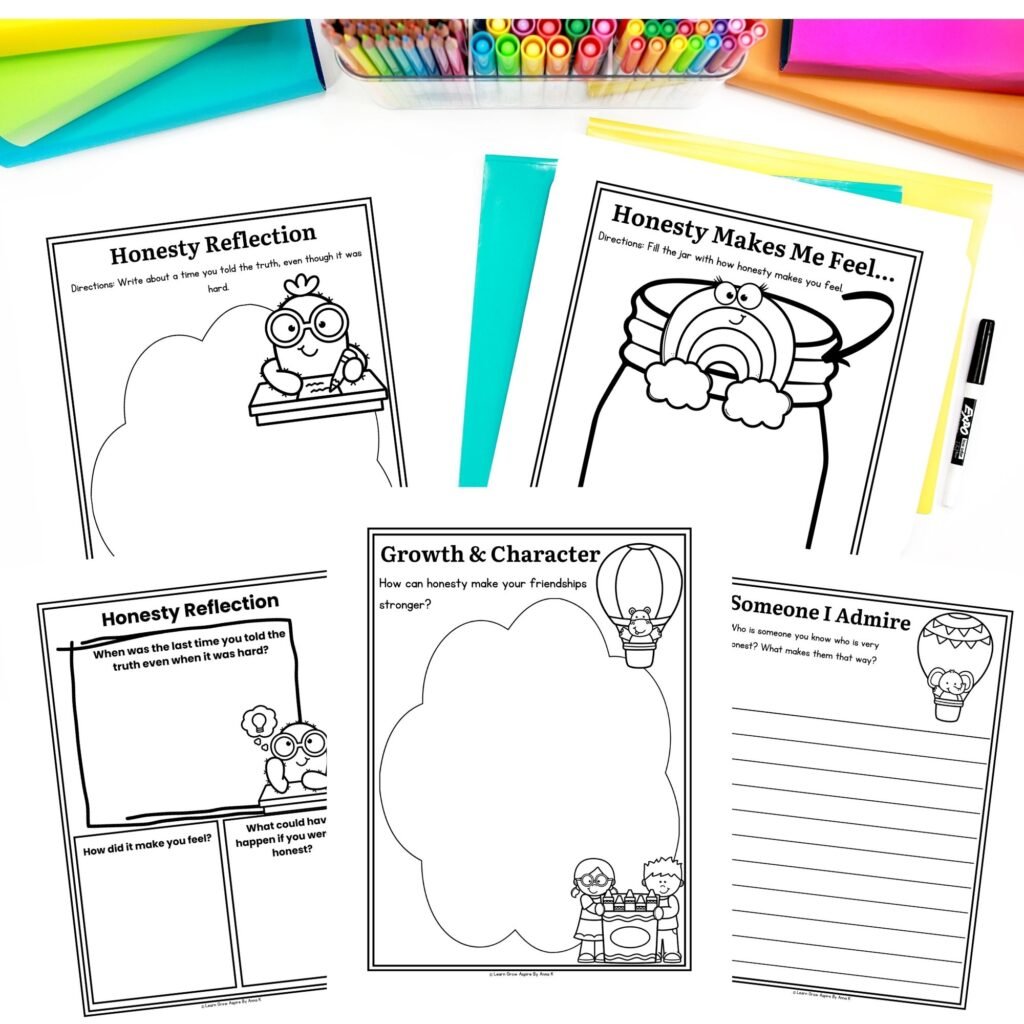
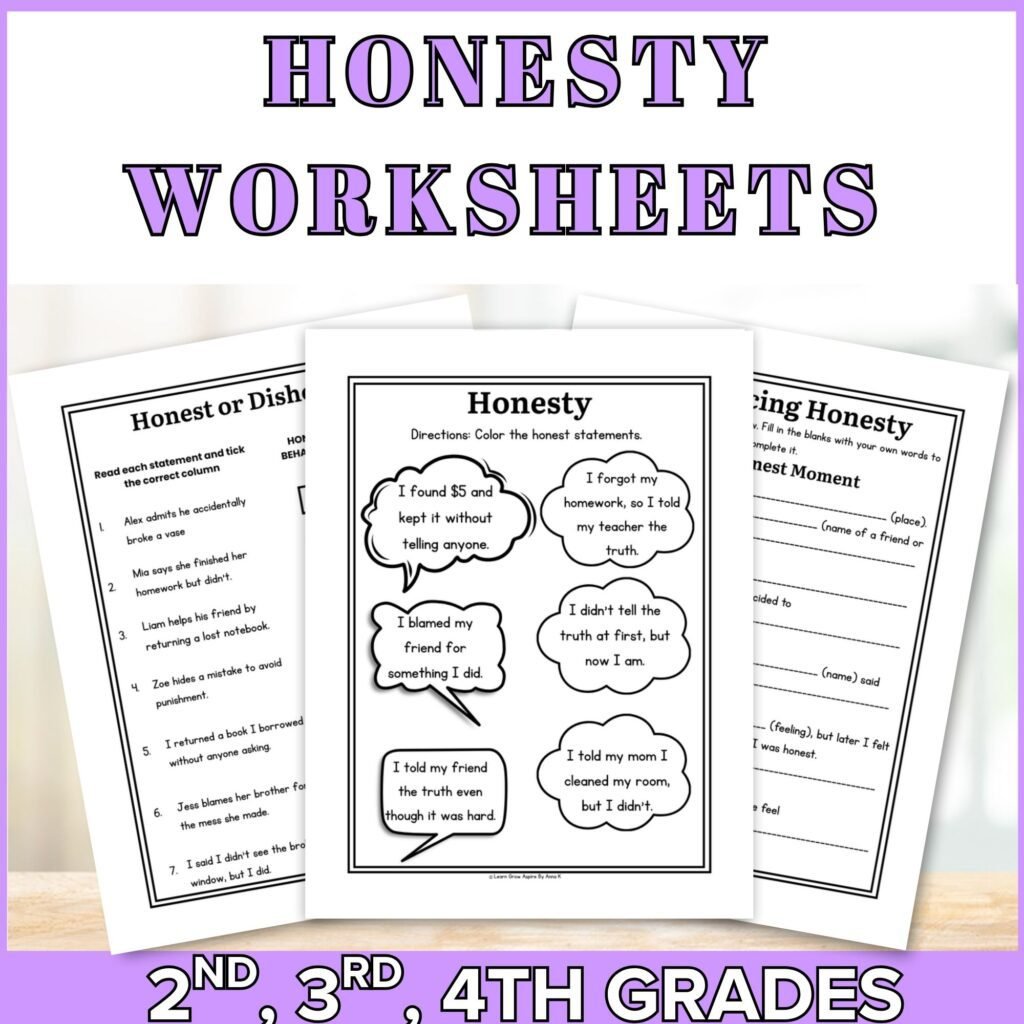
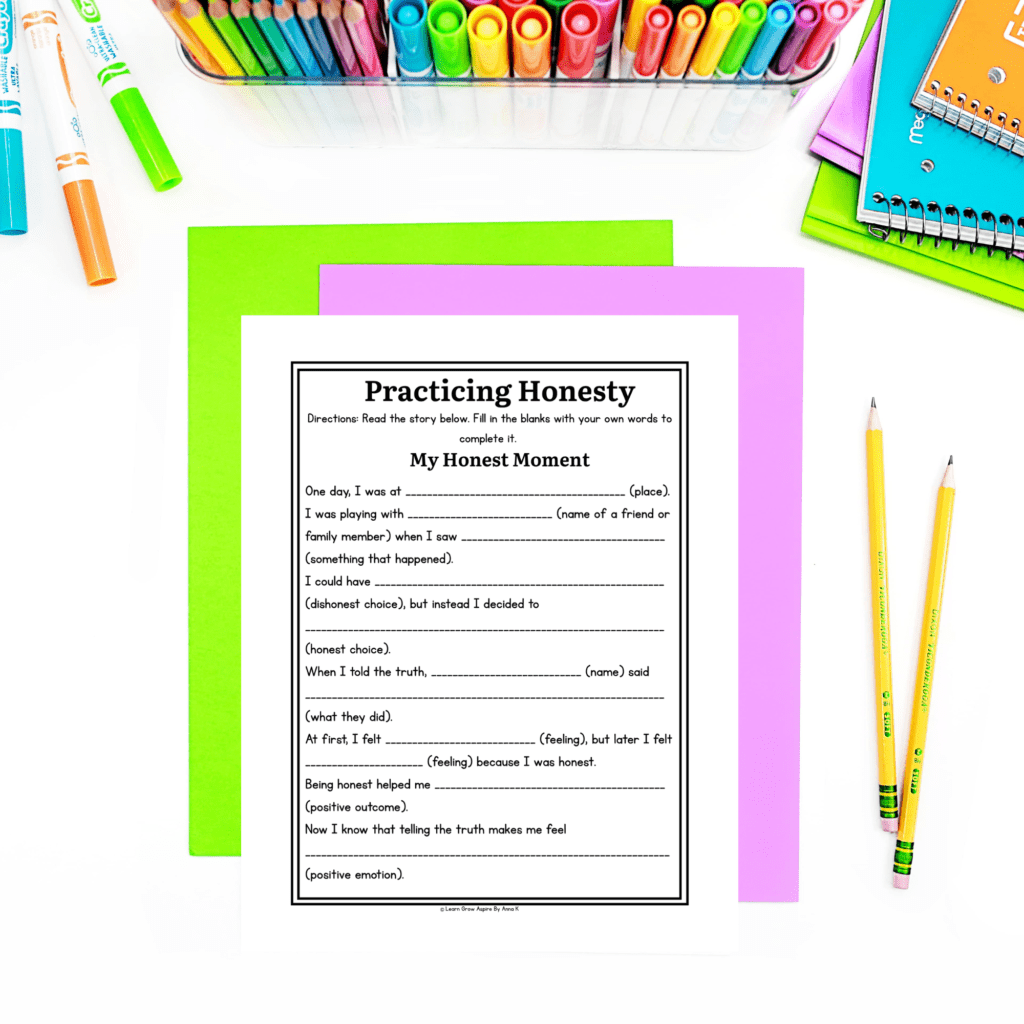
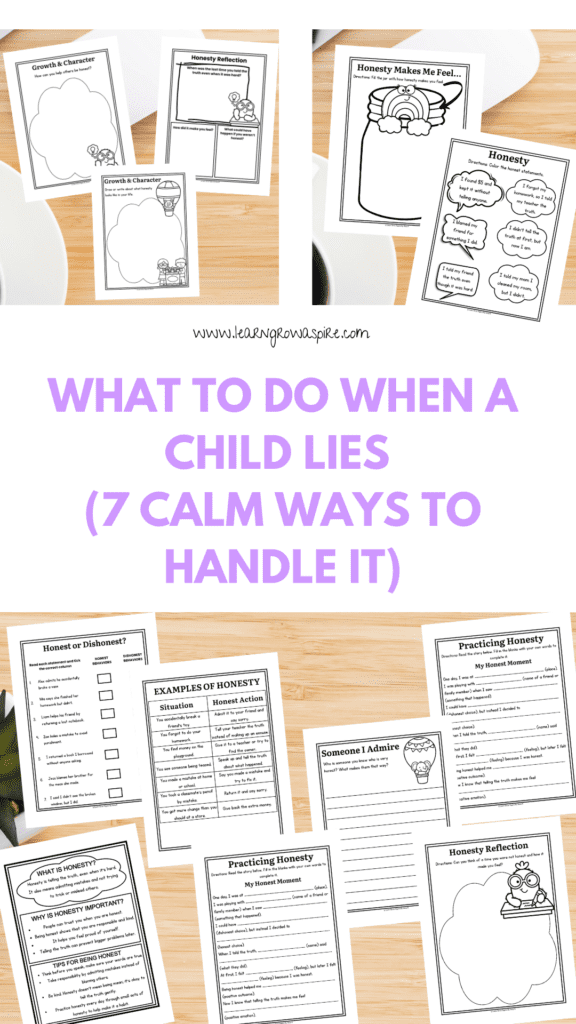
You can also use these honesty worksheets to help you do just so.
Teaching Kids Why Honesty Matters
Children are more likely to value honesty when they understand why it matters.
You can explain that honesty helps:
-
build trust with others
-
solve problems more quickly
-
strengthen relationships
-
show responsibility and maturity
Activities, role-playing scenarios, and discussions can help children explore these ideas in meaningful ways.
When Lying Becomes a Bigger Concern
Occasional lying is normal.
However, if lying becomes frequent or manipulative, it may signal deeper challenges such as:
-
fear of punishment
-
low self-esteem
-
peer pressure
In these situations, it can be helpful to have ongoing conversations with the child or seek guidance from school counselors or child development professionals.
Helping Children Grow Into Honest, Responsible Individuals
Every child will lie at some point. What matters most is how we, as adults, respond in those moments.
When we approach lying with patience, guidance, and understanding, children learn that honesty is safe, valued, and respected.
Instead of viewing lying as a failure, we can see it as an opportunity to teach children about trust, responsibility, and integrity.
With consistent support and positive role modeling, children gradually develop the confidence to tell the truth—even when it’s difficult.
How To Respond When a Child Lies
If your child or student lies, take a breath and remember – this is a teachable moment.
Children are still learning how to navigate mistakes, emotions, and consequences.
With calm guidance and clear expectations, we can help them understand that honesty is not about being perfect – it’s about being brave enough to tell the truth.
Some Other SEL For Kids
- Anger management activities for kids
- Fun ways to teach kids respect
- How to teach responsibility at home without nagging or yelling
- Calm down, countdown for kids free printables
Teach Honesty With Engaging Worksheets
If you’re looking for simple ways to help children understand honesty and responsibility, structured activities can make a big difference.
Our Honesty Worksheets for Kids include thoughtful reflection questions, real-life scenarios, and engaging exercises that help children explore the importance of telling the truth.
These worksheets are perfect for:
• parents
• teachers
• homeschool families
• social emotional learning lessons
They are designed to help children think about their choices, understand consequences, and build strong character skills.
Pin What to Do When a Child Lies
Save these tips on how to handle lying in children to your SEl Pinterest board. And while on Pinterest, please consider following me on the platform.
Some of the links in this post may be affiliate links. I’m also an Amazon Affiliate and will occasionally link to some of my favorite Amazon products. I will receive a small percentage back if you purchase through my link. You won’t be charged a penny more if you shop through my links. That said, I do NOT recommend anything I do not use and love! Thank you for helping support my blog!
