In this post, I’m going to share ways on how you can teach kids confidence with positive self-talk, why it’s so important, some fun ways to practice it, and a set of printable worksheets that let kids get creative while boosting their self-esteem.
As parents and educators, one of the most important skills we can help children develop is positive self-talk.
Teaching kids to think kindly about themselves and their abilities lays the foundation for confidence, resilience, and healthy emotional development.
But what exactly is positive self-talk, why does it matter, and how can we encourage the children in our lives to practice it daily?
What is Positive Self-Talk?
Positive self-talk is the practice of speaking kindly to yourself, using encouraging words and thoughts instead of negative or critical ones.
For children, this can mean replacing thoughts like:
-
“I can’t do this,” with “I can try my best.” Or ” I can’t do this YET!”
-
“I’m not good at anything,” with “I am learning and growing.”
-
“This is too hard”, with “I can do hard things.”
Positive self-talk helps children manage stress, frustration, and anxiety. It also encourages a growth mindset. The belief that abilities can improve with effort and practice.
So, Why Is Positive Self-Talk Important for Kids?
You see, when we teach our children and students to use positive self-talk, it can have long-lasting benefits for both their emotional and cognitive development.
Such as:
Builds Self-Esteem and Confidence – Children who regularly practice positive self-talk begin to believe in their abilities. They are more willing to try new things, take on challenges, and celebrate their achievements.
Supports Emotional Resilience – Kids who can reframe negative thoughts develop coping skills that help them bounce back from setbacks. Positive self-talk teaches them that mistakes are part of learning, not something to fear.
Improves Focus and Motivation – Encouraging phrases like “I can do this” or “I’ll keep trying” help children stay focused on tasks and motivated to finish them, even when they feel frustrated.
Promotes Kindness and Empathy – When children learn to be kind to themselves, it often extends to how they treat others. Positive self-talk fosters a sense of empathy, compassion, and understanding.
Fun Ways to Practice Positive Self-Talk
While talking positively to yourself may come naturally to adults, children often need more creative, interactive ways to develop this habit.
Here are some effective strategies:
-
Model Positive Self-Talk – Children learn by watching adults. Therefore, it helps when they see you using positive statements about yourself. For example, “I didn’t get it right the first time, but I can try again.”
-
Praise Effort, Not Perfection– Encourage children by celebrating their effort rather than just the outcome. Saying, “You worked so hard on that puzzle!” reinforces the value of trying and learning.
-
Create a Positive Environment – Surround kids with uplifting messages, quotes, and affirmations. Posters, stickers, or notes around the room can serve as daily reminders to think kindly of themselves.
-
Use Creative Activities – Activities that combine art and self-reflection are especially effective. Children can express feelings through drawing, coloring, and writing, which makes practicing positive self-talk fun and engaging.
Positive Self-Talk Worksheets for Kids
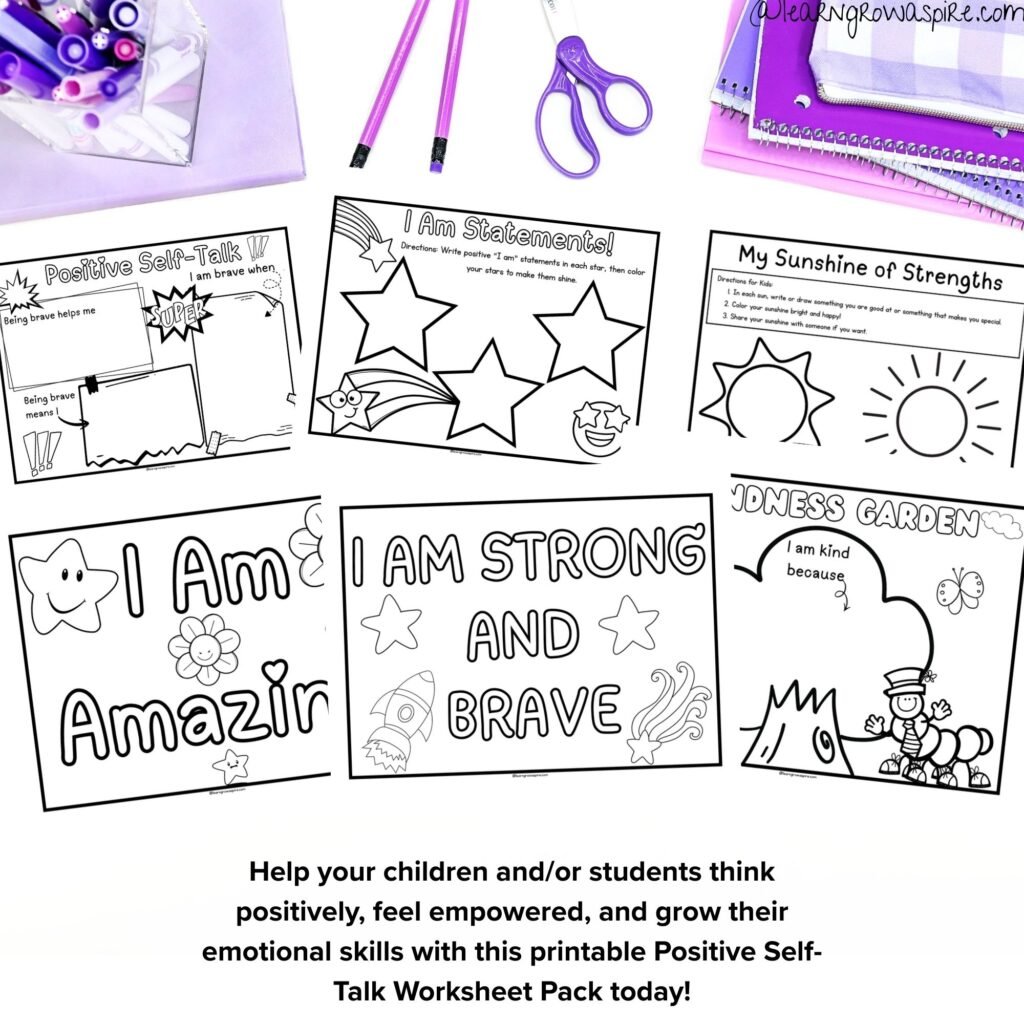
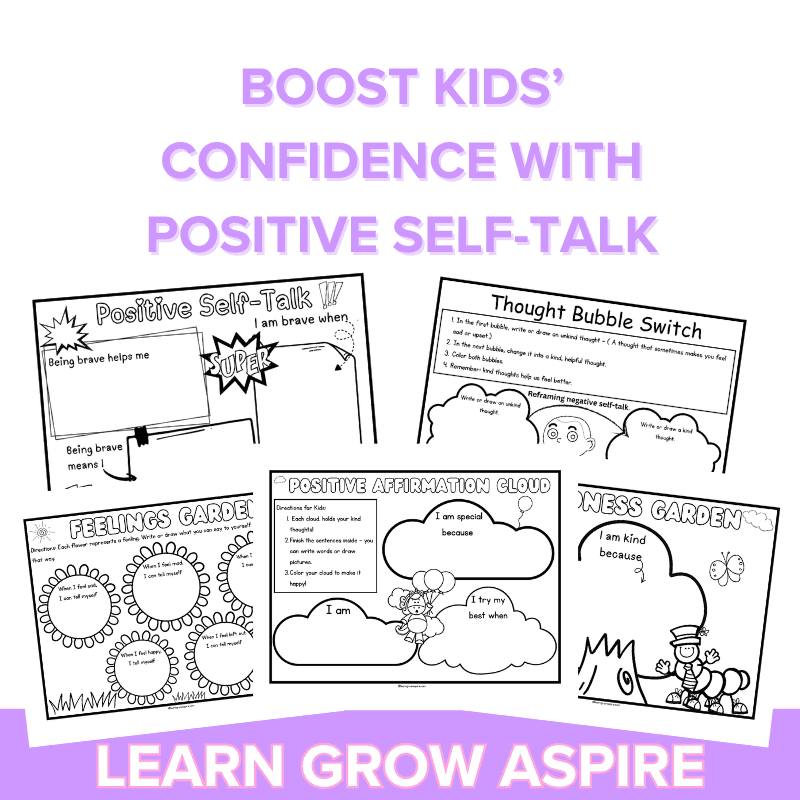
To make practicing positive self-talk even easier, I’ve created a set of printable worksheets designed to help children explore their thoughts, emotions, and personal strengths.
These worksheets are perfect for parents, teachers, and counselors who want to provide structured yet playful ways for kids to build confidence.
Here’s a sneak peek at what’s included:
-
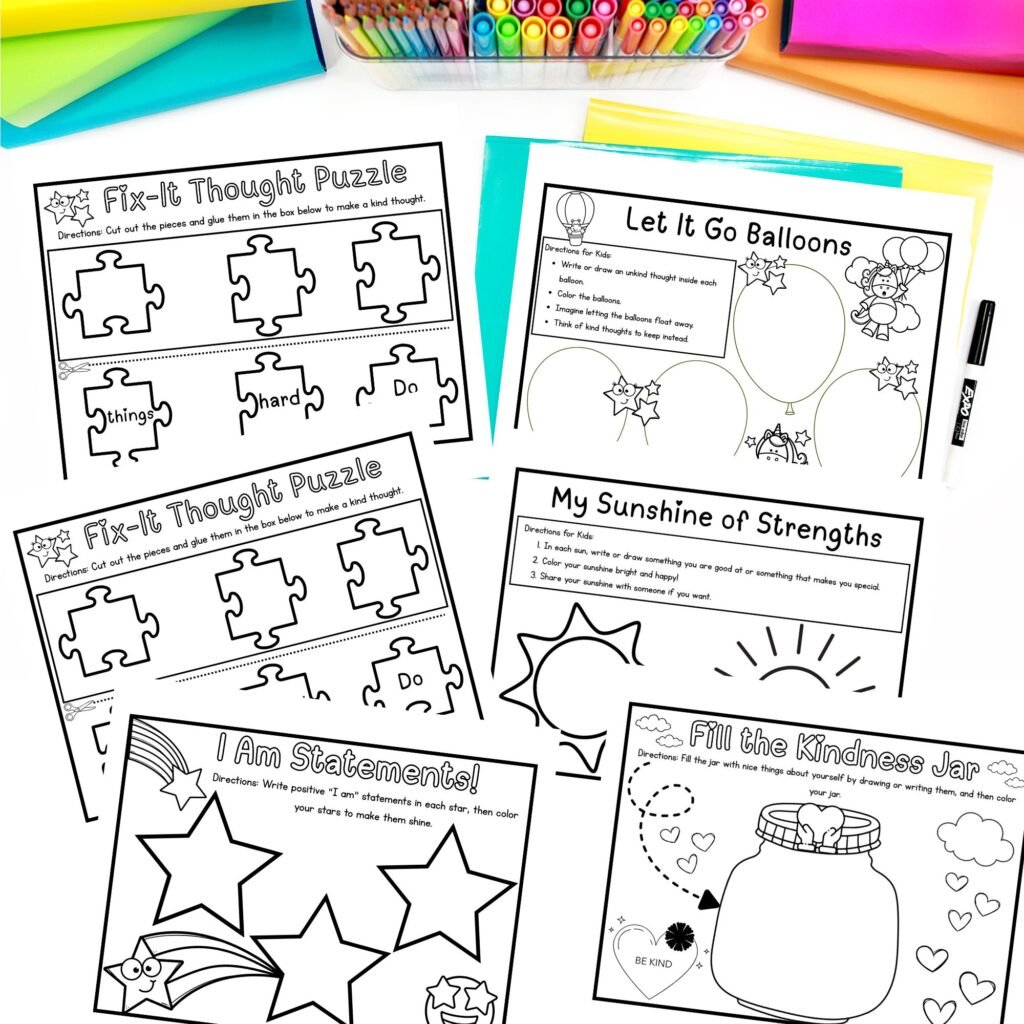
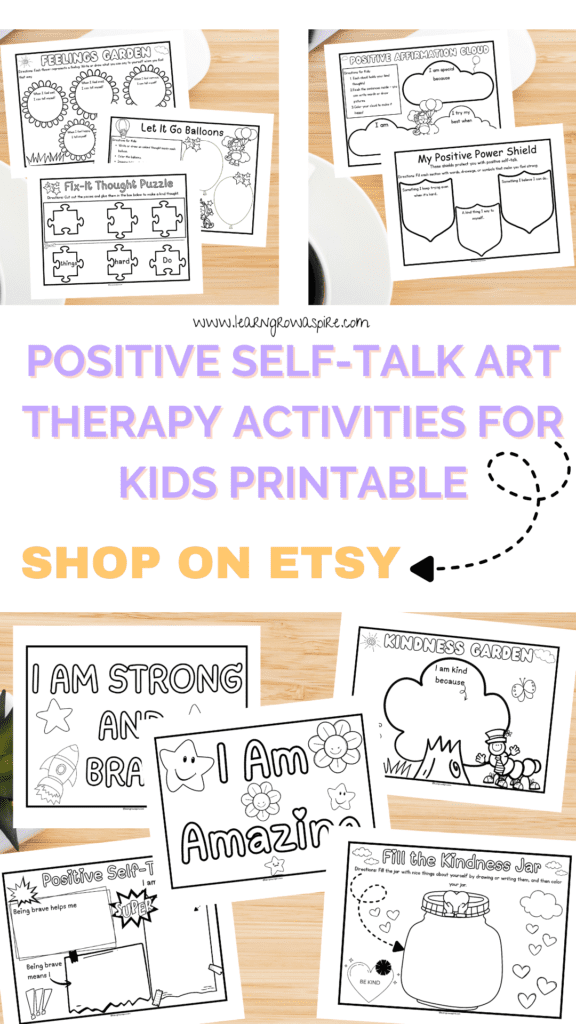
My Kind Words Rainbow – Children write or draw kind words about themselves on each rainbow stripe, helping them visualize positivity in a colorful and engaging way.
-
Thought Bubble Switch – This activity teaches kids to turn unkind or negative thoughts into positive ones, helping them practice reframing and resilience.
-
My Positive Power Shield – Children fill a shield with words, drawings, and symbols that make them feel strong, capable, and confident.
-
Feelings Garden – Each flower represents an emotion, and kids can write or draw what they can say to themselves when feeling that way, fostering emotional awareness.
-
My Inner Coach Mirror – Kids imagine being their own coach and write kind words to themselves, reinforcing self-compassion.
-
Let It Go Balloons – Children write worries or unkind thoughts inside balloons and imagine letting them float away, then replace them with positive thoughts.
-
I Am Statements Art Page – Kids decorate stars with affirmations like “I am brave,” “I am kind,” and “I am enough,” reinforcing their self-worth.
These worksheets are interactive, visually appealing, and easy to print at home. They make practicing positive self-talk fun, whether at school, home, or during counseling sessions.
Tips for Using These Worksheets Effectively
-
Let Kids Lead – Allow children to choose which activities they want to do and how to express themselves.
-
Avoid Perfectionism- Praise effort and creativity rather than neatness or correctness.
-
Talk About It – Encourage children to share their thoughts and feelings after completing a worksheet.
-
Make it Routine – Incorporate positive self-talk activities into daily routines to strengthen the habit.
Benefits of Making Positive Self-Talk Fun
When kids use creative worksheets to practice positive self-talk:
-
They develop stronger emotional regulation skills.
-
They build confidence and self-esteem in a safe, playful way.
-
They learn to reframe challenges and see mistakes as learning opportunities.
-
They gain tools for stress management and mindfulness at an early age.
By combining art, writing, and reflection, these worksheets make abstract concepts like self-talk tangible and enjoyable for children.
Teach Kids Confidence With Positive Self-Talk
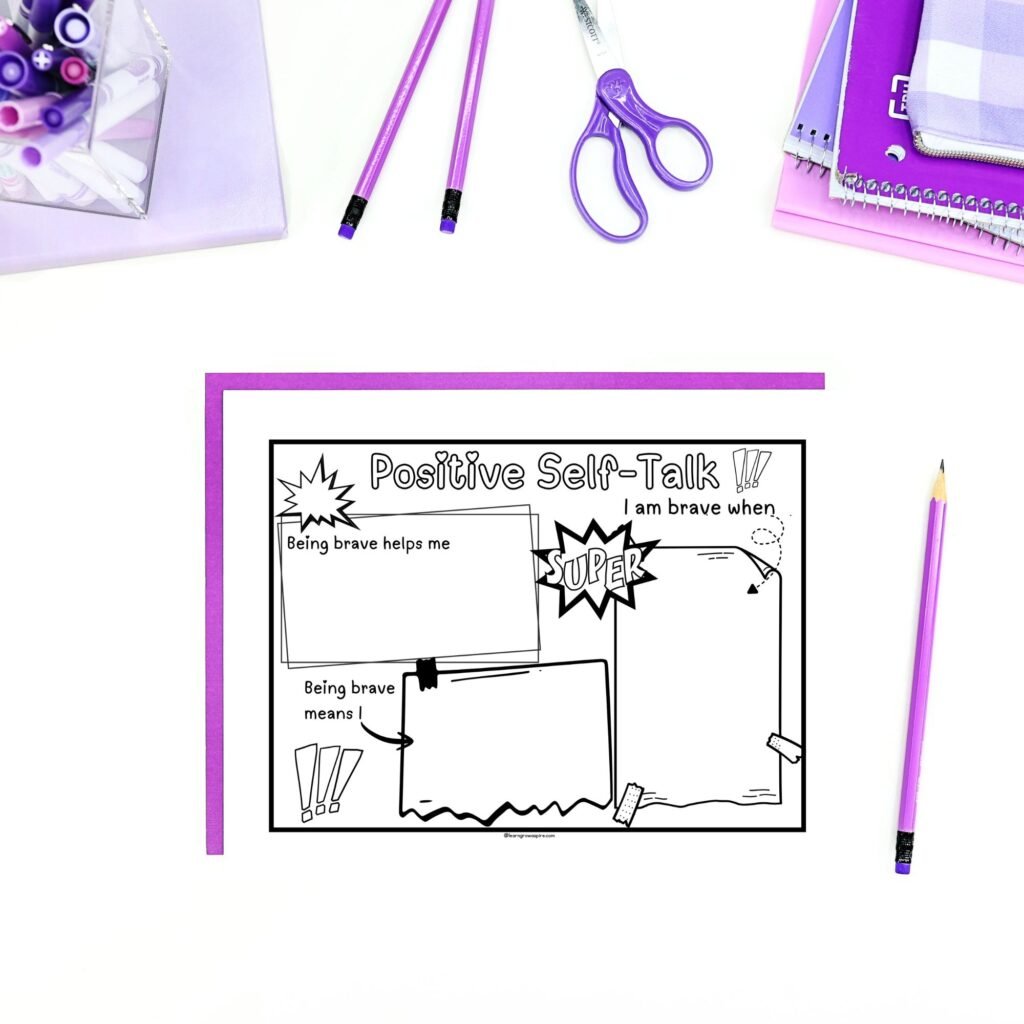
Positive self-talk is a powerful tool that can shape a child’s mindset, confidence, and emotional resilience. By giving kids structured ways to practice affirmations and kind thoughts, we empower them to believe in themselves, embrace challenges, and approach life with courage and optimism.
These Positive Self-Talk Worksheets for Kids are a fun, engaging, and educational resource that you can use to help your students or children build a strong foundation of self-esteem and emotional intelligence.
Shop Positive Self-Talk Printable PDF For Kids
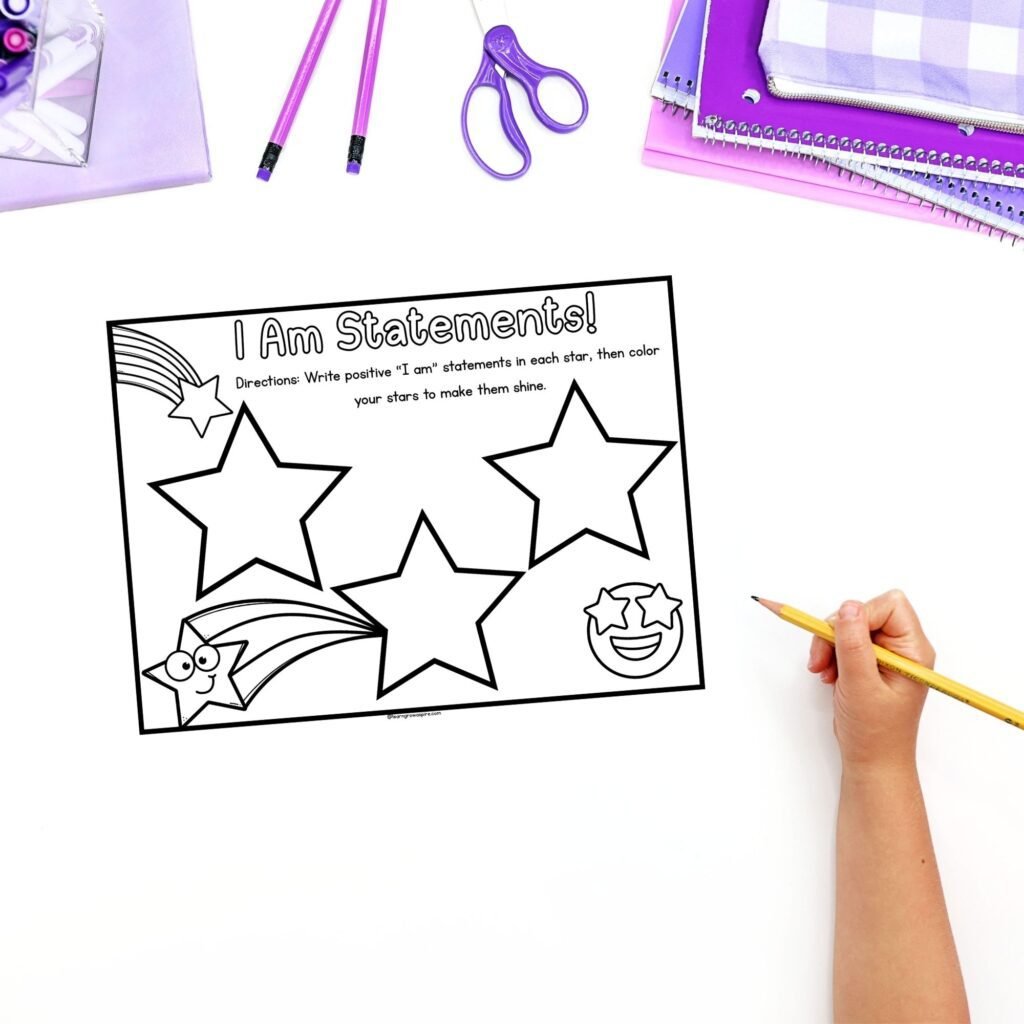
Click on the link below to shop these fun and engaging printable pdf worksheets for your kiddos from my Etsy shop.
Pin Kids Positive Self-talk Art Therapy Activities
Make sure to save these worksheets to your Kids SEL Pinterest board so that you can easily access them when needed.
Some of the links in this post may be affiliate links. I’m also an Amazon Affiliate and will occasionally link to some of my favorite Amazon products. I will receive a small percentage back if you purchase through my link. You won’t be charged a penny more if you shop through my links. That said, I do NOT recommend anything I do not use and love! Thank you for helping support my blog!
