One of the biggest challenges facing adolescents today is the constant pressure to “be enough,” “look enough,” or “achieve enough.” As a result, many teens struggle with an internal voice that puts them down, questions their abilities, and magnifies mistakes. This is known as the inner critic. Learning how to help teens overcome their inner critic is an essential skill for parents, educators, counselors, and teen therapists who want to support healthy self-esteem and emotional resilience.
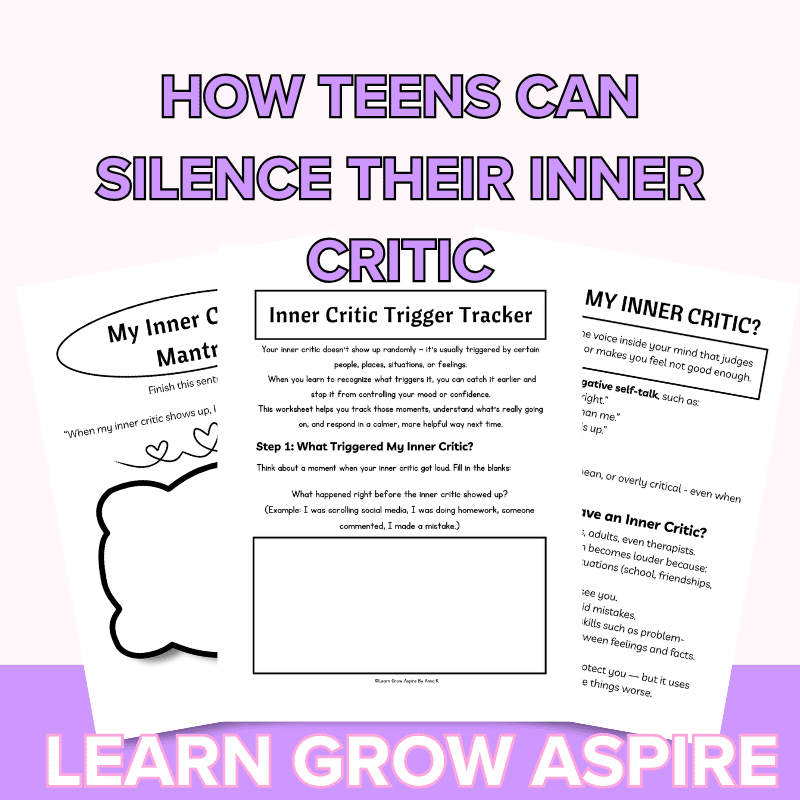
The inner critic is more than simple negative thinking; it’s a pattern of deeply ingrained self-talk that shapes how teens see themselves. And without guidance, this voice can become loud, convincing, and emotionally draining.
The good news?
Teens can learn to challenge it, rewrite it, and replace it with a kinder, more realistic voice: their inner coach.
This comprehensive guide will walk you through why the inner critic develops, what it sounds like, how it affects teen behavior, and the exact strategies you can use to help your teens transform their self-talk.
I’ll also share powerful inner critic worksheets for teens that you can use at home, in the classroom, or in counseling.
What Exactly Is the Inner Critic?
The inner critic is the internal voice that judges, criticizes, and highlights flaws. It often repeats messages like:
-
“You’re not good enough.”
-
“Everyone is better than you.”
-
“You always mess things up.”
-
“You don’t deserve good things.”
-
“Why try? You’ll fail anyway.”
For teens, who are already navigating rapid brain development, peer pressure, academic demands, and social comparison, this voice can become especially loud.
Their brains are still learning emotional regulation, identity formation, and self-evaluation, so self-critical thoughts often feel true, even when they’re not.
Understanding this voice is one of the most important steps in teaching how to help teens overcome their inner critic because once teens can name it, they can challenge it.
Why Teens Struggle With a Loud Inner Critic?
Teens today face unique stressors that amplify negative thinking, such as:
1. Social media comparison
Likes, followers, filters, and highlight reels create constant comparison loops.
2. Academic pressure
Grades, exams, and future planning increase fear of failure.
3. Peer acceptance
Teens want to fit in, feel liked, and be socially accepted, making them sensitive to judgment.
4. Perfectionism
A growing number of teens feel they must perform perfectly to be valued.
5. Past experiences
Bullying, family conflict, trauma, and criticism shape internal beliefs.
6. Biological changes
The teenage brain is wired to focus more on emotions and rewards, heightening self-doubt.
When we understand where the inner critic comes from, we can better address how it affects everyday emotions, behaviors, and decisions.
How The Inner Critic Affects Teens?
The inner critic is not just a thought pattern. It affects behavior, self-esteem, motivation, and relationships. Some common signs include:
-
Avoiding challenges or new experiences
-
Overthinking everything
-
Feeling easily embarrassed or ashamed
-
Struggling with perfectionism
-
Harsh self-judgment or self-blame
-
Difficulty accepting compliments
-
Frequent stress or anxiety
-
WANTING to try but feeling “not enough.”
For educators and mental health professionals, these signs are red flags that a teen may be internalizing negative beliefs about themselves.
Introducing the Inner Coach: A Healthier Inner Voice
One of the most effective CBT-based strategies for helping teens manage negative self-talk is teaching them how to strengthen their inner coach – the supportive, realistic voice that encourages rather than criticizes.
The inner coach says things like:
-
“I can try again.”
-
“Everyone makes mistakes.”
-
“I’m learning and improving.”
-
“I don’t need to be perfect to be worthy.”
Teaching teens to shift from the inner critic to the inner coach is at the heart of overcoming their inner critic and worksheets make this process both structured and accessible.
Practical Strategies to Help Teens Challenge Their Inner Critic
Below are evidence-based, teen-friendly techniques that your can use to help your teens challenge their self-critical thoughts.
1. Help Teens Name Their Inner Critic
Give the inner critic a name, character, or personality.
Examples:
-
“The Doubter”
-
“The Judge”
-
“The Perfectionist”
-
“The Overthinker”
When teens personify the inner critic, it becomes less powerful and easier to challenge.
2. Teach Teens to Notice Trigger Situations
Teens need guided awareness of what activates their negative self-talk.
Common triggers include:
-
social situations
-
academic pressure
-
group presentations
-
performance tasks
-
conflict with friends
-
scrolling social media
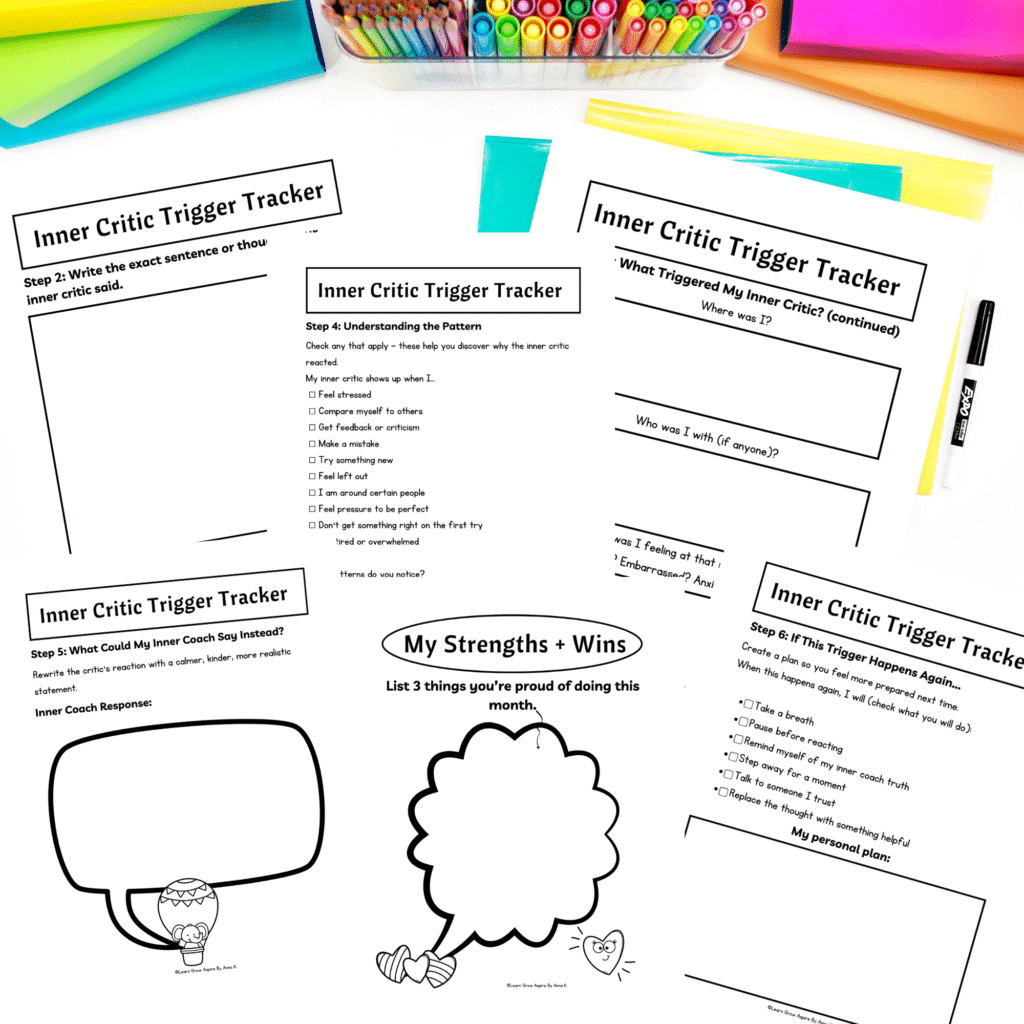
My inner critic trigger tracker worksheet is designed to help teen identify:
-
what triggered the thought
-
what the inner critic said
-
how it made them feel
-
how it changed their behavior
-
how they can respond differently next time
Recognition leads to regulation.
3. Use Inner Critic vs. Inner Coach Worksheets
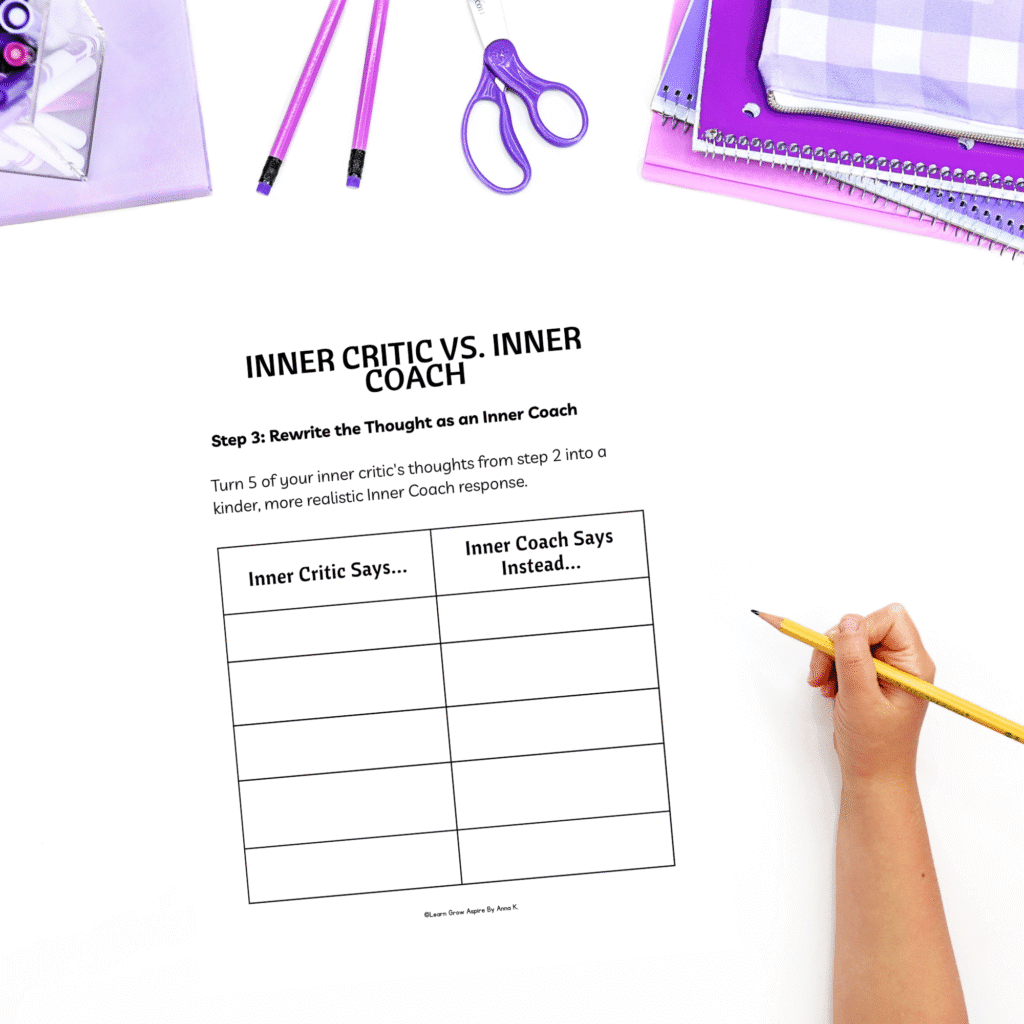
One of the most effective tools is a simple two-column worksheet:
-
Inner Critic Says…
-
Inner Coach Rewrites It…
This can help your teens rewrite harsh thoughts into more balanced ones using CBT reframing.
Example:
Inner Critic: “You’re bad at everything.”
Inner Coach: “I’m not bad at everything. I struggle sometimes, and that’s normal.”
This is where my inner critic worksheets for teens become incredibly valuable.
4. Practice Thought-Challenging Questions
Teach your teens to ask:
-
“Is this thought a fact or a feeling?”
-
“What evidence do I have?”
-
“Would I say this to a friend?”
-
“What’s a more helpful way to look at this?”
The goal is not toxic positivity, but rather balanced thinking.
5. Use Affirmation Jars or Inner Coach Mantras
Affirmation jars (like the one in my worksheet packet) turn positive self-talk into a creative activity.
Teens are directed to fill the jar with affirmations that feel genuine
This builds a stronger internal foundation over time.
6. Encourage Journaling or “Thought Dumps”
Writing helps teens release mental clutter.
Prompts may include:
-
“What is something my inner critic said today?”
-
“Is that really true?”
-
“What would my inner coach say instead?”
This journaling routine is especially helpful for anxious, sensitive, or introspective teens.
7. Teach Teens About Mind-Body Connection
When the inner critic is loud, the nervous system reacts.
Recommend simple grounding tools to your teens, such as:
-
deep breathing
-
butterfly tapping
-
5-4-3-2-1 grounding
-
taking a short walk
-
stepping away from overstimulation
Regulating the body helps regulate the mind.
8. Model Healthy Self-Talk as Adults
Teens learn more from what we do than what we say.
Try saying aloud:
-
“I made a mistake, but that’s okay. I can fix it.”
-
“I’m feeling overwhelmed, so I’m going to take a breath.”
-
“I’m learning as I go.”
This demonstrates resilience and emotional literacy.
Why Inner Critic Worksheets Work So Well?
SHOP INNER CRITIC WORKSHEETS ON ETSY!
Structured worksheets give teens:
-
a safe place to express tough emotions
-
guided coping strategies
-
a sense of control
-
awareness of their inner dialogue
-
step-by-step tools to challenge negativity
My Inner Critic Worksheets Packet is designed specifically for this purpose. It includes:
-
an information sheet
-
a trigger tracker
-
an inner critic vs inner coach chart
-
affirmation jar activity
-
thought rewrites
-
reflection questions
These tools make the work accessible and practical.
Daily Practice To Help Teens Overcome Their Inner Critic
Overcoming the inner critic is not a one-time activity, it’s a repeated process of awareness and rewiring. For lasting results, encourage teens to practice:
-
one inner coach statement per day
-
writing down inner critic thoughts when they show up
-
reviewing their worksheets weekly
-
reflecting on what’s improved
-
acknowledging their efforts
Consistency builds confidence.
How to Help Teens Overcome Their Inner Critic?

Teens deserve self-compassion. They deserve the chance to talk to themselves the way they would talk to a friend, with kindness, empathy, and encouragement.
But they can’t silence their inner critic without guidance, tools, and practice.
This is why inner critic worksheets, SEL activities, and mindset tools are so powerful. They give teens structure, support, and a pathway toward healthier self-beliefs.
SHOP INNER CRITIC WORKSHEETS ON ETSY!
More Coping Skills Resources For Teens
Here are some other coping resources that you may want to take a look at for your teenagers:
- Teens identity and values worksheets for self-discovery
- 7 Powerful ways to support teens mental health
- Helping teens overcome guilt and shame
- Anger management worksheets for teens
Pin These Inner Critic Vs Inner Coach Activities
Make sure to save these teen inner critic activities to your teen’s coping skills Pinterest board so that you can easily access them when needed. And while on Pinterest, please consider following me on the platform.

Some of the links in this post may be affiliate links. I’m also an Amazon Affiliate and will occasionally link to some of my favorite Amazon products. I will receive a small percentage back if you purchase through my link. You won’t be charged a penny more if you shop through my links. That said, I do NOT recommend anything I do not use and love! Thank you for helping support my blog!

