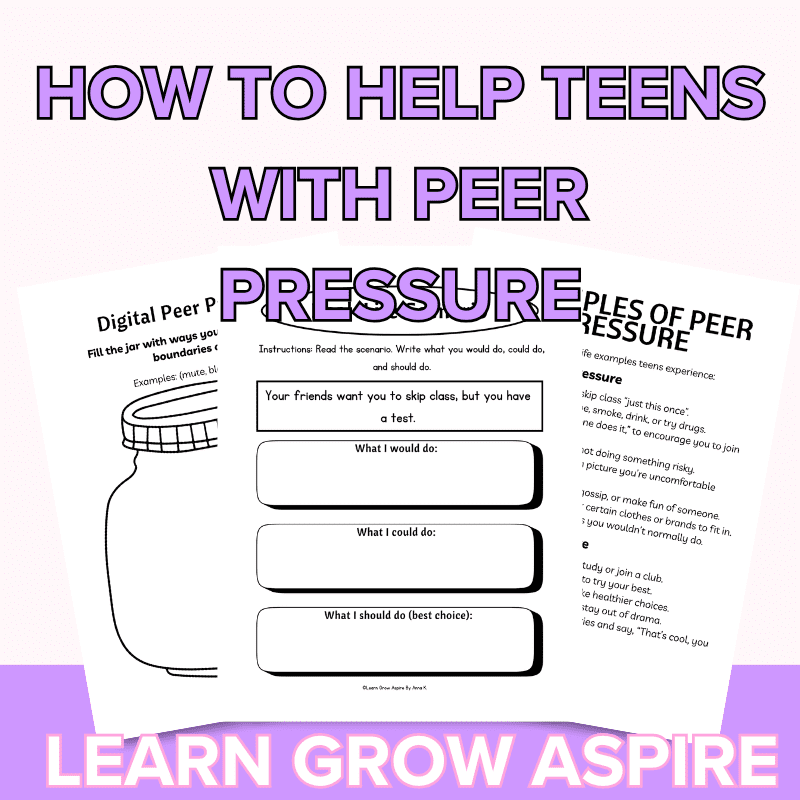
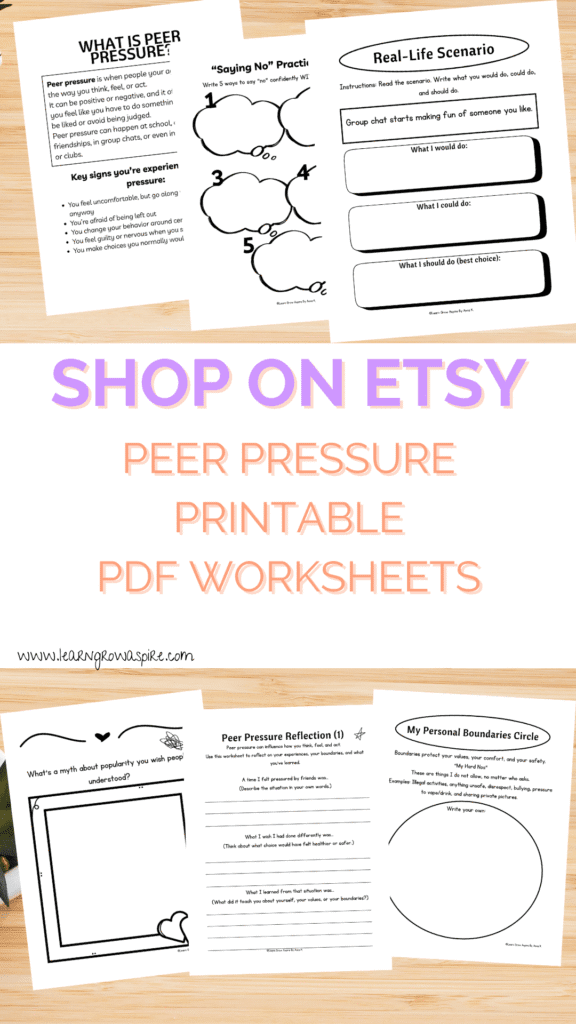
In this post, we’ll break down what peer pressure looks like for teens, why teens struggle with it, and how to help teens with peer pressure using practical, relatable steps that actually work. To make things even easier, I’ve also created Peer Pressure Worksheets for Teens that you can grab on Etsy. These sheets teach boundaries, reflection skills, and decision-making in a gentle and supportive way.
Peer pressure has always been a part of growing up, but today’s teens face a completely different world than the one we did.
Between group chats, constant social media exposure, shifting friend dynamics, and a desire to fit in, teens often feel pressure from every direction.
As a parent, teacher, therapist, or caring adult, you may worry about the choices they’re making or the choices they’re struggling to say no to.
The good news?
Teens can learn how to navigate peer pressure with confidence.
They can learn how to set strong boundaries, recognize unhealthy influence, and make choices that honor their values.
With the right tools, conversations, and support, teens can become more resilient and self-assured than we ever imagined.
Let’s dive in.
What Peer Pressure Looks Like Today?
When most adults think about peer pressure, they picture the classic scene – a group of teens encouraging someone to try something risky.
But peer pressure today is more subtle, and often more emotional.
Teens may experience pressure through:
-
Group chats where the tone turns mean
-
Social media challenges and trends
-
Friends who guilt them for not joining in
-
Fear of losing a friendship if they say no
-
Pressure to send pictures or be more “grown-up”
-
Comparisons with influencers or classmates
-
Silent expectations within their friend group
It’s no longer just the “do this or else” type.
Today’s pressure is often wrapped in fear of embarrassment, fear of missing out, or fear of being excluded.
And because teens care deeply about belonging – (something completely normal at this stage of development), they can feel trapped between what they want and what others want from them.
This is where we, as loving and caring adults, can make all the difference.
9 Powerful Strategies To Help Teens With Peer Pressure
1. Start by validating their feelings
Before teens can learn how to make strong decisions, they need to feel understood. When a teen shares something, even if it sounds small, avoid brushing it off.
Instead of saying:
“Just ignore them.”
Why not say:
“That sounds like a tough situation. I can see why you felt pressured.”
Validation creates trust
Trust creates openness.
And openness is the foundation for teaching healthier coping skills.
2. Talk about real-life scenarios they can relate to
Teens learn better through examples that mirror their lived experiences. Instead of talking about “peer pressure” in general terms, walk through:
-
“What would you do if your friend pressured you to skip class?”
-
“What if someone in a group chat asked you to send something private?”
-
“What if your friends wanted you to make fun of someone?”
-
“What if a friend said you need certain clothes to fit in?”
When teens practice working through situations, they feel more prepared when those moments happen in real time.
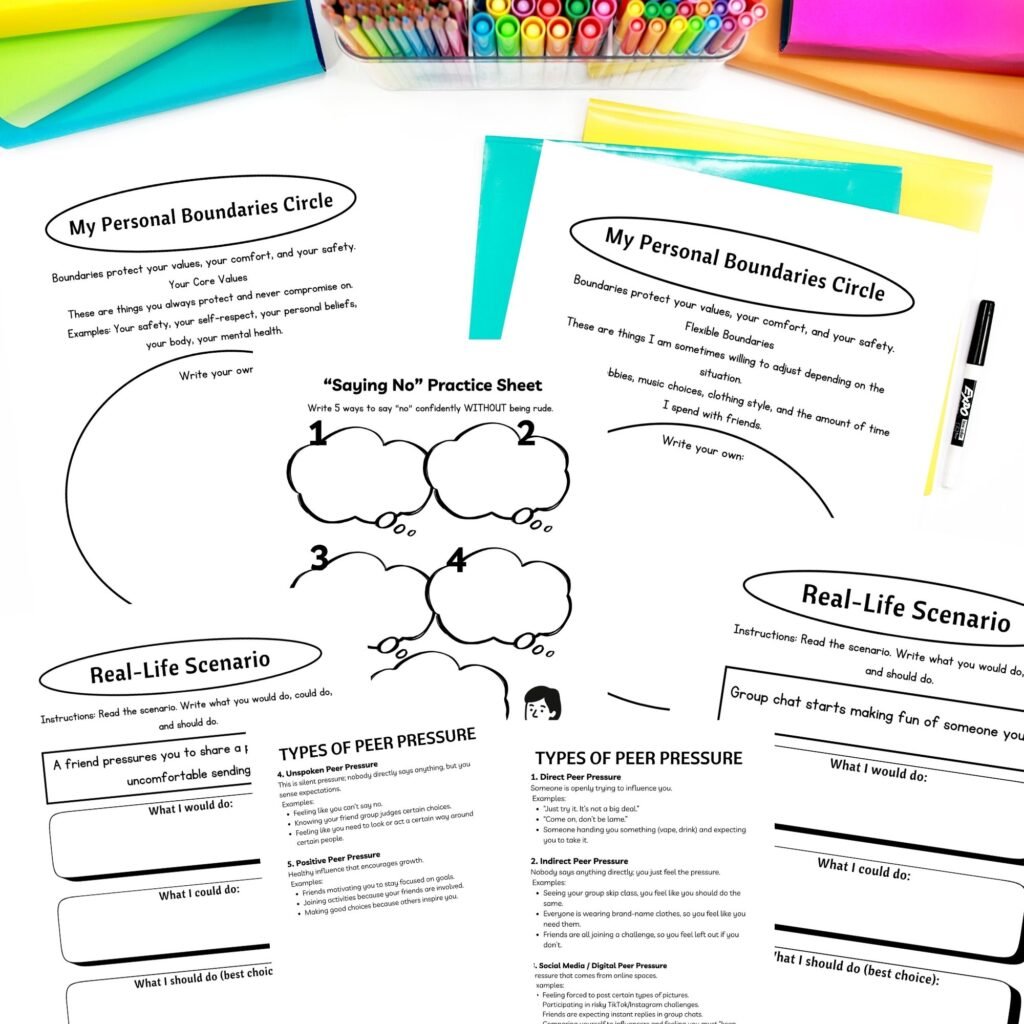
This is why in my Peer Pressure Worksheets for Teens, I included scenario-based reflection questions and activities that encourage teens to think before the pressure happens.
Practicing ahead of time makes all the difference.
3. Teach them simple, non-confrontational ways to say no
Many teens don’t give in because they want to; they give in because they don’t know how to refuse without feeling awkward or rude.
Help them learn non-confrontational phrases like:
-
“I’m good, thanks.”
-
“That’s not really my thing.”
-
“I promised myself I wouldn’t.”
-
“I don’t want to get in trouble for that.”
-
“Nah, I’m doing something else instead.”
Teens don’t need to explain or apologize. They just need a confident boundary.
One of the worksheets in my Peer Pressure pack teaches “Ways to Say No Confidently,” and teens find it incredibly helpful because it gives them phrases that feel realistic, not cringey.
4. Help them identify their personal boundaries
Teens often break their own boundaries simply because they’ve never thought about what they actually stand for.
Ask them questions like:
-
“What are the things you never want to compromise on?”
-
“What keeps you emotionally safe?”
-
“What behaviors from others make you uncomfortable?”
My Personal Boundaries Circle Worksheet helps teens map out:
-
things they always protect
-
what they might be flexible about
-
their non-negotiable hard nos
This gives teens a visual understanding of who they are and what they stand for, and that clarity makes peer pressure easier to resist.
5. Talk openly about social media pressure
Social media is one of the biggest sources of peer pressure for teens. It shapes how they dress, how they talk, what they believe, and what they think is “normal.”
Help them notice:
-
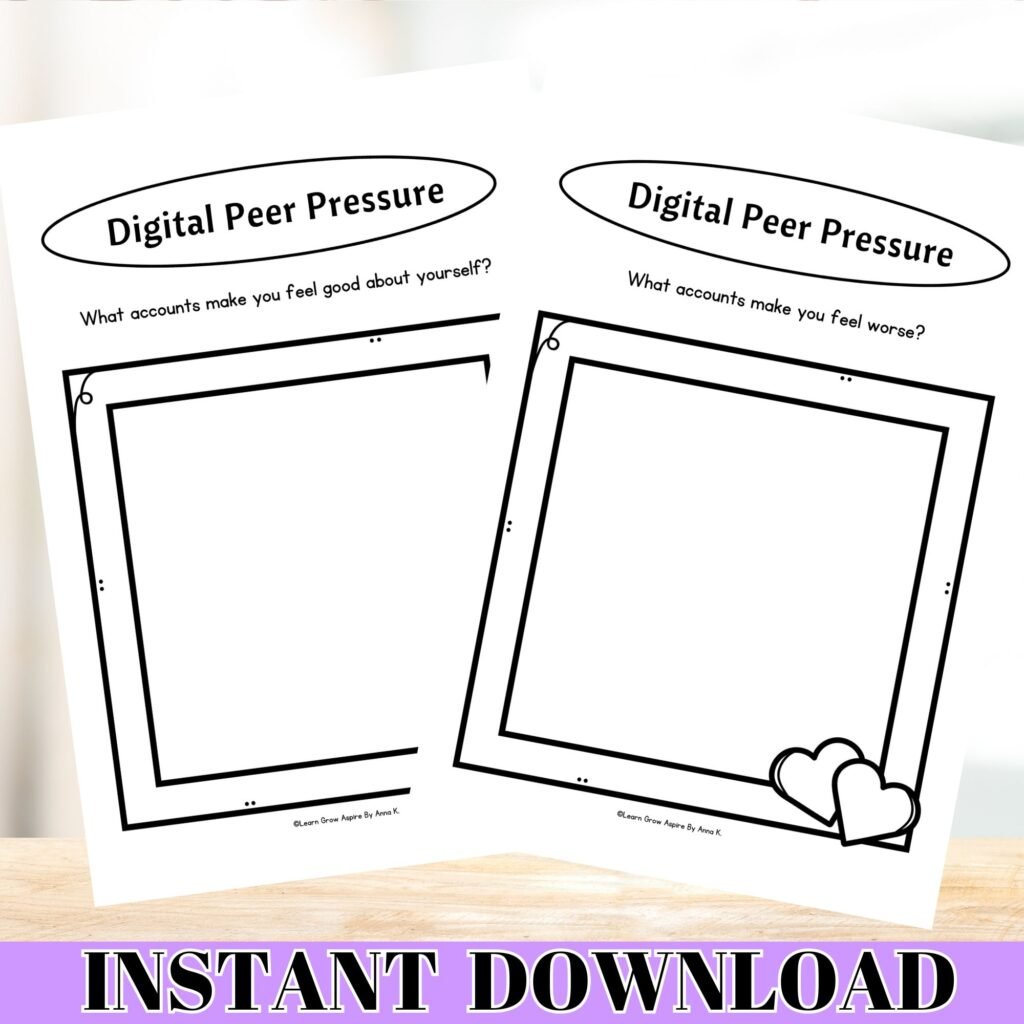
Which accounts make them feel good
-
Which accounts make them feel insecure
-
What pressures do they feel online
-
How to mute, delete, block, or unfollow people
-
How to step away without guilt
Make sure your teens know that they do NOT have to keep every friendship or follow every trend to be enough.
You can even challenge them to one small step:
“Unfollow three accounts today that make you feel less than you are.”
It’s simple, but it works.
6. Encourage them to build a “support squad”
Teens who have even one supportive friend are far more likely to resist peer pressure.
Help them write down 3–5 people who:
-
Respect their decisions
-
Don’t judge them
-
Celebrate their accomplishments
-
Make them feel emotionally safe
-
Support healthy choices
Having a “go-to person” makes difficult decisions easier. And this becomes even easier with the Choose Your Support Squad Worksheet included in my peer pressure pack.
7. Practice role-playing difficult situations
I know, this sounds awkward. But for teens, role-play works.
Try this:
You: “I’m your friend telling you to skip class.”
Them: “No thanks, I can’t.”
You: “Don’t be boring. Just come.”
Them: (practice response)
This helps teens:
-
Practice tone
-
Practice body language
-
Practice confidence
-
Prepare for real conversations
The more they practice saying no, the easier it becomes.
8. Teach them the difference between healthy and unhealthy influence
Not all peer pressure is bad.
Healthy influence includes:
-
Encouraging someone to study
-
Motivating a friend to join a club
-
Cheering on their goals
-
Supporting boundaries
Unhealthy influence includes:
-
Mocking their goals
-
Pressuring them to break rules
-
Making them feel guilty for saying no
-
Making them feel left out if they don’t join in
-
Getting angry when boundaries are set
Teens often struggle to see the difference in the moment, which is why worksheets and examples help bring clarity.
9. Make reflection a habit
Teens grow when they reflect on past experiences.
Ask them:
-
“What happened?”
-
“Why did you feel pressured?”
-
“What would you do differently next time?”
-
“What did you learn about yourself?”
My peer pressure reflection worksheet helps guide teens through these questions in a structured, supportive way. Teens love it because it feels more like journaling than “schoolwork.”
How My Peer Pressure Worksheets Can Help?
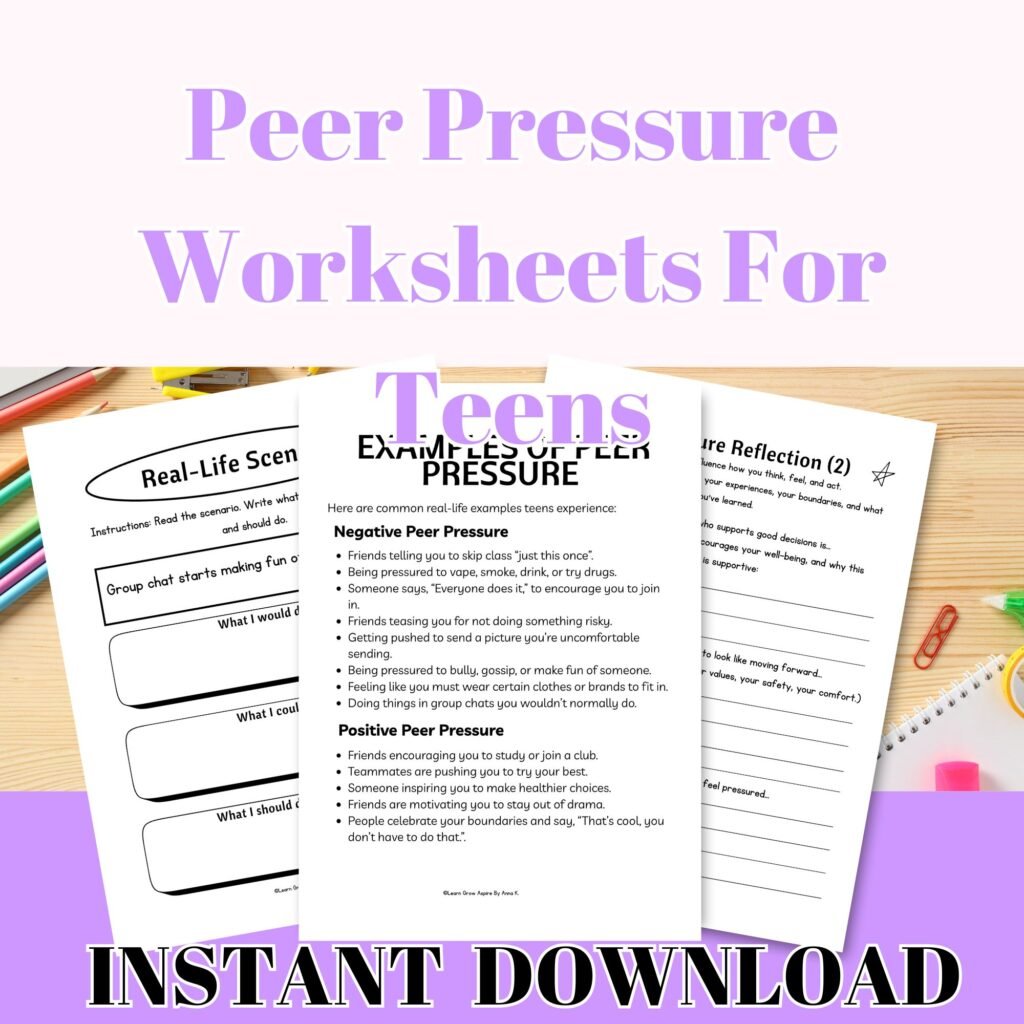
If you want a simple, effective way to support your teens with these skills. I have created a full set of Peer Pressure Worksheets for Teens available on my Etsy storefront.
These worksheets include:
-
Peer pressure information sheets
-
Types & examples of peer pressure
-
Reflection questions
-
Real-life scenarios
-
Choosing a support squad worksheet
-
Setting personal boundaries
-
Saying no confidently
-
And more!
These printables are perfect for:
-
Parents
-
Teachers
-
School counselors
-
Therapists
-
Youth workers
-
After-school programs
They’re designed to be clear, relatable, and completely judgment-free, exactly what today’s teens need.
How to Help Teens With Peer Pressure?
Peer pressure is one of the biggest emotional challenges teens face. But with patience, honest conversations, and the right strategies, teens can learn to protect their boundaries and make confident choices.
Remember:
-
Teens need support, not lectures
-
They need tools, not judgment
-
Practice, not perfection
-
And one safe adult… that might be you
If you want a gentle, structured way to help teens build these skills, make sure to check out my Peer Pressure Worksheets on Etsy.
These worksheets open the door to deeper conversations, stronger boundaries, and healthier decision-making skills every teen deserves to develop.
More Coping Activities For Teens
- Teen identity and personal values worksheets for self-discovery
- Helping teens overcome guilt and shame
- Anger management worksheets for teens
- 7 Powerful ways to support teens’ mental health
Pin For Later
Make sure to save these teen peer pressure worksheets to your Teen Coping Skills Pinterest board. And while on Pinterest, please consider following me on the platform.
Some of the links in this post may be affiliate links. I’m also an Amazon Affiliate and will occasionally link to some of my favorite Amazon products. I will receive a small percentage back if you purchase through my link. You won’t be charged a penny more if you shop through my links. That said, I do NOT recommend anything I do not use and love! Thank you for helping support my blog!

